The Oura ring does not measure blood glucose. This is the critical point to understand before any shopping decision. Oura tracks temperature, heart rate variability, sleep stages, and activity — all useful signals, none of which are glucose. In 2024, Oura announced integrations that let users stream data from a separate continuous glucose monitor (like Dexcom Stelo) into the Oura app. The ring displays the CGM data; it does not produce it.
What the FDA Has Said Directly
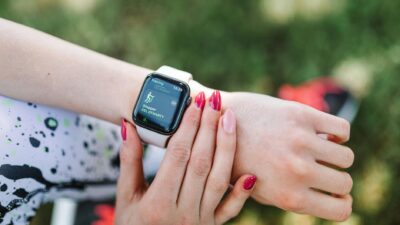
In February 2024, the US Food and Drug Administration issued an explicit safety communication titled “Do Not Use Smartwatches or Smart Rings to Measure Blood Glucose Levels.” The alert warned consumers that no smartwatch, smart ring, or wristband claiming non-invasive (no skin prick, no sensor insertion) glucose measurement has been FDA-cleared.
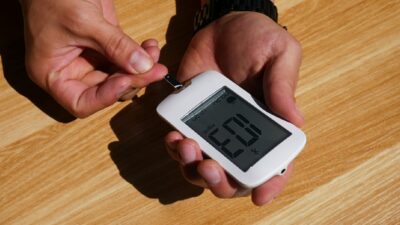
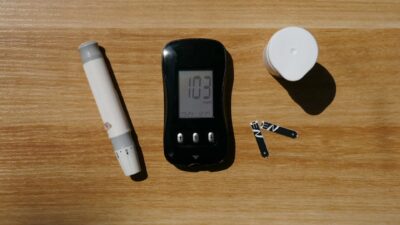
The agency’s concern: people with diabetes who relied on such devices could make dangerous insulin dosing decisions based on inaccurate readings. The FDA recommended using only FDA-cleared fingerstick meters or CGMs for actual glucose management. Read the full FDA safety communication here.
Oura itself has never claimed to measure glucose with the ring. The confusion typically arises from marketing by third-party apps that display CGM data in attractive ring-compatible interfaces, which can look like the ring is doing the measuring.
What the Oura Ring Actually Measures
The current-generation Oura ring (Gen 3 and Gen 4) contains a fairly standard sensor package:
- PPG (photoplethysmography) sensors — green, red, and infrared LEDs measure blood-volume changes to derive heart rate and HRV
- Negative temperature coefficient (NTC) sensors — measure skin temperature overnight
- 3D accelerometer — tracks movement and sleep position
- SpO2 sensor — estimates blood oxygen during sleep
From these raw signals, Oura derives daily scores for Sleep, Readiness, and Activity. None of the sensors can measure blood glucose. Glucose measurement requires either a blood sample (fingerstick) or interstitial fluid analysis (CGM) — technologies that do not fit into a ring form factor and have not been miniaturized to that level.
How the CGM Integration Actually Works
In 2024, Oura partnered with Dexcom to allow glucose data from the over-the-counter Stelo CGM to appear in the Oura app. The mechanics:
- You wear a Stelo sensor on your upper arm for 15 days
- Stelo transmits glucose data via Bluetooth to the Stelo app on your phone
- With user permission, Stelo shares that data with the Oura app
- Oura displays glucose trends alongside sleep, activity, and readiness scores
The benefit of this integration is contextual. Seeing a glucose spike next to a bad sleep score or low HRV day can help you connect patterns. But every data point is coming from the CGM, not from the ring. If you took the ring off, the glucose data would still flow from Stelo to the Oura app via the phone.
Why Non-Invasive Glucose Is So Hard
Several research groups have been working on non-invasive glucose monitoring for decades. The challenge is physical: glucose is chemically similar to other sugars and signals in the body, so distinguishing it through skin using light, radio waves, or electrical impedance is extremely difficult at clinically useful accuracy.
Candidate technologies include:
- Near-infrared spectroscopy — promising in lab but limited by skin pigmentation and hydration variability
- Raman spectroscopy — can detect glucose molecules but currently requires bulky equipment
- Tear fluid sensors — contact lens prototypes exist, none cleared
- Sweat analysis — glucose in sweat correlates poorly with blood glucose
- Ultrasound-based methods — research stage
Apple has reportedly been working on non-invasive glucose sensing for the Apple Watch since at least 2017 with no commercial launch. Samsung and Google have similar research programs. None have produced a product that meets the FDA’s accuracy threshold for glucose claims.
What Oura Signals Tell You About Metabolic Health
Even though Oura does not measure glucose, the data it collects has documented links to metabolic health:
| Oura Signal | Metabolic Health Relationship |
|---|---|
| Lower HRV (chronic) | Associated with insulin resistance and inflammation |
| Elevated resting heart rate | Linked to metabolic syndrome in prospective studies |
| Poor deep sleep | Worsens next-day insulin sensitivity |
| Elevated nighttime temperature | Can indicate inflammation, infection, or hormonal shifts |
| Low activity / steps | Major driver of insulin resistance |
These are circumstantial signals, not diagnostic ones. An Oura ring can highlight when your sleep or stress patterns are likely to make glucose worse, but it cannot tell you your fasting glucose number. For that, see our guide to the best glucose monitors and our A1C levels guide.
Should You Buy an Oura Ring for Metabolic Tracking?
If your primary goal is glucose data, no — buy a CGM. The ring cannot substitute.
If your goal is a broader picture of sleep, stress, and recovery, with optional integration of CGM data when you choose to wear one, the ring is a reasonable tool. Just budget for both devices separately. The Oura ring costs about 300 to 350 dollars plus an optional subscription. A Stelo CGM costs about 89 dollars per month.
The Bottom Line
Oura ring glucose is a misnomer. The ring itself does not measure blood sugar. What it can do is display glucose data streamed in from a separately worn CGM like Dexcom Stelo, alongside sleep, activity, and recovery metrics. The FDA has explicitly warned against any ring or watch that claims to measure glucose non-invasively. If you want real glucose data, you need a real glucose sensor. For guidance on picking one, see our prediabetes 101 hub.
This article is for educational purposes and does not replace personalized advice from your healthcare provider. Never make insulin or medication decisions based on data from a device that is not FDA-cleared for glucose measurement.