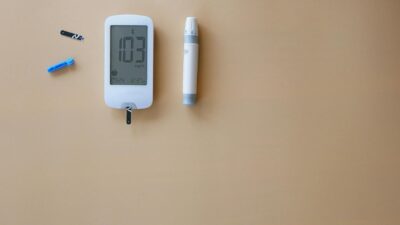
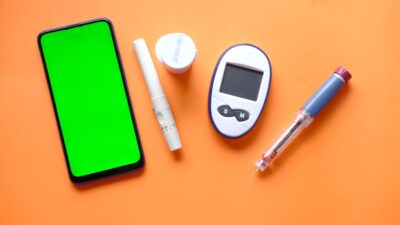
Blood glucose monitors are medical devices that measure the amount of sugar in your blood. There are two main types: fingerstick meters, which analyze a drop of capillary blood, and continuous glucose monitors (CGMs), which measure interstitial fluid glucose through a small sensor worn on the skin. Both are widely available, accurate when used correctly, and central to managing diabetes and prediabetes.
How Blood Glucose Monitors Work
Fingerstick meters use enzyme-coated test strips. When a drop of blood touches the strip, the glucose reacts with an enzyme (glucose oxidase or glucose dehydrogenase) to produce a tiny electrical current proportional to the glucose concentration. The meter measures that current and displays a reading in mg/dL (US) or mmol/L (most other countries). The process takes 5 to 10 seconds per test.
CGMs use a thin filament that sits in the interstitial fluid just under the skin. The sensor measures glucose every 1 to 15 minutes and transmits readings wirelessly to a reader or phone. Readings lag blood glucose by 5 to 15 minutes because interstitial fluid equilibrates with blood slowly, but the trend data is far richer than sparse fingersticks. For an overview of how prediabetes is detected in clinical practice, the underlying test principles are similar.
Meter vs. CGM at a Glance
The table below compares the two major categories on the dimensions most users care about.
| Feature | Fingerstick Meter | Continuous Glucose Monitor |
|---|---|---|
| How often you test | On demand; typically 1 to 8x daily | Automatic, every 1 to 15 minutes |
| Setup | Insert strip, fingerstick, apply drop | Apply sensor every 7 to 15 days |
| Typical upfront cost | $20 to $100 for the meter | $0 to $300 reader + $75 to $400/month sensors |
| Typical accuracy | Within 15% of lab (ISO 15197) | MARD 7 to 12% (lower is better) |
| Alerts and trends | No | Yes (high, low, rate-of-change) |
| Discomfort | Repeated fingersticks | One insertion every 7 to 15 days |
| Data export | Limited, often manual | Rich reports, time-in-range, app sharing |
Popular Fingerstick Meters
Widely used models include the Contour Next One, Accu-Chek Guide, OneTouch Verio Reflect, and FreeStyle Precision Neo. All meet ISO 15197:2013 accuracy standards, which require 95 percent of readings to fall within 15 mg/dL of lab values below 100 mg/dL, and within 15 percent above 100 mg/dL. Strip prices range widely, and generics (ReliOn at Walmart, for example) can cost a fraction of brand-name strips.
Popular Continuous Glucose Monitors
Current-generation CGMs include the Dexcom G7, Abbott FreeStyle Libre 3 and Libre 3 Plus, Dexcom Stelo (OTC), and Abbott Lingo (OTC). Prescription CGMs like Dexcom G7 and Libre 3 are typically covered by insurance for people with diabetes requiring intensive insulin therapy and are increasingly approved for broader populations, including gestational diabetes and non-insulin type 2. Over-the-counter options target people without diabetes who want to learn about their metabolic responses.
Accuracy and Its Limits
Meter and CGM accuracy is good but not perfect. Factors that introduce error include dirty fingers contaminated with residual sugar, very low or very high hematocrit, altitude extremes, temperature extremes, expired strips, and dehydration. CGM readings can be off during rapid glucose changes, during the first day of a new sensor, and under compression (lying on the sensor). Comparing readings to a lab value occasionally is a useful sanity check, especially when starting a new device.
According to the FDA, all US-marketed meters must meet strict accuracy and quality controls. Despite that, two meters testing the same blood drop can differ by 10 to 15 mg/dL and both be within specifications, which is worth knowing before assuming a single reading is gospel.
Who Should Use a Blood Glucose Monitor
People who use insulin (anyone with type 1 diabetes and many with type 2) need a reliable meter or CGM to guide doses and detect hypoglycemia. People with type 2 on oral medications often benefit from occasional testing to confirm whether meals, stress, or illness are affecting control. People with prediabetes can use a meter to learn how specific foods and activities influence their glucose, though CGMs reveal patterns more efficiently.
Pregnancy with gestational diabetes typically requires four daily fingersticks per obstetric guidelines. People with hypoglycemia unawareness or frequent lows often benefit dramatically from CGM alarms. Those tracking lifestyle changes linked to A1C levels can use either tool to stay motivated between quarterly lab tests.
Tips for Accurate Readings
- Wash hands with soap and water (not alcohol wipes) and dry thoroughly before testing.
- Use a fresh, properly stored strip; keep the vial closed except when in use.
- Get a hanging drop of blood, not a smear, and fill the strip in one touch.
- Test control solution monthly to confirm meter function.
- For CGMs, rotate sensor sites and avoid pressing on a freshly placed sensor.
Cost and Insurance
Out of pocket, strip costs can range from $0.15 to $1.50 each depending on brand and pharmacy. Most insurance plans and Medicare cover one meter and a set number of strips per month for people with diabetes; prior authorization is common for CGMs. OTC CGMs cost $50 to $90 per sensor with no prescription required.
The Bottom Line
Blood glucose monitors are an essential tool for managing diabetes and a useful one for people exploring prediabetes or metabolic health. Fingerstick meters are inexpensive and accurate for spot checks; continuous glucose monitors offer trend data and alerts that fingersticks cannot. Choose based on your diabetes type, insurance, and goals, and compare readings occasionally with a lab test to stay confident in the numbers.
Medical disclaimer: This article is for educational purposes only and is not a substitute for professional medical advice, diagnosis, or treatment. Always consult your physician or qualified healthcare provider with any questions about a medical condition or treatment.