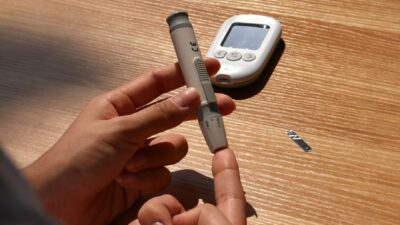
Dawn phenomenon and Somogyi effect both produce morning hyperglycemia in people with diabetes, but for opposite reasons. Dawn phenomenon is a hormonal glucose rise from early-morning cortisol and growth hormone. Somogyi effect is a rebound hyperglycemia after nocturnal hypoglycemia. The 3 AM glucose check (or a continuous glucose monitor overnight trace) distinguishes them — high at 3 AM points to dawn phenomenon, low at 3 AM points to Somogyi. Treatment is opposite: dawn phenomenon usually needs more or better-timed insulin, while Somogyi needs less. CGM data has shown that pure Somogyi is much rarer than textbooks once suggested.
Side-by-Side Comparison
| Feature | Dawn Phenomenon | Somogyi Effect |
|---|---|---|
| Underlying cause | Natural hormonal rise (cortisol, growth hormone, glucagon) | Rebound from nocturnal hypoglycemia |
| Timing of overnight pattern | Steady rise from ~2 AM to ~8 AM | Drop in early-mid night, then sharp rebound |
| 3 AM glucose | Normal or high | Low (typically below 70 mg/dL) |
| Morning fasting glucose | High | High |
| Hypoglycemia awareness | None overnight | May or may not wake the person |
| Population | Most people with type 1 or type 2 diabetes | Patients on insulin or sulfonylurea, especially with hypoglycemia unawareness |
| How common | Very common | Uncommon in CGM-era data |
| Treatment direction | Increase or retime basal insulin; evening exercise; metformin at bedtime | Decrease evening or basal insulin; bedtime snack; review of overall insulin regimen |
Dawn Phenomenon — Mechanism and Pattern
- Cortisol release peaks in the early morning hours (roughly 4 AM to 8 AM)
- Growth hormone also peaks overnight, especially in younger people
- Both hormones increase liver glucose output (gluconeogenesis and glycogenolysis)
- Increase insulin resistance in muscle
- Net effect: glucose rises from late night into morning
- In people without diabetes, pancreatic insulin increases to match — no fasting hyperglycemia
- In diabetes, insulin production or action lags, so glucose rises into fasting hyperglycemia
Somogyi Effect — Mechanism and Pattern
- Originally proposed by Michael Somogyi in the 1930s
- Sequence: too much insulin (or sulfonylurea) at bedtime → nocturnal hypoglycemia
- Counter-regulatory hormones (glucagon, epinephrine, cortisol, growth hormone) release
- Hormones drive glucose release from the liver, pushing morning glucose high
- The person wakes up “high” never knowing they were low at 2 AM
- CGM era: when researchers track glucose continuously overnight, pure Somogyi is found less often than older teaching suggested
How to Tell Them Apart
| Method | What You Do | What You See |
|---|---|---|
| 3 AM finger stick | Set alarm; check glucose for several nights | Low at 3 AM and high fasting = Somogyi; high at 3 AM and high fasting = dawn phenomenon |
| CGM overnight trace | Wear a CGM for 1-2 weeks; review AGP or daily traces | Continuous picture of overnight glucose; pattern is obvious |
| Symptom history | Ask about night sweats, vivid dreams, headaches on waking | Suggests nocturnal hypoglycemia (Somogyi-like) |
| Insulin regimen review | Look at evening rapid-acting dose, basal type and timing | Old NPH or twice-daily premix more prone to overnight peaks |
Why CGM Has Changed the Picture
- Continuous overnight data replaces single 3 AM snapshots
- Frequent rechecks would miss short hypoglycemic dips a CGM picks up
- Multiple studies show that morning highs are dawn phenomenon or just inadequate basal in the majority of cases
- Dexcom, Libre, and Eversense systems all show overnight traces
- Time-below-range data quantifies nocturnal hypoglycemia objectively
For deeper grounding on CGM metrics, see our guides to time in range and ambulatory glucose profile.
Treating Dawn Phenomenon
- Move long-acting basal insulin to bedtime (rather than dinner) so coverage peaks during the dawn rise
- Switch from NPH or older basal to ultra-long-acting (glargine U-300, degludec)
- Increase basal insulin slightly — under clinician guidance, with attention to mid-night safety
- Use an insulin pump with higher basal rate in the 2 AM to 8 AM window
- Evening physical activity (a 20-30 minute walk after dinner) improves overnight insulin sensitivity
- Lower-carbohydrate dinner may reduce a delayed peak
- Bedtime metformin can blunt morning hepatic glucose output
- Hybrid closed-loop pumps (Control-IQ, MiniMed 780G, Omnipod 5) automatically increase basal as glucose rises
Treating Somogyi Effect
- Decrease evening basal insulin (or basal segment from midnight to 4 AM on pump)
- Avoid late-evening rapid-acting insulin or correction doses
- Small bedtime snack with protein and slow carbs if hypoglycemic pattern is mild
- Re-evaluate the entire insulin regimen — total daily dose may be excessive
- Address hypoglycemia unawareness with strict avoidance of lows for 2-4 weeks
- Confirm Somogyi pattern with CGM before lowering insulin — reducing basal in dawn-phenomenon patient worsens morning highs
When to Call Your Diabetes Provider
- Persistently high morning glucose despite stable bedtime numbers
- Nocturnal hypoglycemia (overnight CGM lows, vivid dreams, sweating, headache)
- Sudden change in fasting pattern
- Recent changes in insulin, weight, illness, or activity
- Before adjusting insulin yourself — small changes can cascade
Common Misconceptions
- “I should always lower my evening insulin if my morning is high” — only true for Somogyi, dangerous for dawn phenomenon
- “Dawn phenomenon means my diabetes is worse” — it is a normal hormonal pattern, more visible when basal insulin or beta-cell reserve is limited
- “A bedtime snack will fix everything” — only useful in selected nocturnal hypoglycemia cases
- “3 AM testing is the only way to tell” — CGM has largely replaced overnight finger sticks
Related Reading
For comparison-type diabetes topics in this batch, see ketosis vs ketoacidosis and type 1 vs type 2 diabetes. For symptom and management context, see symptoms of prediabetes and our treatment hub.
The Bottom Line
Dawn phenomenon and Somogyi effect look the same in the morning but have opposite causes and opposite treatments. Dawn phenomenon is a normal hormonal glucose rise that needs more or better-timed insulin. Somogyi effect is a rebound from nocturnal hypoglycemia that needs less evening insulin. The 3 AM glucose check or — much better — a continuous glucose monitor distinguishes them. CGM data has shown that pure Somogyi is uncommon, and most persistent morning highs are dawn phenomenon or simply inadequate overnight basal coverage. Before adjusting insulin, confirm the pattern with at least several nights of data and work with your diabetes team to make changes safely.