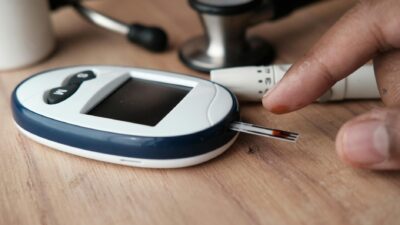
Diabetes and insomnia are bidirectional. Poor sleep worsens insulin resistance — one night of partial sleep loss can drop insulin sensitivity by about 30 percent. Diabetes causes insomnia through nocturia, neuropathy pain, restless legs, hypoglycemia fear, and frequently undiagnosed sleep apnea. The sleep duration sweet spot for metabolic health is 7 to 8 hours; under 6 or over 9 hours both correlate with worse A1C. Cognitive Behavioral Therapy for Insomnia (CBT-I) is first-line treatment. Medications such as melatonin, low-dose doxepin, ramelteon, and suvorexant are options when CBT-I is insufficient.
The Bidirectional Link
How Poor Sleep Worsens Diabetes
- Reduces insulin sensitivity in muscle and liver
- Raises evening cortisol, increasing morning hyperglycemia
- Decreases leptin (satiety hormone) and increases ghrelin (hunger hormone)
- Increases caloric intake the next day by 300 to 500 kcal on average
- Reduces motivation for exercise
- Activates sympathetic nervous system
- Raises inflammatory markers (CRP, IL-6, TNF-alpha)
How Diabetes Causes Insomnia
- Nocturia from osmotic diuresis when blood sugar is high
- Nocturia from SGLT2 inhibitors (often improves after first 4 to 6 weeks)
- Peripheral neuropathy pain — burning, tingling worse at night
- Restless legs syndrome (RLS) more common in diabetes
- Nocturnal hypoglycemia — sweating, racing heart, vivid dreams
- Fear of hypoglycemia keeping people from sleeping deeply
- Obstructive sleep apnea
- Gastroparesis — fullness, reflux, nausea
- Atrial fibrillation episodes
- Depression and anxiety
- Polyuria/polydipsia in poorly controlled diabetes
Sleep Duration and A1C
| Sleep Duration | Association |
|---|---|
| Under 5 hours | Higher A1C, weight gain, CV risk |
| 5 to 6 hours | Moderately worse insulin sensitivity |
| 7 to 8 hours | Optimal — lowest metabolic and CV risk |
| 9 to 10 hours | U-shaped curve — higher CV and depression risk |
| More than 10 hours | Higher mortality (often marker of other illness) |
Defining Insomnia
- Difficulty falling asleep (sleep-onset insomnia)
- Difficulty staying asleep (sleep-maintenance insomnia)
- Waking too early (terminal insomnia)
- Non-restorative sleep
- Daytime impairment — fatigue, cognitive, mood, social, occupational
- Chronic insomnia: at least 3 nights per week for 3 months or more
- Acute (adjustment) insomnia: less than 3 months — often resolves with stressor resolution
Screening Tools
- Insomnia Severity Index (ISI) — 7 items; score 0 to 28; ≥15 indicates clinically significant insomnia
- Pittsburgh Sleep Quality Index (PSQI) — 19 items; score above 5 = poor sleep
- Epworth Sleepiness Scale (ESS) — daytime sleepiness; ≥10 suggests excessive sleepiness
- STOP-BANG — obstructive sleep apnea screen
- Sleep diary for 1 to 2 weeks — bedtime, sleep latency, awakenings, wake time, naps
- Consumer wearables (Oura, Apple Watch, Fitbit) — useful for trends, not diagnostic
Cognitive Behavioral Therapy for Insomnia (CBT-I)
Components
- Sleep restriction therapy — limit time in bed to actual sleep time to consolidate sleep, then gradually expand
- Stimulus control — bed only for sleep and sex; get out of bed if not asleep within 15 to 20 minutes
- Cognitive restructuring — challenge unhelpful beliefs (“I must get 8 hours or I will fail tomorrow”)
- Relaxation training — progressive muscle relaxation, paced breathing, mindfulness
- Sleep hygiene education
- Typically 4 to 8 weekly sessions; effects often persist for years
Delivery Options
- In-person with trained psychologist or sleep specialist
- Telehealth CBT-I
- App-based: CBT-i Coach (free, US Department of Veterans Affairs), Somryst (prescription), Sleepio
- Self-help workbooks
- Group CBT-I sessions
Sleep Hygiene Foundations
- Consistent wake time every day, including weekends
- Limit caffeine after noon (half-life 5 to 7 hours)
- Avoid alcohol within 3 hours of bedtime (worsens sleep architecture and apnea)
- Stop heavy meals 2 to 3 hours before bed
- Cool bedroom (60 to 67 degrees F)
- Dark room (blackout curtains or eye mask)
- Quiet environment or white noise
- Limit screens 1 hour before bed (blue light suppresses melatonin)
- Wind-down routine: reading, stretching, warm shower
- Limit naps to under 30 minutes and before 3 pm
- Regular daytime exercise — but not within 3 hours of bedtime
- Morning sunlight exposure for circadian alignment
Medications
| Drug | Mechanism | Notes |
|---|---|---|
| Melatonin (0.5 to 5 mg) | Circadian phase shift | OTC; best for jet lag, shift work, sleep-onset; few side effects |
| Ramelteon (Rozerem) | Melatonin receptor agonist | Sleep-onset insomnia; minimal dependence risk |
| Doxepin low-dose (Silenor 3 to 6 mg) | Histamine antagonist | Sleep-maintenance; very low dose has minimal anticholinergic effects |
| Suvorexant (Belsomra), lemborexant (Dayvigo) | Orexin receptor antagonist | Lower morning sedation; controlled substance schedule IV |
| Trazodone (off-label 25 to 100 mg) | 5HT2A/H1 antagonist | Common off-label use; orthostatic hypotension risk in elderly |
| Mirtazapine (off-label 7.5 to 15 mg) | Antihistamine, serotonergic | Useful if comorbid depression; weight gain |
| Zolpidem (Ambien) | GABA-A modulator | Beers list — avoid in older adults; complex sleep behaviors; dependence |
| Eszopiclone (Lunesta) | GABA-A modulator | Similar cautions to zolpidem |
| Temazepam (Restoril) | Benzodiazepine | Beers list — avoid in older adults; dependence, falls |
| Diphenhydramine (Benadryl, PM products) | Antihistamine | Avoid in older adults — anticholinergic, falls, cognitive impairment |
Treating Diabetes-Specific Sleep Disruptors
Nocturia
- Improve glycemic control to reduce osmotic diuresis
- Shift SGLT2 inhibitor dose to morning if causing nocturia
- Stop fluid intake 2 to 3 hours before bed
- Limit alcohol and caffeine
- Evaluate for prostate (men) or pelvic floor (women) issues
Peripheral Neuropathy Pain
- Gabapentin, pregabalin at bedtime
- Duloxetine
- Amitriptyline (low dose) — caution in older adults
- Topical capsaicin or lidocaine
- Glycemic optimization
Restless Legs Syndrome
- Check ferritin — supplement if below 75 ng/mL
- Avoid triggers (alcohol, caffeine, certain antidepressants)
- Gabapentin, pregabalin, or gabapentin enacarbil
- Dopamine agonists (ropinirole, pramipexole) — risk of augmentation; second-line
Hypoglycemia Fear
- Continuous glucose monitor (CGM) with alarms
- Bedtime snack if pre-bed glucose under 100 mg/dL
- Adjust evening insulin dosing
- Switch from sulfonylurea to non-hypoglycemic agent if possible
- CBT for fear of hypoglycemia
Gastroparesis
- Smaller, more frequent meals; finish 3 hours before bed
- Avoid high-fat and high-fiber foods late in day
- Elevate head of bed
- Prokinetic agents per clinician
Sleep Apnea — Don’t Miss It
- Estimated 70 percent of people with T2D have OSA
- Symptoms often mistaken for insomnia: frequent awakenings, fatigue, morning headache
- Screen with STOP-BANG — score ≥3 warrants home sleep apnea test or polysomnography
- CPAP therapy improves both sleep and A1C
Substances to Reconsider
- Alcohol — initially sedating but fragments later sleep and worsens apnea
- Cannabis — chronic use can reduce REM and disrupt sleep architecture
- Caffeine — even afternoon coffee can affect sensitive sleepers
- Nicotine — stimulant; smokers have lighter, more fragmented sleep
- Stimulant medications (ADHD drugs) — adjust timing with prescriber
- Steroids (prednisone) — take in the morning when possible
- Beta agonists (asthma inhalers) — avoid evening if causing arousal
- Some antidepressants (SSRIs, bupropion) — may need dose timing adjustment
When to See a Sleep Specialist
- Chronic insomnia not responding to CBT-I or medication
- Suspected sleep apnea (positive STOP-BANG)
- Severe restless legs unresponsive to first-line therapy
- Parasomnias (sleep walking, REM behavior disorder)
- Narcolepsy symptoms (excessive daytime sleepiness, cataplexy)
- Circadian rhythm disorders (delayed sleep phase, shift work disorder)
- Excessive daytime sleepiness despite adequate time in bed
Related Reading
See our overviews on complications and related conditions, diabetes and CPAP for sleep apnea, and cortisol, stress, and blood sugar. The American Academy of Sleep Medicine publishes practice guidelines on insomnia and other sleep disorders.
The Bottom Line
Insomnia and diabetes feed each other. Sleep loss reduces insulin sensitivity quickly — even one short night can drop sensitivity by about 30 percent. Diabetes contributes to insomnia through nocturia, neuropathy pain, restless legs, hypoglycemia fear, and often undiagnosed sleep apnea. The sleep sweet spot is 7 to 8 hours; both under 6 and over 9 hours correlate with worse outcomes. Cognitive Behavioral Therapy for Insomnia is first-line treatment — available in person, via telehealth, and through apps such as CBT-i Coach (free). Medication options include melatonin, low-dose doxepin, ramelteon, and suvorexant; benzodiazepines and Z-drugs are avoided in older adults due to fall and cognitive risks. Screen for sleep apnea and address diabetes-specific disruptors (nocturia, neuropathy, hypoglycemia) directly. Talk to your doctor about a sleep plan if insomnia is persistent.