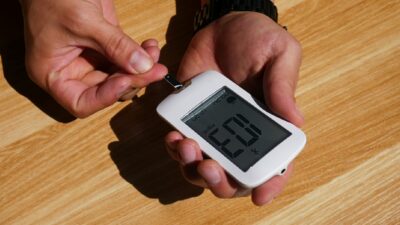
Hashimoto’s thyroiditis affects 25 to 30 percent of people with type 1 diabetes, making it the most common companion autoimmune disease. The two conditions share HLA genetic susceptibility and cluster as part of autoimmune polyendocrine syndrome type 2. Anti-TPO antibodies often appear years before TSH rises. The ADA recommends thyroid screening at T1D diagnosis and annually thereafter, especially if antibodies are positive. Levothyroxine treats overt hypothyroidism and frequently stabilizes erratic glucose control.
Why Hashimoto’s Clusters with Type 1 Diabetes
Type 1 diabetes and Hashimoto’s thyroiditis are both T-cell-mediated autoimmune diseases that target endocrine glands. They share:
- HLA susceptibility — DR3 and DR4 haplotypes raise risk for both
- Non-HLA susceptibility genes — CTLA-4, PTPN22, others
- Immune dysregulation — loss of self-tolerance to organ-specific antigens
- Environmental triggers — viral infections, vitamin D status, microbiome shifts
- Female predominance — both conditions are more common in women
The combined presentation is described as autoimmune polyendocrine syndrome type 2 (APS-2), the most common polyglandular syndrome.
How Common Is the Overlap?
| Population | Hashimoto’s / Positive Anti-TPO |
|---|---|
| General adult population | ~5 to 10% positive anti-TPO |
| Adults with type 1 diabetes | ~25 to 30% Hashimoto’s; up to 40% anti-TPO positive |
| Children with type 1 diabetes | ~10 to 20% develop Hashimoto’s within 10 years |
| Women with type 1 diabetes > 35 years | ~30 to 40% |
| Family members of T1D patients | ~15 to 20% anti-TPO positive |
Other Autoimmune Diseases That Cluster Here
| Disease | Approximate Prevalence in T1D |
|---|---|
| Hashimoto’s thyroiditis | 25 to 30% |
| Graves’ disease | 1 to 3% |
| Celiac disease | 5 to 10% |
| Addison’s disease (primary adrenal insufficiency) | ~0.5% |
| Pernicious anemia / atrophic gastritis | ~2 to 5% |
| Vitiligo | ~5 to 10% |
| Premature ovarian insufficiency | ~2 to 5% |
How Hashimoto’s Develops
- Loss of self-tolerance — T cells begin to recognize thyroid antigens as foreign.
- Antibody production — B cells make anti-TPO and anti-thyroglobulin antibodies.
- Lymphocytic infiltration — the thyroid is gradually infiltrated and destroyed.
- Subclinical hypothyroidism — TSH rises while free T4 remains normal.
- Overt hypothyroidism — free T4 falls; symptoms appear.
The progression from positive antibodies to overt disease can take 5 to 20 years; some patients never progress.
Symptoms of Hashimoto’s in a Person with T1D
- Fatigue beyond what diabetes alone would cause
- Cold intolerance
- Weight gain or difficulty losing weight
- Dry skin and hair thinning
- Constipation
- Heavy or irregular menstrual periods
- Depression or slowed thinking
- Increased frequency of unexplained hypoglycemia (from delayed insulin clearance)
- Worsening lipid panel
- Bradycardia
Screening Tests
| Test | Purpose |
|---|---|
| TSH | First-line screen for thyroid dysfunction |
| Free T4 | Confirms hypothyroidism if TSH elevated |
| Anti-TPO antibodies | Confirms Hashimoto’s; appears years before TSH rises |
| Anti-thyroglobulin antibodies | Adjunct; positive in many Hashimoto’s patients |
| Thyroid ultrasound | Heterogeneous “lymphocytic infiltration” pattern |
| Tissue transglutaminase IgA | Screen for coexisting celiac disease |
| Vitamin B12, intrinsic factor antibodies | Pernicious anemia screen if indicated |
| Morning cortisol | Screen for Addison’s if symptoms suggest |
Treatment with Levothyroxine
- Start dose typically 1.6 mcg/kg/day in healthy adults; lower starting dose in elderly or cardiac disease
- Take on empty stomach, 30 to 60 minutes before breakfast
- Separate from calcium, iron, fiber, antacids, and metformin by 4 hours
- Recheck TSH at 6 to 8 weeks after starting or dose change
- Target TSH usually 0.5 to 2.5 mIU/L in young to middle-aged adults; up to 4 to 5 in older adults
- Dose may increase over years as thyroid destruction progresses
- Pregnancy typically requires a 30 percent dose increase by 6 weeks gestation
How Levothyroxine Changes Diabetes Management
| Before Treatment | After Treatment |
|---|---|
| Slowed insulin clearance | Normal clearance — may need slightly more insulin |
| Delayed gastric emptying | Normal emptying — postprandial spikes may shift |
| Elevated LDL cholesterol | Often normalizes |
| Unexplained hypoglycemia | Resolves in many patients |
| Weight gain | Modest weight loss as metabolism normalizes |
| Fatigue | Energy improves over weeks to months |
What to Monitor
- TSH every 6 to 12 months once stable; sooner after dose changes
- Free T4 if TSH abnormal
- Anti-TPO antibodies — not routinely repeated once positive
- Annual lipid panel
- A1C and continuous glucose monitor patterns — reassess insulin needs
- Screen for other autoimmune diseases periodically (celiac, B12, adrenal as indicated)
- Vitamin D status — often low in autoimmune disease
Subclinical Hashimoto’s — Treat or Watch?
Subclinical hypothyroidism (elevated TSH, normal free T4) in T1D is common. Treatment thresholds vary:
- TSH ≥ 10 mIU/L — generally treat regardless of symptoms
- TSH 4.5 to 10 mIU/L with symptoms — often treat
- TSH 4.5 to 10 mIU/L without symptoms — observe; recheck in 3 to 6 months
- Pregnancy or trying to conceive — lower threshold (treat if TSH > 2.5)
- Anti-TPO positive — more likely to progress; closer monitoring
Discuss the trade-offs with an endocrinologist; not every patient benefits from treatment of subclinical disease.
Special Populations
- Children and adolescents with T1D: Up to 1 in 5 develop Hashimoto’s by age 18; annual TSH and anti-TPO are standard.
- Pregnancy: Untreated hypothyroidism raises miscarriage, preeclampsia, and developmental delay risk. Target TSH < 2.5 in the first trimester.
- Latent autoimmune diabetes of adults (LADA): Hashimoto’s coexistence is common; antibody screening is reasonable.
Related Conditions to Be Aware Of
Because autoimmune diseases cluster, anyone with T1D plus Hashimoto’s deserves periodic surveillance for celiac disease (tissue transglutaminase IgA), pernicious anemia (vitamin B12, intrinsic factor antibodies), Addison’s disease (morning cortisol), and vitiligo. See our complications hub for the broader picture and our diabetes and thyroid foundation piece.
Related Reading
For broader thyroid context, see hypothyroidism and diabetes, thyroid and blood sugar, and Graves disease and diabetes. Patient resources are available at American Thyroid Association.
The Bottom Line
Hashimoto’s thyroiditis is the most common second autoimmune disease in type 1 diabetes, affecting 25 to 30 percent of patients. They share HLA susceptibility, cluster in autoimmune polyendocrine syndrome type 2, and amplify each other’s metabolic effects. Annual TSH (and anti-TPO at diagnosis) is now standard screening. Levothyroxine restores euthyroid status and usually stabilizes glucose patterns and lipids. Anyone with type 1 diabetes who has not had thyroid screening or has new fatigue, weight change, or unexplained hypoglycemia should ask their endocrinologist about thyroid testing.