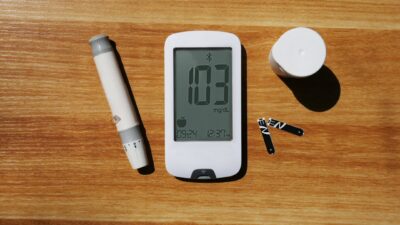
Cushing’s-induced diabetes is hyperglycemia caused by endogenous excess cortisol from Cushing’s syndrome. It occurs in roughly 30 to 60 percent of Cushing’s patients and shares mechanisms with steroid-induced diabetes — but persists until the underlying cortisol excess is corrected. Successful treatment of Cushing’s frequently improves or resolves the diabetes.
What Is Cushing’s Syndrome?
Cushing’s syndrome is the clinical state of chronic excess cortisol. The cortisol can come from:
- A benign pituitary adenoma secreting ACTH (Cushing’s disease — the most common endogenous form, ~70 percent)
- An adrenal cortisol-producing adenoma or carcinoma (~20 percent)
- An ectopic ACTH-producing tumor (often small-cell lung cancer, bronchial or thymic carcinoid, medullary thyroid cancer — ~10 percent)
- Adrenal hyperplasia (rare)
Exogenous cortisol excess from medical glucocorticoids is sometimes called iatrogenic Cushing’s syndrome — for that form, see our companion guide on steroid-induced diabetes. The mechanisms of glucose disturbance are similar; the difference is whether the cortisol source is endogenous or exogenous.
How Cushing’s Causes Diabetes
- Increased hepatic gluconeogenesis — cortisol upregulates PEPCK and glucose-6-phosphatase
- Reduced peripheral glucose uptake — impaired insulin signaling in skeletal muscle and adipose tissue
- Impaired beta-cell insulin secretion
- Visceral adiposity — independently worsens insulin resistance
- Possible direct effects on the gut microbiome and incretin signaling
Who Gets Diabetes from Cushing’s
| Factor | Effect on Diabetes Risk |
|---|---|
| Severity of hypercortisolism | Higher cortisol — higher risk |
| Duration of disease | Years of cortisol excess increase risk |
| Age | Older age increases risk |
| Family history of type 2 diabetes | Predisposes |
| Pre-existing obesity or insulin resistance | Predisposes |
| Ethnic background | Higher risk in some populations |
| Female sex | Cushing’s more common in women |
Clinical Features
Cushing’s syndrome has a recognizable clinical picture beyond hyperglycemia:
- Central obesity with relatively thin arms and legs
- Rounded “moon” face with facial plethora (red cheeks)
- Dorsocervical fat pad (“buffalo hump”)
- Supraclavicular fat pads
- Wide purple striae (>1 cm) on the abdomen, thighs, axilla, or breasts
- Easy bruising and thin, fragile skin
- Proximal muscle weakness — difficulty climbing stairs or rising from a chair
- Hypertension
- Osteoporosis with vertebral fractures
- Mood changes — depression, anxiety, irritability, occasional psychosis
- Menstrual irregularities or impotence
- Hirsutism and acne
- Recurrent infections
- Hyperglycemia or overt diabetes
When to Suspect Cushing’s
Diabetes alone is not a sensible trigger for Cushing’s workup — it is too common. But the combination of diabetes plus characteristic features should prompt screening:
- Diabetes with progressive central obesity, purple striae, easy bruising, and proximal muscle weakness
- Diabetes plus uncontrolled hypertension and hypokalemia
- Resistant diabetes requiring escalating insulin doses without obesity changes that explain it
- Young patient with diabetes, osteoporosis, and unexplained features
- Adrenal mass found incidentally on imaging
Diagnosis
First-Line Cortisol Testing
| Test | What It Measures |
|---|---|
| 24-hour urinary free cortisol | Total free cortisol excreted in a day — elevated in Cushing’s |
| Late-night salivary cortisol | Salivary cortisol at 11 pm — loss of diurnal nadir in Cushing’s |
| Overnight 1 mg dexamethasone suppression test | Cortisol after 1 mg dexamethasone at 11 pm — fails to suppress in Cushing’s |
The Endocrine Society recommends at least two of these tests be abnormal before confirming hypercortisolism.
Pseudo-Cushing’s Differential
- Alcohol use disorder
- Severe depression
- Severe obesity
- Chronic kidney disease
- Glucocorticoid resistance (rare)
- Pregnancy (third trimester elevations)
- Use of estrogen or oral contraceptives (raises CBG and total cortisol)
The dexamethasone-CRH stimulation test or low-dose dexamethasone followed by CRH helps distinguish true Cushing’s from pseudo-Cushing’s.
Source Identification
- ACTH level — low in adrenal Cushing’s, high or normal in pituitary or ectopic disease
- High-dose dexamethasone suppression — pituitary tumors usually suppress, ectopic ACTH usually does not
- Pituitary MRI — adenomas are often small and may not be visible
- Adrenal CT — for ACTH-independent disease
- Inferior petrosal sinus sampling — gold standard for pituitary vs ectopic ACTH
- Whole-body imaging for ectopic source — CT chest/abdomen/pelvis, sometimes Ga-68 DOTATATE PET
Treatment
Treating the Underlying Cushing’s
- Transsphenoidal pituitary surgery — first-line for Cushing’s disease
- Adrenalectomy — for adrenal adenomas or carcinomas
- Surgical resection of the ectopic tumor when localized
- Bilateral adrenalectomy — last-resort definitive cortisol reduction
- Pituitary radiation — when surgery is incomplete or recurrent
Medical Cortisol-Lowering Agents
| Drug | Mechanism |
|---|---|
| Pasireotide | Somatostatin analog — reduces ACTH from pituitary adenomas |
| Cabergoline | Dopamine agonist — modest effect in Cushing’s disease |
| Ketoconazole | Inhibits adrenal cortisol synthesis |
| Metyrapone | Inhibits 11-beta-hydroxylase, blocks cortisol synthesis |
| Osilodrostat | Newer 11-beta-hydroxylase inhibitor |
| Mifepristone | Glucocorticoid receptor antagonist — approved specifically for Cushing’s-related hyperglycemia |
| Etomidate (IV) | Rapid cortisol reduction in severely ill inpatients |
Pasireotide and mifepristone in particular have specific Cushing’s-related hyperglycemia data — pasireotide can actually worsen glucose itself, so close monitoring is needed.
Diabetes Management Alongside Cushing’s Treatment
- Lifestyle — diet, physical activity (see diet and nutrition)
- Metformin — first-line oral agent
- GLP-1 receptor agonists — useful for both glucose and weight
- SGLT2 inhibitors — useful, with caution about volume status
- Insulin — often required during active hypercortisolism
- Doses adjusted downward after cortisol-lowering treatment begins to work
What to Expect After Cushing’s Cure
- Diabetes often improves within weeks to months
- Approximately 30 to 60 percent achieve diabetes remission
- Persistent diabetes is more likely with longer disease duration, older age, family history, or baseline obesity
- Blood pressure, weight, lipids, and bone density typically improve
- Adrenal insufficiency may follow successful pituitary surgery — requires temporary glucocorticoid replacement
For background on diabetes remission concepts, see is prediabetes reversible?.
Complications
Untreated or poorly controlled Cushing’s syndrome carries substantial morbidity and mortality:
- Cardiovascular disease — myocardial infarction, stroke, heart failure
- Venous thromboembolism — Cushing’s is a prothrombotic state
- Osteoporosis and vertebral fractures
- Infections — opportunistic and severe
- Standard diabetes microvascular complications if hyperglycemia persists — see complications and related conditions
- Psychiatric complications — depression, suicide risk
Prevention
Cushing’s syndrome itself cannot generally be prevented, but its complications — including diabetes — can be reduced by:
- Early diagnosis — heightened awareness in patients with clinical features
- Prompt referral to endocrinology for confirmatory testing
- Definitive treatment as soon as feasible
- Aggressive glycemic, blood pressure, and lipid management during the active phase
- Bone protection (calcium, vitamin D, bisphosphonates)
- Thromboprophylaxis around surgery
Related Reading
See our companion guides on steroid-induced diabetes, secondary diabetes, type 3c pancreatogenic diabetes, and the prediabetes basics hub.
The Bottom Line
Cushing’s-induced diabetes is hyperglycemia caused by endogenous cortisol excess. It occurs in 30 to 60 percent of Cushing’s patients and shares mechanisms with steroid-induced diabetes. Recognition requires noticing the characteristic clinical features — central obesity, moon face, wide purple striae, easy bruising, proximal muscle weakness — alongside diabetes. Diagnosis combines 24-hour urinary free cortisol, late-night salivary cortisol, and dexamethasone suppression testing. Treatment of the underlying Cushing’s — usually surgical — frequently improves or resolves the diabetes. Talk to an endocrinologist if features of Cushing’s syndrome appear with new or worsening diabetes.