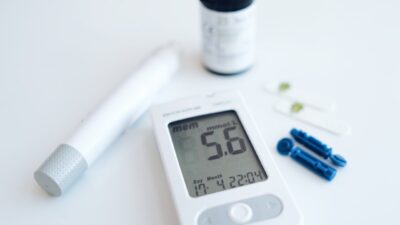
A blood sugar of 240 mg/dL is clearly in the hyperglycemia range — well above the typical post-meal upper bound of 180 mg/dL that the American Diabetes Association cites for most adults with diabetes. The clinical meaning depends on timing (fasting versus post-meal), symptoms, ketone status, and whether the reading is isolated or part of a pattern. For most people, 240 is a signal to act — not always to panic, but always to take it seriously.
What a Blood Sugar of 240 Means
To put 240 mg/dL in context:
- Fasting target for most adults with diabetes: 80 to 130 mg/dL
- 2-hour post-meal target for most adults with diabetes: below 180 mg/dL
- 240 fasting: well above target, indicates poor control or new diabetes
- 240 two hours after a meal: above target but less concerning than the same reading fasting
- 240 with symptoms (thirst, urination, nausea, rapid breathing): may indicate DKA in type 1 diabetes
Blood Sugar 240 in Context
| Reading (mg/dL) | Classification | Typical Response |
|---|---|---|
| Below 70 | Hypoglycemia | Fast-acting carbs immediately |
| 70 to 130 | Fasting target range | Usual routine |
| 131 to 180 | At or near target post-meal | Usual routine |
| 181 to 239 | Hyperglycemia — above target | Hydration, recheck, identify driver |
| 240 to 299 | Hyperglycemia — clearly diabetic range | Hydration, correction insulin if prescribed, ketone check (T1D) |
| 300 to 399 | Severe hyperglycemia | Same-day clinical contact if persistent |
| 400 or higher | Very severe hyperglycemia | Urgent evaluation; ER if symptomatic |
How Accurate Is a 240 Reading?
Home blood glucose meters that meet ISO 15197:2013 standards must be within plus or minus 15 percent of a reference laboratory value 95 percent of the time at glucose levels of 100 mg/dL and above. At a reported reading of 240 mg/dL, this means the true value could plausibly be anywhere from roughly 204 to 276 mg/dL. Sources of error include:
- Improper hand washing — residue from sugary food or drink on the finger
- Test strips stored outside temperature range or past expiration
- Inadequate blood sample size
- Hematocrit extremes
- Severe dehydration
If a high reading does not match how you feel — for example, you feel fine but get 240 — re-test with a different finger after washing your hands, or compare with a continuous glucose monitor reading.
A1C Equivalent
If your typical readings cluster around 240 mg/dL, your A1C is likely in the very poor control range. Single high readings do not equal high A1C — context matters.
| Average Glucose (mg/dL) | Estimated A1C (%) |
|---|---|
| 154 | 7.0 |
| 183 | 8.0 |
| 212 | 9.0 |
| 240 | 10.0 |
| 269 | 11.0 |
| 298 | 12.0 |
What to Do When Your Reading Is 240
- Hydrate. Drink water — high glucose drives fluid loss through urine.
- Avoid adding carbs. Skip sugary drinks, fruit juice, and starchy snacks until the reading comes down.
- Check ketones (if type 1 diabetes). Urine or blood ketone strips. Moderate to large ketones with glucose 240 or higher is a signal for urgent evaluation.
- Use your correction dose if you have a doctor-prescribed insulin correction factor.
- Move, if safe. A light walk can help bring glucose down, but avoid strenuous exercise with ketones present.
- Recheck in 1 to 2 hours. If still 240 or higher, repeat correction if prescribed; contact your care team if the reading persists or rises.
- Identify the driver. Large meal, missed dose, illness, steroid use, stress, sleep deprivation, or a new medication can all spike glucose.
When to Seek Urgent Care
Seek same-day or emergency care if a 240 reading is accompanied by:
- Persistent glucose 240 or higher despite usual treatment
- Moderate to large ketones (type 1 diabetes)
- Nausea, vomiting, or abdominal pain
- Rapid or labored breathing
- Fruity-smelling breath
- Confusion, drowsiness, or altered mental status
- Severe dehydration or inability to keep fluids down
- Chest pain or shortness of breath
Adjacent Glucose Values
- Versus blood sugar 260: Higher; same diabetic range, similar management — see blood sugar 260.
- Versus blood sugar 500: Much higher; emergency range — see blood sugar 500.
- A1C equivalent: Approximately 10.0 percent if sustained — see A1C 9.5.
Related Reading
See our broader guides on detecting prediabetes and diabetes, diabetes treatment, and diabetes complications.
The Bottom Line
A blood sugar of 240 mg/dL is clearly hyperglycemic — well above the 180 mg/dL post-meal target. The right response depends on timing, symptoms, ketone status (especially in type 1 diabetes), and whether it is a one-off or a pattern. Hydrate, avoid adding carbs, check ketones if type 1, use your correction dose if prescribed, and recheck in 1 to 2 hours. Persistent readings at this level mean it is time to contact your care team for a treatment review.