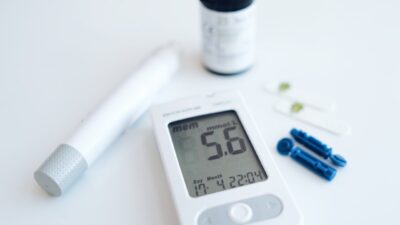
A blood sugar of 500 mg/dL is severely hyperglycemic and, for most people, a medical emergency. In type 1 diabetes, it commonly signals diabetic ketoacidosis (DKA). In older adults with type 2 diabetes, it can signal hyperosmolar hyperglycemic state (HHS). Both are life-threatening and require emergency care. Even when symptoms seem mild, a reading at this level warrants urgent clinical evaluation — same-day, not next week.
What a Blood Sugar of 500 Means
Context for 500 mg/dL:
- Fasting target for most adults with diabetes: 80 to 130 mg/dL
- 2-hour post-meal target for most adults with diabetes: below 180 mg/dL
- 500 is roughly 4 times the fasting target and 2.5 times the post-meal target
- Symptoms of hyperglycemia (thirst, urination, fatigue, blurred vision) are usually present
- DKA risk in type 1 diabetes is meaningful; HHS risk in older type 2 diabetes is meaningful
Blood Sugar 500 in Context
| Reading (mg/dL) | Classification | Typical Response |
|---|---|---|
| Below 70 | Hypoglycemia | Fast-acting carbs immediately |
| 70 to 180 | Target range | Usual routine |
| 181 to 239 | Hyperglycemia — above target | Hydration, recheck, identify driver |
| 240 to 299 | Hyperglycemia — clearly diabetic | Correction dose if prescribed, ketone check (T1D) |
| 300 to 399 | Severe hyperglycemia | Same-day clinical contact |
| 400 to 499 | Very severe hyperglycemia | Urgent evaluation; ER if symptomatic |
| 500 or higher | Extreme hyperglycemia — emergency in most contexts | ER or 911 if symptomatic or any ketones in T1D |
Diabetic Ketoacidosis (DKA) and HHS
Two life-threatening hyperglycemic crises associated with very high glucose:
| DKA | HHS | |
|---|---|---|
| Typical diabetes type | Type 1 (sometimes type 2) | Type 2, especially older adults |
| Typical glucose | Often 250 to 600 mg/dL | Often 600 or higher |
| Ketones | Moderate to large | Usually absent or small |
| Onset | Hours to a day | Days to weeks |
| Key symptoms | Nausea, vomiting, abdominal pain, rapid breathing, fruity breath | Severe dehydration, altered mental status, weakness |
| Mortality without treatment | Significant | Significant — higher than DKA |
| Treatment | IV fluids, IV insulin, electrolyte replacement | IV fluids, IV insulin, electrolyte replacement |
How Accurate Is a 500 Reading?
Home glucose meter accuracy can degrade at the extremes of the measurable range. Many consumer meters either display “HI” rather than a specific number above 500 or 600 mg/dL, or carry an explicit accuracy warning at the high end. Sources of error include:
- Meter at or near top of measurable range
- Sugary residue on the finger
- Severe dehydration affecting capillary blood
- Extreme hematocrit (very high or very low)
- Old or improperly stored test strips
The clinical message: if your meter reads 500 or “HI,” do not dismiss it. Wash hands, re-test, check ketones if type 1 diabetes, and seek urgent evaluation.
A1C Equivalent
Glucose at 500 mg/dL is roughly twice the average glucose seen in someone with A1C 10. If readings cluster anywhere near 500, A1C is likely 13 or higher.
| Average Glucose (mg/dL) | Estimated A1C (%) |
|---|---|
| 240 | 10.0 |
| 269 | 11.0 |
| 298 | 12.0 |
| 326 | 13.0 |
| 355 | 14.0 |
| 384 | 15.0 |
What to Do When Your Reading Is 500
- Check for symptoms. Rapid breathing, nausea, vomiting, abdominal pain, fruity breath, severe thirst, confusion, lethargy — any of these is an emergency.
- Check ketones (if type 1 diabetes). Moderate or large ketones with glucose 500 is DKA until proven otherwise — call 911 or go to the ER.
- Re-test to confirm. Wash hands, repeat with a new strip. Severe dehydration or sugary residue can cause errors.
- Drink water. Hydration is critical; avoid sugary drinks.
- Contact your care team or 911. Even if you feel well, persistent glucose at 500 warrants urgent evaluation.
- If you are alone and feel unwell, call 911 — do not drive yourself.
- Do not delay hoping the number will come down on its own. Severe hyperglycemia can progress quickly to DKA or HHS.
When to Call 911
Call 911 or go to the emergency department immediately if you have any of the following with a reading of 500:
- Rapid or labored breathing
- Persistent nausea or vomiting
- Abdominal pain
- Fruity-smelling breath
- Confusion, lethargy, or unconsciousness
- Inability to keep fluids down
- Chest pain or shortness of breath
- Moderate or large ketones (type 1 diabetes)
Adjacent Glucose Values
- Versus blood sugar 240: Much lower; clearly diabetic but not usually emergency — see blood sugar 240.
- Versus blood sugar 260: Much lower; same diabetic range — see blood sugar 260.
- A1C equivalent: If sustained, A1C is likely 13 or higher — see A1C 13.0 or A1C 14.0.
Related Reading
See our broader guides on detecting prediabetes and diabetes, diabetes treatment, and diabetes complications.
The Bottom Line
A blood sugar of 500 mg/dL is severe hyperglycemia and a medical emergency in most contexts. In type 1 diabetes, it commonly signals DKA; in older type 2 diabetes, HHS. With any symptoms — rapid breathing, nausea, vomiting, abdominal pain, fruity breath, severe dehydration, confusion — or any ketones in type 1 diabetes, call 911 or go to the ER now. Even without symptoms, contact your care team immediately. Do not wait for the number to come down on its own.