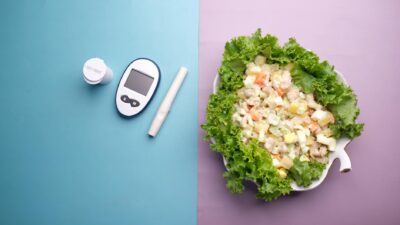
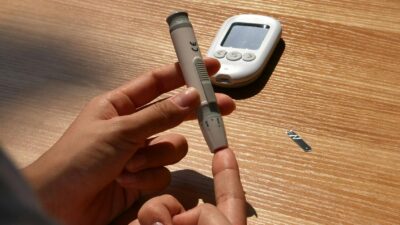
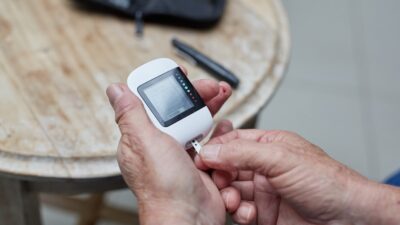
A CGM device for non-diabetics is a small wearable sensor that tracks interstitial glucose continuously for 10-15 days. Over-the-counter options like Dexcom Stelo and Abbott Lingo are cleared for adults without diabetes to observe patterns related to food, exercise, sleep, and stress – not to diagnose metabolic disease.
What Non-Diabetic CGMs Are
In 2024 the US FDA cleared the first over-the-counter CGMs for adult consumers not using insulin. Stelo (Dexcom) and Lingo (Abbott) use the same enzyme-electrode sensor chemistry as their prescription siblings but are packaged and labeled for wellness use. Both pair with a smartphone app that displays current glucose, trend arrow, historical graph, and summary statistics.
Why People Without Diabetes Use Them
- Food curiosity: Seeing how specific meals affect glucose can inform eating patterns.
- Fitness optimization: Endurance athletes sometimes track fueling strategies.
- Family history awareness: People with a parent or sibling who has type 2 diabetes may want early signals.
- Weight management support: Glucose trends can complement a prediabetes nutrition plan.
- Sleep and stress insight: Overnight data reveals how shift work or poor sleep alters metabolism.
What Normal Looks Like on a CGM
Published research using CGMs in healthy adults shows the following typical ranges:
| Context | Typical glucose range | Notes |
|---|---|---|
| Fasting / overnight | 70-100 mg/dL | Brief dips to 60s can occur |
| Pre-meal | 70-110 mg/dL | Varies with time since last meal |
| 1 hour after meal | 100-140 mg/dL | Peak usually within 60-90 min |
| 2 hours after meal | 80-120 mg/dL | Should approach baseline |
| During exercise | 80-140 mg/dL | Can rise with high intensity |
Brief excursions above these ranges – for example, a spike to 160 mg/dL after a sugary dessert – are not inherently abnormal in someone without diabetes. Sustained patterns of elevation, particularly fasting values consistently above 100 mg/dL or post-meal peaks repeatedly above 180 mg/dL, deserve clinical follow-up.
What a CGM Cannot Do
CGMs do not diagnose diabetes or prediabetes. Diagnosis requires laboratory-confirmed tests:
- A1C of 5.7-6.4% indicates prediabetes; 6.5% or higher indicates diabetes.
- Fasting plasma glucose of 100-125 mg/dL indicates prediabetes; 126 or higher indicates diabetes.
- Two-hour oral glucose tolerance test value of 140-199 mg/dL indicates prediabetes.
CGM patterns may prompt you to get these tests, which is useful. But the device itself does not replace the A1C blood test.
How to Wear and Interpret
- Insertion: Apply the sensor to the back of the upper arm (most OTC devices) using the included applicator.
- Warm-up: Allow 30-60 minutes before first reading.
- Log context: Note meals, exercise, sleep, and stress in the app.
- Review weekly: Look at average glucose, time in range, and biggest spikes rather than single values.
Potential Downsides
Continuous data can be double-edged. Some users develop anxiety about normal variability, start restricting healthy foods unnecessarily, or chase flat-line glucose as a goal unsupported by evidence. Researchers call this “glucose neuroticism.” Wearing a CGM for a week or two to learn your patterns, then removing it, is a more balanced approach than continuous long-term use for non-diabetics.
Practical issues include adhesive reactions, sensor dislodgment during sports, limited phone compatibility, and subscription auto-renewals. Data export quality varies across brands.
Working With a Clinician
If your CGM shows patterns that worry you – fasting values above 100 mg/dL, frequent post-meal peaks above 180, or long periods below 70 – share the data and graphs with your primary care provider. They can order an A1C and fasting insulin and determine whether you meet criteria for prediabetes or need further treatment planning.
Common Experiments Non-Diabetics Run
- Meal comparisons: Eating the same breakfast two days in a row but swapping white toast for sourdough or oats to see the spike difference.
- Post-meal walks: Logging a 15-minute walk after lunch on some days and sitting on others to quantify the flattening effect.
- Sleep impact: Observing fasting glucose after a 6-hour versus an 8-hour night.
- Exercise type: Comparing resistance training, steady-state cardio, and high-intensity intervals.
- Alcohol response: Tracking overnight glucose after wine with dinner versus no alcohol.
Short-Term vs Continuous Use
Research groups like Stanford’s medicine school have argued that two to four weeks of CGM wear provides most of the learning value for non-diabetics. After that, data tends to repeat itself, and the cost curve rises without additional insight. A time-limited trial is also less likely to produce glucose-centric anxiety than open-ended year-round monitoring.
The Bottom Line
A CGM device for non-diabetics can be a powerful self-awareness tool when used with realistic expectations. It reveals how food, sleep, and exercise affect your glucose in real time, but it is not diagnostic and cannot replace standard laboratory testing. Use a CGM to ask better questions of your clinician, not to self-diagnose or over-restrict. A short period of monitoring combined with basic labs usually gives you the information you need to act on.