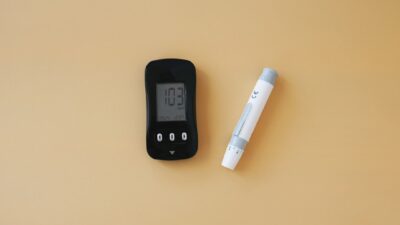
A CGM monitor (continuous glucose monitor) measures glucose every 1-5 minutes through a small sensor inserted just under the skin. Data streams wirelessly to a smartphone or reader, giving you a 24/7 picture of how food, exercise, sleep, and stress affect your blood sugar. Modern sensors last 7-15 days, are factory-calibrated, and have transformed diabetes management — and increasingly, prediabetes prevention.
How a CGM Works
A CGM has three parts:
- Sensor — a thin filament inserted under the skin (usually upper arm or abdomen) that measures glucose in interstitial fluid (the fluid between cells)
- Transmitter — built into the sensor patch on most modern devices; sends data wirelessly
- Receiver — a smartphone app, smartwatch, or dedicated handheld that displays readings, trends, and alerts
Interstitial glucose lags blood glucose by about 5-15 minutes. Most of the time this gap is unimportant, but during fast changes (a sugar treatment for a low, intense exercise), values may differ from a fingerstick.
What a CGM Shows You
- Current glucose reading
- Trend arrow — rising, falling, or steady
- 24-hour graph with patterns
- Time in Range (TIR) — percent of time spent in target glucose
- Estimated A1C (called GMI — Glucose Management Indicator)
- Custom alerts for lows, highs, or rapid changes
- Reports for sharing with your provider
Sensor Wear Time and Site Care
| CGM Category | Wear Time | Calibration | Insertion Site |
|---|---|---|---|
| Standard wearable sensor (most current models) | 10-14 days | Factory-calibrated | Upper arm or abdomen |
| Long-wear sensor | 14-15 days | Factory-calibrated | Upper arm |
| Implantable sensor | Up to 180 days | Twice-daily fingerstick | Inserted under skin in office |
| Older / second-line models | 6-7 days | Manual calibration twice daily | Abdomen |
Tips for Longer Sensor Life
- Clean and dry the skin thoroughly before insertion
- Apply medical adhesive overlay (Tegaderm, sensor patches)
- Rotate sites each session
- Avoid scar tissue, lotion-heavy areas, or spots that rub against clothes
- Pat dry rather than rubbing after showering
Pros of Using a CGM
- No daily fingersticks for routine readings
- Trend arrows let you act before glucose goes out of range
- Overnight visibility reveals lows and highs you’d otherwise miss
- Food and exercise feedback — see how each meal or workout affects you
- Alarms reduce risk of severe hypoglycemia
- Data sharing with caregivers and providers
- Reduced A1C in randomized trials of insulin users
Cons and Limitations
- Cost without insurance can be significant
- Skin irritation from adhesives is common; some people develop persistent reactions
- Insertion discomfort for the first few uses
- Lag time from interstitial fluid (5-15 minutes)
- Compression lows — sleeping on the sensor can produce false low readings
- Data overload — seeing every fluctuation can cause anxiety
- Some interfering substances (high-dose vitamin C, acetaminophen on certain models) can affect accuracy
Who Benefits Most From a CGM
- Anyone with type 1 diabetes
- People with type 2 diabetes on insulin or sulfonylureas
- People with frequent or unaware hypoglycemia
- Pregnant women with diabetes (type 1, type 2, or gestational)
- Adults with prediabetes wanting to understand their glucose patterns
- People starting major diet, exercise, or weight loss programs
- Athletes optimizing fuel timing
For broader monitoring options, see our blood sugar monitor guide.
Insurance and Cost
According to the American Diabetes Association Standards of Care, CGM is recommended for everyone with type 1 diabetes and most adults with type 2 diabetes on insulin. Coverage varies:
| Payer | Typical Coverage | Cost to You (with coverage) |
|---|---|---|
| Medicare Part B | Covered for type 1, type 2 on insulin | 20% coinsurance after deductible |
| Medicaid | Varies by state; expanding | $0-$25 |
| Private insurance | Most plans cover with prescription | $0-$75/month copay typical |
| Out of pocket | Available without prescription (newer OTC models) | $50-$200/month |
CGM Use Without Diabetes
The FDA cleared the first over-the-counter CGM for adults without diabetes in 2024. Non-diabetic uses include:
- Metabolic awareness — seeing how meals affect your glucose
- Weight management — identifying foods that drive cravings or energy crashes
- Prediabetes intervention — catching early dysregulation
- Athletic performance — fuel timing for endurance events
- PCOS management — tracking insulin resistance patterns
Evidence for non-diabetic benefits is still emerging. If you are using a CGM purely out of curiosity, remember that brief glucose excursions in healthy people are normal and not always meaningful.
Getting the Most Out of Your CGM
- Start with goals — TIR above 70%, fewer overnight lows, lower post-meal peaks
- Log what matters — meals, exercise, stress, sleep, medication
- Run experiments — try the same meal with and without a 10-minute walk after
- Use trend arrows to act early
- Set alerts thoughtfully — too many alarms cause fatigue
- Share data with your provider before appointments
- Don’t chase every wiggle — focus on patterns over days, not minutes
For background on what your readings mean, visit our A1C levels hub.
The Bottom Line
A CGM monitor turns glucose from a snapshot into a movie. Sensors last up to 15 days, factory calibration is the norm, insurance coverage is broader than ever, and over-the-counter options now exist for non-diabetic users. CGMs are most powerful for people on insulin, but anyone serious about understanding their metabolic health can benefit. Talk to your provider about whether one is right for you and how to interpret the data you collect.