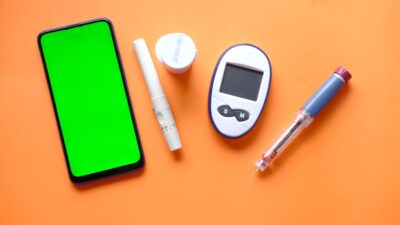
The Dexcom Stelo glucose biosensor is an FDA-cleared, over-the-counter continuous glucose monitor (CGM) designed for adults 18 and older who are not on insulin. It measures interstitial glucose continuously and streams the data to a smartphone app, offering trend information for people with type 2 diabetes not on insulin, prediabetes, or a general interest in metabolic health.
What Stelo Is — and What It Is Not
Stelo is the first over-the-counter CGM to receive FDA authorization in the United States, a meaningful shift in how Americans can access continuous glucose data. It is a wearable biosensor, roughly the size of a small coin, applied to the back of the upper arm and paired with the Stelo smartphone app.
Just as important is what Stelo is not. It is not intended for people who use insulin or who are at risk of severe hypoglycemia. It is not cleared to make insulin dosing decisions. It does not replace a fingerstick meter for confirming low glucose symptoms or urgent treatment decisions. It is explicitly a wellness and awareness tool in the adult, non-insulin-using population.
How the Biosensor Works
The core technology is familiar CGM architecture. A hair-thin filament under the skin uses glucose oxidase chemistry to generate an electrical signal proportional to interstitial glucose. The onboard electronics convert that signal into an estimated glucose value and transmit readings to the Stelo app by Bluetooth. Sensors are factory-calibrated, require no fingersticks for calibration, and last approximately 15 days before replacement.
Because Stelo reads interstitial fluid, there is a small physiologic lag of a few minutes compared with capillary blood glucose. This is not a defect; it is how the technology works.
Who Might Benefit From Stelo
Stelo is aimed at several non-insulin adult groups:
- Adults with type 2 diabetes managed with lifestyle changes and/or oral medications, who want to understand patterns.
- People with prediabetes who want to see how meals, activity, and sleep influence their A1C-relevant glucose patterns.
- Generally healthy adults interested in metabolic awareness and wellness data.
Stelo is not designed for type 1 diabetes, for insulin-treated type 2 diabetes, or for people with frequent severe hypoglycemia.
Accuracy and Key Specs
Dexcom reports Stelo accuracy in the single-digit MARD range, consistent with contemporary CGM technology. For the non-insulin use case Stelo is designed for, that level of accuracy is typically sufficient to identify patterns and guide lifestyle change. For precise dosing decisions, a different, prescription-grade CGM would be more appropriate, chosen with a clinician.
| Feature | Dexcom Stelo |
|---|---|
| Intended population | Adults 18+ not using insulin |
| Prescription required | No — available over the counter |
| Sensor wear | Approximately 15 days |
| Display | Stelo smartphone app |
| Calibration | Factory-calibrated; no fingerstick calibration |
| Insulin dosing | Not cleared for insulin dosing decisions |
| Severe low alerts | Limited; Stelo is not designed as a hypoglycemia management device |
How People Typically Use Stelo
Because Stelo is over-the-counter and wellness-oriented, everyday usage tends to focus on patterns rather than individual readings:
- Identifying which meals cause the largest spikes.
- Seeing the effect of a walk after dinner on post-meal glucose.
- Noticing how poor sleep or stress shifts overnight and morning glucose.
- Tracking the direction of change over weeks to motivate lifestyle adjustments.
These insights work best when paired with a consistent approach to diet and nutrition and an overall metabolic treatment plan.
Limitations Worth Knowing
- Stelo is not a diagnostic tool. Diagnosing prediabetes or diabetes still requires lab testing.
- Readings during rapid glucose change can lag fingersticks by a few minutes.
- Compression on the sensor overnight can produce false lows.
- Without a clinician in the loop, it is easy to over-interpret day-to-day variability.
- It is not a substitute for prescription CGMs used to manage insulin therapy.
Stelo and the Bigger CGM Picture
Stelo’s arrival reflects a broader trend: continuous glucose data moving from clinical tool to consumer awareness product. For people newly paying attention to metabolic health, it can be a useful starting point. For people with established diabetes, especially insulin users, the right CGM is typically a prescription sensor chosen and monitored through a clinical relationship.
Medical Disclaimer
This article is for educational purposes only and is not medical advice. Stelo is a wellness-oriented over-the-counter device. Anyone with diabetes, suspected diabetes, or concerning symptoms should consult a licensed healthcare professional for diagnosis, device selection, and treatment decisions.
The Bottom Line
The Dexcom Stelo glucose biosensor is a meaningful step toward accessible continuous glucose awareness: an FDA-cleared, over-the-counter CGM for adults not on insulin. It is useful for seeing patterns, motivating lifestyle changes, and learning how your body responds to food and activity. It is not a replacement for medical care, not cleared for insulin dosing, and not ideal for people at risk of severe hypoglycemia. If you are considering it, loop in a clinician so the data actually improves your health plan.