Freestyle Libre 1 was the original flash glucose monitor from Abbott, FDA-approved in the US in late 2017 and superseded for new prescriptions when Libre 2 launched in 2020. It was a major step forward when introduced because it eliminated routine fingerstick calibration, but it has since been replaced by Libre 2, Libre 3, and Libre 3 Plus, which offer alarms and continuous Bluetooth streaming. If you are shopping for a CGM today, the original Libre 1 is no longer the right choice.
What the Original Libre 1 Did
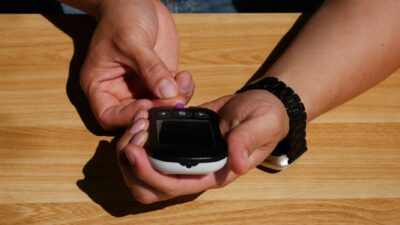
Libre 1 used a small round sensor (about the size of a US quarter, 35 mm) worn on the back of the upper arm for up to 14 days. A thin filament beneath the skin measured glucose in interstitial fluid using glucose oxidase chemistry. Unlike a full continuous glucose monitor, Libre 1 did not transmit data continuously. Instead, you had to actively scan the sensor with a handheld reader or, later, with the LibreLink smartphone app via near-field communication (NFC). Each scan returned the current glucose value, an 8-hour trend, and a directional arrow.
Specifications at a Glance
| Spec | Freestyle Libre 1 |
|---|---|
| Wear time | 14 days |
| Warm-up time | 1 hour |
| Sensor size | ~35 mm diameter, 5 mm height |
| Reading method | Scan with reader or phone (NFC) |
| Bluetooth alarms | None |
| Calibration | Factory calibrated, no fingersticks needed |
| Approved age range | Adults and children 4 and up |
| MARD (accuracy) | ~9.4 percent in adults |
Why It Was Discontinued
The lack of high and low glucose alarms was the main limitation of Libre 1. Patients with hypoglycemia unawareness, parents of children with type 1 diabetes, and insulin users wanted alerts that could wake them at night or warn before a dangerous low. Libre 2, approved by the FDA in 2020, added optional high and low alarms over Bluetooth Low Energy while keeping the same sensor footprint and 14-day wear. Once Libre 2 became widely available, Abbott shifted production and most US insurance formularies followed, ending the supply of new Libre 1 sensors and readers. By 2021 the original Libre 1 was effectively retired in the US.
What Replaced It: Libre 2 and Libre 3
| Model | Year | Key Upgrade |
|---|---|---|
| Libre 1 | 2017 | Original flash monitor |
| Libre 2 | 2020 | Optional high/low alarms via Bluetooth |
| Libre 3 | 2022 | Continuous 1-minute streaming, smaller sensor |
| Libre 3 Plus | 2024 | 15-day wear, improved accuracy |
Should Anyone Still Use Libre 1?
For new patients in the US, no. Sensors are no longer in commercial distribution and any leftover stock would be near or past its labeled shelf life. Patients with old readers can sometimes find expired sensors on third-party sites, but using out-of-date sensors risks inaccurate readings and is not recommended. The Libre family has improved significantly since 2017 in accuracy, alarms, and ease of use; current models are usually similar in cost or covered identically by insurance.
Cost and Insurance Today
Libre 2 and Libre 3 are covered by most US commercial insurance and by Medicare for patients with insulin-treated diabetes. The current cash-pay price runs roughly $75-$140 per 14-day sensor through the Abbott pharmacy network, with a 2-pack costing $150-$280 for a month of wear. Most patients pay $0-$75 per month with insurance after meeting prior-authorization requirements (typically a documented diabetes diagnosis and insulin use, or 4+ daily fingerstick checks).
Sticking with the Libre Family: What to Pick Now
- Libre 2 (or Libre 2 Plus): Choose if you want optional alarms but prefer the larger, more durable sensor body, or if your insurance only covers this generation.
- Libre 3: Choose if you want a smaller, slimmer sensor and a continuous reading every minute on your phone.
- Libre 3 Plus: The newest in the family with 15-day wear instead of 14 days.
Discuss specific model selection with your clinician based on your insurance formulary, age (Libre 3 is currently approved for ages 4+ in the US), and whether you are using insulin.
How Libre Sensors Compare to Competitors
Dexcom G7 and Dexcom Stelo are the main US competitors. Dexcom G7 has a 10-day wear cycle (plus 12-hour grace period) and is approved for adjunctive use with insulin pumps from Tandem and Insulet. Dexcom Stelo is over the counter for non-insulin users with a 15-day wear time. According to the American Diabetes Association, all three brands are appropriate options for diabetes management, with selection driven by insurance coverage, age, and clinician familiarity. For background on the broader prediabetes journey, see the prediabetes 101 hub and the detection of prediabetes guide.
The Bottom Line
Freestyle Libre 1 was an important first-generation flash glucose monitor, but it has been retired in the US in favor of Libre 2, Libre 3, and Libre 3 Plus, which add alarms, smaller sensors, and continuous Bluetooth streaming. New patients should not seek out Libre 1; ask your clinician about Libre 2, Libre 3, Libre 3 Plus, or other current CGMs covered by your insurance.
Medical disclaimer: This article is for educational purposes only and is not a substitute for professional medical advice, diagnosis, or treatment. Always consult your physician or qualified healthcare provider with any questions about a medical condition or medication.