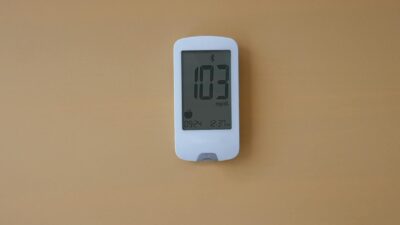
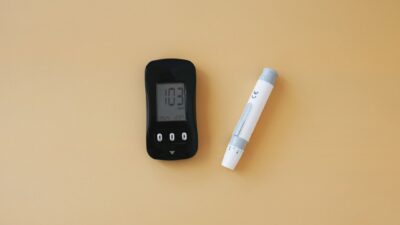
The FreeStyle Libre 14 day is Abbott’s flash glucose monitoring system, worn on the back of the upper arm for two weeks at a time. Instead of streaming readings continuously, the sensor stores glucose data that you retrieve by scanning with a handheld reader or a smartphone. No fingerstick calibration is required, and accuracy is similar to traditional meters. FreeStyle Libre 2 and Libre 3 extended the platform with optional and automatic alerts.
What FreeStyle Libre 14 Day Actually Is
Abbott’s original FreeStyle Libre launched in Europe in 2014 and in the United States in 2017 with a 10-day sensor. In 2018, the FDA cleared the FreeStyle Libre 14 day version, extending wear time to two weeks per sensor. The system consists of:
- A small, round sensor that adheres to the back of the upper arm, with a flexible filament under the skin.
- A handheld reader, or the FreeStyle LibreLink smartphone app using NFC.
- The LibreView cloud platform for sharing data with caregivers and clinicians.
The Libre 14 day is classified as flash glucose monitoring because readings appear when you scan, rather than streaming automatically. That distinguishes it from continuous systems like Dexcom G5/G6/G7 and the later Libre 2 and Libre 3.
How to Use FreeStyle Libre 14 Day
- Clean the back of your upper arm with soap and water, dry fully, then wipe with the included alcohol prep.
- Load the sensor applicator per the instructions inside the carton.
- Press the applicator firmly onto your arm. The filament deploys in a fraction of a second.
- Wait 1 hour for the sensor to warm up.
- Pass the reader or your NFC-enabled phone over the sensor to capture a reading.
- Scan at least once every 8 hours to avoid losing history.
- Replace the sensor after 14 days of wear, applying the new one to the opposite arm.
Reader vs Smartphone
Most users now use the FreeStyle LibreLink app on iPhone or Android. It displays the current reading, an 8-hour trend graph, trend arrows, and a daily glucose summary. The dedicated reader remains an option if your phone does not support NFC or if you prefer a standalone device. You can use both simultaneously; readings from each appear in LibreView.
| Option | Pros | Cons |
|---|---|---|
| FreeStyle Libre Reader | Dedicated device, doubles as meter | Extra item to carry; battery life |
| LibreLink app (phone) | Always with you; integrates with LibreView | Requires NFC-equipped phone |
FreeStyle Libre 14 Day Accuracy
In the FDA pivotal trial, the FreeStyle Libre 14 day system had a mean absolute relative difference (MARD) of about 9.4 percent in adults. That is within the range of home fingerstick meters, which typically run 5 to 10 percent. Accuracy was slightly lower on day one, improved through the middle of wear, and varied with very low or very high glucose values.
Like all CGMs, arm-worn sensors read interstitial glucose, which lags blood glucose by a few minutes. During rapid changes (after meals or intense exercise), the reading may trail behind a fingerstick. The difference is rarely clinically important, but is worth knowing.
How Libre 2 and Libre 3 Evolved the Platform
Abbott released Libre 2 in 2020 and Libre 3 in 2022 (Libre 2 Plus and Libre 3 Plus followed). Both added Bluetooth and real-time alerts that the original 14 day did not have.
- FreeStyle Libre 2 Plus: 15-day wear, optional high/low alarms, still requires scanning for full reading but alerts alone come via Bluetooth.
- FreeStyle Libre 3 Plus: 15-day wear, automatic continuous readings every minute pushed to the phone, no scanning needed, smaller sensor.
For people buying new, Libre 2 Plus or Libre 3 Plus are usually the better pick. Libre 14 day remains available for existing users and those whose insurance formularies specify it.
Who Should Use FreeStyle Libre 14 Day?
The ADA Standards of Care recommend CGM for all adults and youth with type 1 diabetes and for people with type 2 using multiple daily insulin injections. Libre 14 day fits that population well, especially for users who want 14-day wear and do not need real-time alerts.
If you are early in the journey and still learning how meals and activity affect your numbers, the broader prediabetes overview and our diet and nutrition content help you translate the CGM trace into lifestyle choices.
Common Issues and Fixes
- Scanner beeps without reading: hold the reader closer to the sensor and keep it still for 1 to 2 seconds.
- Sensor peels at the edge: reinforce with a FreeStyle adhesive patch; call Abbott for a replacement if it falls off early.
- Compression lows overnight: avoid sleeping directly on the sensor arm.
- Readings off after day 1: recheck with a fingerstick; if differences persist, contact Abbott support.
The Bottom Line
The FreeStyle Libre 14 day is a 14-day flash glucose monitor that you scan with a reader or phone to see glucose values and trends. Accuracy is around 9.4 percent MARD — comparable to fingersticks — without routine calibration. For most new users, FreeStyle Libre 2 Plus or Libre 3 Plus add alerts and continuous readings, but the 14 day remains a solid option. Talk with your clinician about which Libre system and what insurance coverage fit your plan.
Medical disclaimer: This article is educational and is not medical advice. Follow the user guide included with your FreeStyle Libre sensor and discuss treatment changes with your healthcare provider.