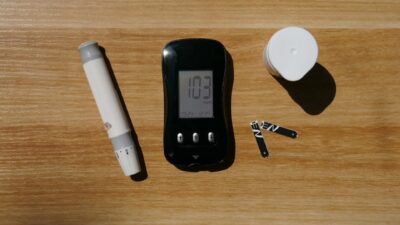
The normal nonfasting glucose range is under 140 mg/dL two hours after eating. Within an hour of a meal, levels in the 140 to 180 range are normal in healthy adults before returning toward baseline. Random glucose of 140 to 199 mg/dL two hours after eating suggests prediabetes; 200 or higher with symptoms suggests diabetes. A single random value rarely confirms a diagnosis on its own — fasting glucose, A1C, or formal oral glucose tolerance testing usually follows.
What Counts as Nonfasting?
Nonfasting (or random) glucose refers to any blood sugar measurement taken without an 8-hour fast first. It includes:
- 2-hour post-meal readings (most informative)
- 1-hour post-meal readings (peak time for many)
- Truly random checks regardless of last meal
- Readings during illness, exercise, or stress
- Continuous glucose monitor (CGM) values throughout the day
Fasting glucose, by contrast, requires no food or caloric drinks for 8 hours.
Normal Ranges by Time After Eating
| Time Since Meal | Normal (mg/dL) | Prediabetes Range | Diabetes Range |
|---|---|---|---|
| 30 minutes | Under 180 | 180 to 220 | Over 220 |
| 1 hour | Under 180 | 180 to 220 | Over 220 |
| 2 hours | Under 140 | 140 to 199 | 200 or more |
| 3 hours | Under 130 | 140 to 180 | Over 180 |
| Random / no recent meal | 70 to 140 | 140 to 199 | 200 or more (with symptoms) |
How Glucose Rises and Falls After a Meal
- Carbohydrates are digested into glucose
- Glucose enters the bloodstream — rising starts within 15 minutes
- Peak occurs 30 to 60 minutes after eating in healthy adults
- Insulin response from beta cells lowers glucose into target by 2 hours
- Glucose returns to fasting baseline 3 to 4 hours after meal
In prediabetes and diabetes, the peak is higher and the return to baseline is slower.
What a Single High Reading Does and Does Not Mean
Does Mean
- Worth checking again on a different day
- Time to consider full diabetes screening
- Useful data point even if not diagnostic
Does Not Mean
- Confirmed diabetes diagnosis
- Permanent loss of glucose control
- Medical emergency unless 250+ with symptoms or signs of DKA
Confirmatory Testing
| Test | Diagnostic Cutoff for Diabetes | Diagnostic Cutoff for Prediabetes |
|---|---|---|
| Fasting glucose | 126 mg/dL or more (twice) | 100 to 125 mg/dL |
| A1C | 6.5 percent or more (twice) | 5.7 to 6.4 percent |
| 2-hour OGTT | 200 mg/dL or more | 140 to 199 mg/dL |
| Random glucose | 200 mg/dL or more with symptoms | Not used for prediabetes alone |
What Else Influences Nonfasting Glucose
- Recent food: carbohydrate amount and type, fat and protein delay absorption
- Exercise: raises glucose briefly during intense effort, lowers afterward
- Stress: cortisol and adrenaline raise glucose
- Illness: infection commonly raises glucose
- Sleep: poor sleep raises insulin resistance and morning glucose
- Medications: steroids, beta blockers, diuretics, antipsychotics
- Time of day: dawn phenomenon raises early morning glucose
- Hydration: dehydration concentrates glucose
Continuous Glucose Monitor Targets
For people with diabetes or those using a CGM for general metabolic awareness, time in range is the modern target:
- Time in range (70 to 180 mg/dL): 70 percent or more of the day
- Time below 70 mg/dL: less than 4 percent
- Time below 54 mg/dL: less than 1 percent
- Time above 180 mg/dL: less than 25 percent
- Time above 250 mg/dL: less than 5 percent
For non-diabetics using OTC CGMs (Stelo, Lingo), staying mostly between 70 and 140 mg/dL is a tighter and reasonable goal. Read more in our guide on detection of prediabetes.
Random Glucose in Children and Pregnancy
- Children: similar nonfasting ranges, but pediatric thresholds for diabetes diagnosis remain at 200 with symptoms
- Pregnancy: tighter ranges — fasting under 95 mg/dL, 1 hour after meal under 140, 2 hours under 120
- Gestational diabetes screening: 1-hour 50 g screening test at 24 to 28 weeks
What to Do With a Borderline Reading
- Repeat in different conditions (fasting next morning, 2 hours after a different meal)
- Schedule formal A1C and fasting glucose with your clinician
- Track readings for a week to see patterns
- Note what you ate, when, and any stressors before the reading
- Reduce refined carbs and add a daily 20 to 30 minute walk while waiting for testing
Related Reading
For more on glucose readings and diabetes screening, see our guides on detection of prediabetes and A1C levels.
The Bottom Line
The normal nonfasting glucose range is under 140 mg/dL two hours after a meal. Random levels of 140 to 199 suggest prediabetes; 200 or more with symptoms suggests diabetes. Time of day, recent food, exercise, stress, and illness all influence readings. A single high random value is not diagnostic — formal A1C, fasting glucose, or oral glucose tolerance testing confirms the picture. CGM users should aim for 70 percent or more time in range (70 to 180 mg/dL) for diabetes, or tighter (70 to 140) for general metabolic awareness.