This article is for informational purposes only and does not constitute medical advice. Always consult your physician or a qualified healthcare provider regarding any medical condition or treatment.
Key Takeaways
Hospital stay after bariatric surgery for diabetes is typically 1 to 3 days for sleeve gastrectomy and 2 to 4 days for Roux-en-Y gastric bypass — early mobilization, breathing exercises, VTE prevention, and pain control are the immediate priorities.
Diabetes medications change quickly — most patients are off insulin and sulfonylureas at discharge, with metformin often held, and require frequent glucose monitoring (continuous glucose monitor is ideal) for the first 4 to 8 weeks while insulin sensitivity rapidly returns.
Diet progresses through 5 stages over 6 to 8 weeks — clear liquids, full liquids, puree, soft foods, regular textures — under registered dietitian guidance, with 60 to 80 grams of protein daily, small frequent meals, and no drinking with meals.
Return to desk work averages 2 weeks; physical work 4 to 6 weeks; walking starts immediately post-op; resistance training resumes at 6 to 8 weeks; long-term aerobic 150 minutes per week and strength training twice weekly are standard.
Lifelong follow-up labs every 6 to 12 months — CBC, comprehensive metabolic, A1C, lipid panel, B12, iron studies, ferritin, vitamin D, PTH, calcium, magnesium, zinc, copper, vitamins A and E — plus annual bariatric surgeon and mental health support.
Bariatric surgery recovery for diabetes is fast for the basics — most patients leave the hospital in 1 to 4 days off insulin and sulfonylureas — but full recovery and habit reset take 8 to 12 weeks, and follow-up is lifelong. This is the week-by-week roadmap with specific diabetes management considerations.
Hospital Course — Days 1 to 4
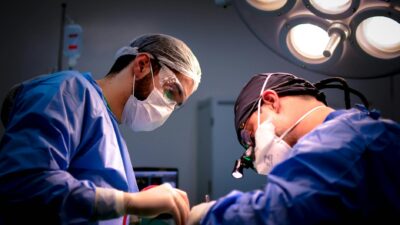
Surgery: 60 to 90 minutes laparoscopically; minimal incisions (5 small ports plus one for specimen retrieval if sleeve)
Bariatric surgery recovery for diabetes is rapid for the basics — most patients are off insulin and sulfonylureas at hospital discharge, walking the day of surgery, and back to desk work in 2 weeks. Full recovery takes 8 to 12 weeks as the diet progresses through 5 stages and resistance training resumes. The first 4 to 8 weeks need close glucose monitoring (continuous glucose monitor ideal) because hypoglycemia is a real risk if old doses are restarted. Lifelong supplementation (bariatric multivitamin, calcium, vitamin D, B12, iron), labs every 6 to 12 months, annual bariatric surgeon visits, and mental health support are essential. Diabetes can recur in 20 to 35 percent within 5 years — GLP-1 agonists are first-line for recurrence. Talk to your bariatric program about the specific recovery plan, and stick with the follow-up schedule for life — the durable benefit depends on it.
Frequently Asked Questions
How long is recovery from bariatric surgery?
Hospital stay averages 1 to 3 days for sleeve and 2 to 4 days for gastric bypass. Desk-work return is typically 2 weeks, physical work 4 to 6 weeks. Walking begins the day of surgery; resistance training resumes at 6 to 8 weeks. The diet progresses through 5 stages over 6 to 8 weeks. Full energy and physical recovery typically take 8 to 12 weeks. Long-term follow-up continues for life with annual visits and labs.
When do diabetes medications stop after bariatric surgery?
Insulin and sulfonylureas (glipizide, glimepiride) are usually held at admission and most patients leave the hospital off both. Metformin is often held for 1 to 4 weeks then resumed if needed. GLP-1 agonists are typically paused around surgery. Continuous glucose monitoring for 4 to 8 weeks post-op is ideal — hypoglycemia is a real risk if old doses are restarted while insulin sensitivity is rapidly improving.
What can I eat after bariatric surgery?
The diet progresses in 5 stages over 6 to 8 weeks. Stage 1 (days 1 to 3): clear liquids only. Stage 2 (days 4 to 14): full liquids including protein shakes. Stage 3 (weeks 2 to 4): pureed foods. Stage 4 (weeks 4 to 6): soft foods. Stage 5 (week 6 to 8 onward): regular textures in small portions. Goals throughout: 60 to 80 grams of protein daily, 64 ounces of fluid, no drinking with meals, chew thoroughly, stop at satiety.
What follow-up do I need after bariatric surgery?
Lifelong follow-up is essential. First year: 2-week, 1-month, 3-month, 6-month, and 12-month visits. After year 1: annual labs every 6 to 12 months including CBC, A1C, lipid panel, B12, iron, ferritin, vitamin D, PTH, calcium, magnesium, zinc, copper, vitamins A and E. Annual bariatric surgeon visit for screening (internal hernia, marginal ulcer, GERD). Mental health support recommended. Diabetes recurrence requires restart of pharmacotherapy.
Sources
American Society for Metabolic and Bariatric Surgery. Clinical Practice Guidelines for the Perioperative Nutritional, Metabolic, and Nonsurgical Support of Patients Undergoing Bariatric Procedures.
American Diabetes Association. Standards of Care in Diabetes 2024. Diabetes Care 47(Suppl 1).