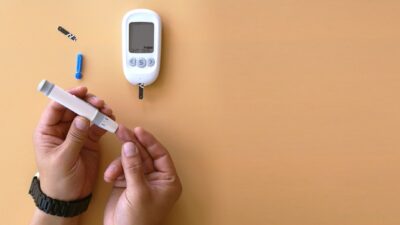
Diabetes falls prevention in elderly adults is a multifactorial undertaking — older adults with diabetes fall roughly 1.5 times as often as those without, and the consequences (hip fractures, hospitalization, loss of independence) are severe. Major drivers are peripheral neuropathy, vision changes, hypoglycemia, orthostatic hypotension from autonomic neuropathy, and sarcopenia. Hypoglycemia is the most modifiable factor. Assessment uses the Timed Up and Go (TUG), Berg Balance Scale, and CDC’s STEADI toolkit; interventions combine exercise, vitamin D, home safety, vision correction, footwear, and medication review.
How Diabetes Raises Falls Risk
| Mechanism | How It Causes Falls | Modifiable? |
|---|---|---|
| Peripheral neuropathy | Loss of foot sensation, impaired proprioception, abnormal gait | Partially (glucose control prevents progression) |
| Retinopathy / cataracts | Reduced acuity, contrast sensitivity, depth perception | Yes (treatment, glasses, cataract surgery) |
| Hypoglycemia | Confusion, weakness, syncope, loss of consciousness | Highly (regimen adjustment) |
| Orthostatic hypotension (autonomic neuropathy) | Drop in BP on standing → dizziness, syncope | Partially (med review, hydration) |
| Sarcopenia | Reduced leg strength, slow gait, poor recovery from stumble | Yes (resistance training, protein) |
| Foot deformities (Charcot, ulcers) | Altered gait, balance, footwear difficulty | Partially |
| Polypharmacy | Sedation, hypotension, cognitive slowing from multiple drugs | Yes (deprescribing) |
| Vestibular dysfunction | Vertigo, balance disturbance | Yes (vestibular rehab) |
Hypoglycemia: The Most Important Modifiable Risk
Hypoglycemia in older adults causes more than 100,000 ED visits per year in the US. Severe lows cause:
- Sudden loss of postural control → fall
- Cardiac arrhythmias → syncope → fall
- Cognitive impairment → poor decision-making, missed obstacles
- Long-term cognitive decline, which feeds back into falls risk
For any older patient who has fallen, the diabetes regimen should be reviewed first:
- Is A1C below 7 percent in a complex/intermediate or very complex tier patient? → loosen
- Is the patient on a long-acting sulfonylurea (glyburide)? → switch or stop (Beers Criteria)
- Is bedtime insulin causing nocturnal lows? → consider dose reduction or switch to ultra-long-acting
- Is glucose checking adequate to detect lows? → consider CGM
See our deeper coverage of A1C targets in A1C target for elderly.
Assessment Tools for Falls Risk
| Tool | What It Measures | Red Flag |
|---|---|---|
| Timed Up and Go (TUG) | Stand from chair, walk 3m, return, sit | >12 seconds |
| 30-second chair stand | Number of full stands from a chair | <8 in women 60–64; thresholds rise with age |
| 4-stage balance test | Stand in 4 progressively harder positions | Unable to hold tandem stance 10 seconds |
| Berg Balance Scale | 14-item balance assessment | Score <45/56 indicates high fall risk |
| STEADI screening | CDC’s 3-question screen + functional tests | Positive answer to any of 3 screen questions triggers full assessment |
| Gait speed | 4-meter walk time | <0.8 m/s suggests frailty |
| Orthostatic vital signs | BP and HR lying, sitting, standing at 1 and 3 min | Drop ≥20 mmHg systolic or ≥10 diastolic |
The CDC STEADI Toolkit
STEADI (Stopping Elderly Accidents, Deaths, and Injuries) is a structured framework:
- Screen — three questions: fall in last year? unsteady on feet? worry about falling?
- Assess — if any “yes”: medication review, gait/balance testing, orthostatic vitals, vision, vitamin D, foot exam, home safety
- Intervene — multifactorial plan tailored to identified risks
The toolkit is free at the CDC website and is widely used in primary care and geriatrics.
Interventions With the Best Evidence
| Intervention | Evidence | Effect Size |
|---|---|---|
| Multifactorial program (exercise + meds + home) | Strong | ~25% fall reduction |
| Tai chi 2x weekly | Strong | ~20–30% fall reduction |
| Otago Exercise Programme (home-based strength + balance) | Strong | ~35% fall reduction |
| Vitamin D if deficient (<20 ng/mL) | Moderate | ~20% fracture reduction; modest fall reduction |
| Medication review and deprescribing | Strong for psychotropics; moderate for diabetes drugs | Variable, often substantial |
| Cataract surgery (first eye) | Strong | ~30% fall reduction in cataract patients |
| Home safety modifications | Strong in high-risk | ~20% fall reduction |
| Footwear advice and orthotics | Modest | Small effect, useful as add-on |
Home Safety Checklist
- Remove throw rugs or secure with non-slip backing
- Improve lighting in stairways, bathrooms, hallways; use night lights
- Install grab bars in shower and beside toilet
- Use non-slip mats in tub and shower
- Keep frequently used items at waist-to-shoulder height
- Clear walkways of cords, clutter, and pet bowls
- Wear shoes with non-slip soles indoors (not socks alone)
- Add handrails on both sides of stairs
- Consider a bedside commode if nighttime urgency
Footwear and Foot Care
- Well-fitting closed-toe shoes with low heel and non-slip sole
- Avoid slippers without backs
- Replace shoes when soles wear smooth
- Custom orthotics or therapeutic shoes if foot deformity or neuropathy
- Annual foot exam — Semmes-Weinstein 10g monofilament for sensation, vibration with tuning fork, pulse check
- Treat calluses, ingrown nails, fungal infections promptly to prevent altered gait
Medication Review for Falls Risk
Beyond diabetes drugs, common offenders include:
- Benzodiazepines (Beers Criteria avoid)
- Z-drugs (zolpidem, zaleplon — Beers Criteria avoid)
- Tricyclic antidepressants (anticholinergic, sedating)
- First-generation antihistamines (diphenhydramine)
- Antipsychotics
- Opioids
- Alpha-blockers for BPH (orthostatic hypotension)
- Antihypertensives if over-treated (especially clonidine, methyldopa)
- Loop diuretics (volume depletion)
- Skeletal muscle relaxants
The Type 2 Diabetes Bone Paradox
People with type 2 diabetes have higher fracture risk despite often-normal or elevated bone density:
- Hip fracture risk roughly 1.4–1.7x in type 2 diabetes
- Bone quality (microarchitecture, collagen glycation) is impaired
- Trabecular bone score and FRAX with adjustment perform better than BMD alone
- Thiazolidinediones (pioglitazone) raise fracture risk in women — avoid in osteoporosis
- SGLT2 inhibitors had a fracture signal early on (canagliflozin in CANVAS) — current evidence is reassuring but consider in high-risk patients
Older adults with diabetes should have DEXA screening as recommended for general population — women ≥65, men ≥70, or earlier with risk factors.
What to Do After a Fall
- Get medical evaluation — fracture screen, head injury check, vital signs including orthostatic
- Identify cause — hypoglycemia, syncope, mechanical trip, medication, environmental?
- Glucose log and CGM download if applicable
- Full medication reconciliation including OTC
- Refer to PT for gait, balance, and strength assessment
- Home safety review
- Vision check if not done in the past year
- Consider 504-style “diabetes meal/snack plan” to prevent skipped meals leading to lows
Side Effects of Falls Prevention Interventions
- Exercise — soreness, joint pain at start; rare overuse injury
- Vitamin D — usually safe; rarely hypercalcemia at very high doses
- Footwear changes — short-term discomfort while adjusting
- Home modifications — cost; possible mismatch with aesthetic preferences
- Deprescribing — rebound symptoms (insomnia, anxiety) when stopping sedatives — taper
- Cataract surgery — small surgical risks (infection, retinal issues)
Related Reading
For broader context on geriatric diabetes care, see diabetes in the elderly. Cognitive decline interacts with falls risk via dementia — see diabetes cognitive decline and dementia. For complications overview, see our complications and related conditions page.
The Bottom Line
Diabetes raises falls risk in older adults by about 1.5x — through neuropathy, vision changes, hypoglycemia, orthostatic hypotension, and sarcopenia. Hypoglycemia is the most modifiable factor; review the regimen for over-tight A1C and high-risk drugs like glyburide. Assess with Timed Up and Go, Berg Balance, or the CDC STEADI toolkit. Intervene with a multifactorial plan: exercise (tai chi, Otago), vitamin D if low, home safety, vision correction, footwear, and medication review. After any fall, a full workup including glucose data, orthostatic vitals, and medications is warranted. Talk to your doctor about whether your current regimen and home environment match your falls risk.