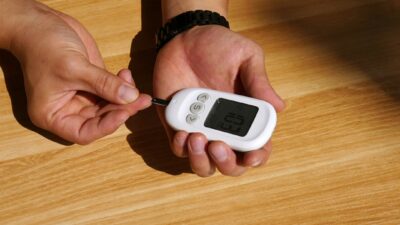
Type 1 diabetes in children is autoimmune destruction of pancreatic beta cells, leaving the body unable to produce insulin. It is the most common chronic disease of childhood — about 200,000 US children are affected — with onset peaking at ages 4 to 7 and 10 to 14 years. Presentation typically includes increased urination, thirst, hunger, and weight loss; about 30 percent of newly diagnosed children present in diabetic ketoacidosis. Lifelong insulin is essential, modern care combines continuous glucose monitoring with smart pens or pumps, and the current ISPAD A1C target is less than 7 percent for most children.
What Causes Type 1 Diabetes
- Autoimmune T-cell mediated destruction of pancreatic beta cells
- Genetic susceptibility — strong HLA-DR3/DR4 association (about 50% of risk)
- Environmental triggers (under research) — enteroviruses, vitamin D status, early diet, gut microbiome
- Process begins years before clinical onset — autoantibodies appear first, then dysglycemia, then symptoms
- About 10–15 percent of new T1D cases have a first-degree relative with T1D
- Not caused by sugar intake or lifestyle
How Common Is It?
- About 200,000 US children and adolescents under age 20 have T1D
- Incidence is rising about 2–3 percent per year globally
- Highest rates in Finland, Sweden, Sardinia, and parts of North America
- Two onset peaks — ages 4 to 7 and 10 to 14 years
- Roughly equal in boys and girls
- Family history: about 5 percent risk if a parent has T1D; about 5 percent in siblings
Stages of Type 1 Diabetes
| Stage | Characteristics | Treatment Implications |
|---|---|---|
| Stage 1 | 2+ autoantibodies, normal glucose | Monitoring; consider trials |
| Stage 2 | 2+ autoantibodies, dysglycemia (impaired glucose tolerance or impaired fasting glucose) | Teplizumab can delay onset; close monitoring |
| Stage 3 | Clinical disease — hyperglycemia with symptoms | Insulin required |
| Stage 4 | Long-standing T1D | Continued insulin; complication screening |
Presentation and Diagnosis
Classic symptoms:
- Polyuria — frequent urination, often nighttime bedwetting in a previously dry child
- Polydipsia — constant thirst
- Polyphagia with weight loss
- Fatigue and irritability
- Blurred vision
- Yeast infections, slow wound healing
About 30 percent of newly diagnosed children present in diabetic ketoacidosis (DKA) — fruity breath, deep rapid breathing (Kussmaul), nausea, vomiting, abdominal pain, dehydration, and altered mental status. DKA is a medical emergency.
Diagnostic criteria (any one, confirmed):
- Fasting plasma glucose ≥126 mg/dL
- Random glucose ≥200 mg/dL with symptoms
- 2-hour OGTT ≥200 mg/dL
- A1C ≥6.5%
Confirmation of type 1 specifically uses:
- Autoantibodies — anti-GAD, anti-IA2, ZnT8, insulin autoantibodies
- Low or undetectable C-peptide (especially after meal or stimulation)
- Clinical phenotype — lean, acute onset, ketosis-prone
The Honeymoon Period
After diagnosis and insulin start, many children enter a “honeymoon period” where residual beta-cell function provides partial endogenous insulin. Insulin requirements drop temporarily, sometimes dramatically. Duration ranges from weeks to about 2 years. Important to continue insulin during honeymoon to preserve beta-cell function as long as possible — see honeymoon period in type 1 diabetes.
Modern Treatment
| Component | Options | Notes |
|---|---|---|
| Insulin delivery | Multiple daily injections (MDI), insulin pump, automated insulin delivery (AID) | AID systems (Tandem Control-IQ, Omnipod 5, Medtronic 780G, iLet) increasingly standard |
| Glucose monitoring | Continuous glucose monitor (CGM) — Dexcom G7, Libre 3, Medtronic Guardian | Recommended for all T1D children regardless of age |
| Education | Structured family-based diabetes education | Initial admission usually 3–5 days; ongoing teaching |
| Carbohydrate counting | Standard for MDI and pump users | Family education on labels, portions, hidden carbs |
| Insulin types | Rapid-acting (lispro, aspart, glulisine) + long-acting (glargine, degludec, detemir) | Ultra-rapid (Fiasp, Lyumjev) also used |
| Mental health | Routine screening for depression, anxiety, eating disorders | Built into diabetes visits |
Insulin Dosing Considerations in Children
- Total daily dose typically 0.5–1.0 units/kg/day, varying by age and pubertal stage
- Honeymoon doses can be as low as 0.2–0.3 units/kg/day
- Puberty raises insulin needs to 1.0–1.5 units/kg/day due to growth hormone effects
- Distribution roughly 40–50 percent basal, 50–60 percent bolus
- Insulin-to-carb ratios and correction factors are individualized; recalculated frequently in growing children
- Younger children have unpredictable eating patterns — flexible dosing strategies help
ISPAD A1C Targets
Current ISPAD guidelines recommend:
- A1C <7 percent for most children and adolescents with T1D (recently tightened from 7.5 percent)
- Individualization for children with frequent severe hypoglycemia, hypoglycemia unawareness, limited resources, or severe psychosocial concerns — target may be 7.5 percent
- Time in range (70–180 mg/dL) goal >70 percent
- Time below 70 mg/dL <4 percent; below 54 mg/dL <1 percent
The tighter target reflects evidence that lower childhood A1C correlates with reduced long-term complications, plus better tools (CGM, AID) that make tighter control achievable with lower hypoglycemia risk than in past decades.
School and Daily Life
- 504 Plan or Individualized Education Plan (IEP) protects rights and outlines care
- Diabetes Medical Management Plan (DMMP) details insulin dosing, snacks, emergency care
- School nurse, trained staff, and self-management depending on child age
- Hypoglycemia treatment (glucose tabs, gel, glucagon) must be accessible
- PE adjustments, field trip planning
- See school management for pediatric diabetes for the full framework
Mental Health in Pediatric T1D
- Depression rates 2–3 times the general pediatric population
- Anxiety especially around hypoglycemia and management burden
- Disordered eating, including “diabulimia” (intentional insulin omission for weight loss) — particularly in adolescent girls
- Family stress, sibling impact
- Diabetes distress — burnout, treatment fatigue
- Routine screening at diagnosis and annually with validated tools
Complications to Monitor
- Acute — DKA, severe hypoglycemia
- Microvascular — retinopathy screening begins 3–5 years after diagnosis or at puberty; albuminuria screening annually after age 10; neuropathy assessment annually
- Associated autoimmune conditions — celiac disease, autoimmune thyroid, Addison’s (screen periodically)
- Growth and pubertal development monitoring
- Cardiovascular risk — lipid screening from age 10, blood pressure
- Bone health — T1D can affect peak bone mass
Emerging Therapies and Research
- Teplizumab (Tzield) — FDA approved 2022 for delaying T1D onset in Stage 2; about 2-year delay on average
- Automated insulin delivery systems continue to evolve toward fully closed-loop
- Verapamil — preliminary trials suggest preservation of beta-cell function in newly diagnosed
- Beta-cell replacement — stem cell-derived islets (Vertex VX-880) in trials
- Immunomodulation — anti-CD3, anti-thymocyte globulin, rituximab combinations in trials
- Smart pens with dose memory and CGM integration are increasingly available
Side Effects of Treatment
- Hypoglycemia — sweating, shakiness, confusion, seizure or unconsciousness if severe
- Weight gain — insulin is anabolic; managed with intensive education and lifestyle
- Injection site reactions — lipohypertrophy with poor rotation
- Skin issues with CGM and pump adhesives
- DKA risk during illness, technology failure, or missed insulin
- Psychosocial burden — constant decision-making, alarm fatigue
- Cost — insulin and supplies remain expensive even with insurance
Family Support and Resources
- JDRF (now Breakthrough T1D) — advocacy, research, family support
- American Diabetes Association — Camp programs, school guidance, legal resources
- Children with Diabetes — online community and conferences
- Diabetes camps — peer connection, skill-building, often the first time the child meets another child with T1D
- Beyond Type 1 — youth-focused content
- Local pediatric endocrinology team — primary medical home
Related Reading
For the broader pediatric framework, see pediatric diabetes management. For T2D in kids — different disease, different protocols — see type 2 diabetes in children. School coordination is covered in school management for pediatric diabetes.
The Bottom Line
Type 1 diabetes in children is autoimmune beta-cell destruction requiring lifelong insulin from diagnosis. About 200,000 US children are affected, with onset peaks at 4 to 7 and 10 to 14 years. Presentation includes classic symptoms and DKA in about 30 percent at diagnosis. Confirmation uses glucose criteria, autoantibodies, and C-peptide. Modern care combines CGM, insulin pumps or smart pens, automated insulin delivery, structured family-based education, and mental health support. ISPAD now recommends A1C under 7 percent for most children. Emerging therapies including teplizumab can delay onset in Stage 2 disease. Talk to your child’s care team about technology options, school plans, mental health, and family support — modern T1D care is increasingly individualized and outcomes have improved meaningfully.