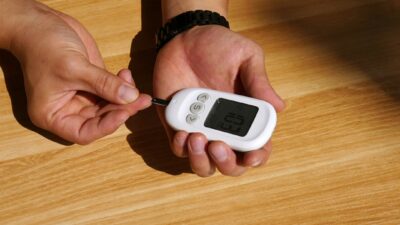
Pediatric diabetes management is fundamentally different from adult care — it is family-centered, technology-rich, growth-aware, and mental-health-attuned. The child or teen, parents, siblings, school staff, and medical team all play roles. Modern care combines continuous glucose monitoring, automated insulin delivery, smart pens, structured education, and routine mental health screening. Insulin doses are weight-based and recalculated frequently as the child grows. Self-management develops gradually over years. This article overviews the principles that apply across both type 1 and type 2 pediatric diabetes.
Family-Centered Care
Unlike adult diabetes, pediatric management is not the patient’s responsibility alone. Effective care involves:
- Parents and primary caregivers
- The child or adolescent at developmentally appropriate level
- Siblings (often impacted; sometimes left out)
- Grandparents or other extended family caregivers
- School nurse and teachers
- Coaches, camp counselors, babysitters
- Pediatric endocrinologist + diabetes educator + dietitian + social worker + psychologist
- Primary care pediatrician
The “team” is large and communication breakdowns are common — written plans (Diabetes Medical Management Plan, 504, IEP) help.
Glucose Monitoring
| Device | Type | Wear Time | Notes |
|---|---|---|---|
| Dexcom G7 | CGM | 10 days | Approved ≥2 y; share with up to 10 followers |
| Abbott FreeStyle Libre 3 | CGM | 14 days | Approved ≥4 y; smallest sensor |
| Medtronic Guardian 4 | CGM | 7 days | Pairs with Medtronic pumps |
| Eversense (implantable) | CGM | 180 days | Adults only currently |
| Finger stick BGM | Spot check | — | Backup; still used in young children intermittently |
| Urine ketone strips | — | — | Sick-day backup |
| Blood ketone meter | — | — | More accurate than urine; recommended for T1D households |
CGM is now considered standard of care for T1D in children of all ages. CGM reduces severe hypoglycemia, increases time in range, reduces A1C, and improves quality of life for the whole family.
Insulin Delivery Options
| System | Age Approval | How It Works |
|---|---|---|
| Multiple daily injections (MDI) | All ages | Long-acting basal + rapid-acting boluses with meals/corrections |
| Smart pens (InPen, Tempo, NovoPen 6) | All ages | Track doses, integrate with CGM apps, calculate bolus suggestions |
| Insulin pump (no automation) | All ages | Continuous subcutaneous insulin via cannula, programmed basal rates |
| Tandem t:slim X2 + Control-IQ | ≥6 y | AID; predicts and adjusts basal, auto-bolus for highs |
| Omnipod 5 | ≥2 y | Tubeless AID, smartphone-controlled |
| Medtronic 780G | ≥7 y | AID; auto-correction boluses; SmartGuard |
| Beta Bionics iLet | ≥6 y | “Bionic pancreas” — only needs weight input, simplifies dosing |
How Automated Insulin Delivery Changes Care
- Basal insulin auto-adjusts to predicted glucose every 5 minutes
- Many systems auto-correct highs without user input
- Time in range improves 10–15 percentage points on average
- A1C drops 0.3–0.6 percentage points compared to pump + CGM alone
- Nocturnal hypoglycemia drops dramatically
- Parent sleep improves — fewer alarms, more predictable nights
- Mealtime bolusing still required (except iLet, which simplifies but doesn’t eliminate)
- Carb counting still important for full benefit
Insulin Dosing in Children
Doses are weight-based and recalculated:
- Total daily dose (TDD) — typically 0.5–1.0 u/kg/day
- Honeymoon TDD — 0.2–0.4 u/kg/day
- Pubertal TDD — 1.0–1.5 u/kg/day (growth hormone is potently anti-insulin)
- Distribution — about 40–50 percent basal, 50–60 percent prandial/correction
- Insulin-to-carb ratio — start with 500 rule (500 ÷ TDD) for adults; pediatric often uses 300–450 rule
- Correction factor — start with 1800 rule (1800 ÷ TDD)
- Pre-meal bolus 15–20 minutes before eating improves post-prandial control
- Ultra-rapid analogs (Fiasp, Lyumjev) work faster for picky-eater dosing after meals
Carb Counting Basics
- Read nutrition labels and standard portion sizes
- Apps (Calorie King, MyFitnessPal, Carb Manager) speed lookup
- Restaurant nutrition info online for chains
- Hidden carbs in sauces, drinks, dressings
- Fat and protein delay glucose rise — extended boluses help for pizza, ice cream
- Pre-meal bolus 15–20 minutes ahead of eating works well for most foods
- Younger children with unpredictable eating — split bolus (half before, half after) or post-meal bolus
Sick Day Rules
- Check glucose every 2–4 hours (or rely on CGM with backup confirmation)
- Check ketones if glucose >240 mg/dL or with illness
- Continue insulin even if eating less — illness raises glucose
- Push fluids — sugar-free if glucose elevated, with sugar if low
- Add correction doses every 3–4 hours for high glucose with ketones
- Call the diabetes team for moderate ketones (≥0.6 mmol/L blood beta-hydroxybutyrate) or persistent vomiting
- Hospital for large ketones (≥3.0), vomiting preventing fluid intake, altered consciousness, rapid breathing
Mental Health Integration
- Depression — 2–3x general pediatric prevalence; screen with PHQ-A or PHQ-9
- Anxiety — often around hypoglycemia, social situations
- Diabetes distress — burnout, treatment fatigue, “diabetes burnout”
- Disordered eating — particularly girls with T1D; “diabulimia” (intentional insulin omission for weight loss) has high mortality
- Family conflict around regimen adherence
- ADHD prevalence higher in pediatric T1D
- Routine annual screening starting at diagnosis
- Referral to mental health professional with diabetes experience when indicated
School Coordination
Daily care happens at school for 6+ hours. Coordination requires:
- Diabetes Medical Management Plan (DMMP) from the medical team
- 504 Plan or IEP from the school
- School nurse training on devices, dosing, glucagon
- Emergency glucagon (Baqsimi nasal, Gvoke prefilled, generic injection) on-site
- Permission to carry supplies and self-treat hypoglycemia
- PE adjustments and field trip planning
- See school management for pediatric diabetes for the full guide
Growth, Development, and Diabetes
- Monitor height, weight, BMI at each visit
- Pubertal staging (Tanner) — affects insulin needs
- Bone health screening in long-duration T1D
- Thyroid screening annually for T1D (autoimmune comorbidity)
- Celiac screening at diagnosis and periodically for T1D
- Address smoking, vaping, alcohol, substance use in adolescent visits
- Contraception counseling for sexually active teens — pregnancy with uncontrolled diabetes is high risk
Diabetes Camps and Peer Support
- ADA Camps, JDRF (Breakthrough T1D) programs, Camp Nejeda, Clara Barton Camp
- Peer connection — often first time child meets another with diabetes
- Skill-building in a supportive environment
- Parent respite
- Counselors with diabetes serve as role models
- Day camps and overnight options for different ages
Insurance and Access
- Insulin and supplies remain expensive even with insurance
- Medicare/Medicaid coverage varies by state
- Manufacturer copay assistance programs
- Patient assistance programs for low-income families
- Prior authorization for pumps, CGMs common
- Insulin cost cap legislation has helped in some states
- Insulin and pump pages on treatment have ongoing updates
Side Effects and Risks of Pediatric Diabetes Management
- Hypoglycemia — most common acute risk; can cause seizure, unconsciousness in severe cases
- DKA — recurrent in poorly controlled or technology failure
- Lipohypertrophy at injection or infusion sites
- Skin reactions to pump and CGM adhesives
- Weight gain — insulin is anabolic
- Treatment burden — alarm fatigue, decision fatigue, family stress
- Body image issues, especially with visible devices
- Sleep disruption from alarms, especially in early diagnosis
Related Reading
See type 1 diabetes in children for T1D-specific deep dive and type 2 diabetes in children for T2D-specific. The honeymoon phase is covered in honeymoon period in type 1 diabetes. For acute lows in kids see low blood sugar in kids.
The Bottom Line
Pediatric diabetes management is family-centered, technology-rich, and growth-aware. Standard of care for T1D includes continuous glucose monitoring and increasingly automated insulin delivery via systems like Tandem Control-IQ, Omnipod 5, Medtronic 780G, and Beta Bionics iLet. Insulin doses are weight-based and recalculated as children grow and progress through puberty. Mental health screening is built into routine visits. School coordination via DMMP and 504 plans protects daily care. Diabetes camps and peer support fill gaps that medical visits cannot. Talk to your child’s care team about technology that fits your family, mental health support, and the gradual transition to self-management as your child grows.