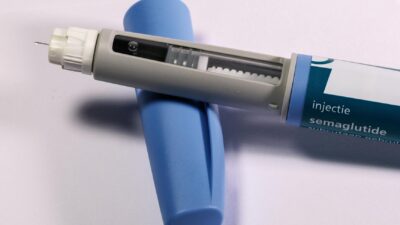
Compounded semaglutide is not FDA-approved, and any dosage chart presented for it should be read as an informational reference based on the FDA-approved Wegovy titration schedule, not as a self-prescribing tool. The standard Wegovy escalation starts at 0.25 mg subcutaneously once weekly, increases every four weeks (0.5, 1.0, 1.7 mg), and reaches a maintenance dose of 2.4 mg weekly. Compounding pharmacies and telehealth programs typically mirror this schedule, but specific dosing must come from a licensed prescriber who has evaluated you, reviewed your medical history, and is monitoring you for side effects.
Reference Dosage Chart (Based on Wegovy Titration)
| Week | Dose (Subcutaneous, Once Weekly) | Purpose |
|---|---|---|
| 1 to 4 | 0.25 mg | Initiation; for tolerability only, not for clinical effect |
| 5 to 8 | 0.5 mg | First titration step |
| 9 to 12 | 1.0 mg | Second titration step |
| 13 to 16 | 1.7 mg | Third titration step |
| 17 and beyond | 2.4 mg | Maintenance dose for chronic weight management |
This schedule is taken directly from the Wegovy prescribing information. If a dose is not tolerated, the prescribing information allows delaying titration by four weeks. If 2.4 mg is not tolerated, 1.7 mg may be considered as a maintenance dose, with reassessment of whether to continue therapy.
What Compounded Semaglutide Is
Compounded semaglutide is a medication mixed by a state-licensed compounding pharmacy rather than a FDA-approved branded product manufactured by Novo Nordisk. Compounding pharmacies are regulated under sections 503A (patient-specific compounding) and 503B (outsourcing facilities) of the Federal Food, Drug, and Cosmetic Act. Per the FDA’s overview at Compounding and the FDA, compounded drugs are not FDA-approved, and the agency does not verify the safety, effectiveness, or quality of compounded products before they reach patients.
The Legal Landscape Has Changed
During the FDA-declared semaglutide shortage of 2022 to 2024, compounding pharmacies could legally produce certain semaglutide preparations under sections 503A and 503B. The FDA declared the semaglutide shortage resolved in 2025, narrowing the legal basis for routine compounding. Per the FDA’s semaglutide guidance page, large-scale compounding of copies of an approved drug that is no longer in shortage is generally not permitted. Patient-specific 503A compounding remains permitted in narrow cases, such as a documented allergy to an inactive ingredient in the brand product, but routine compounded weight-loss programs are now in legal jeopardy.
Why Compounded Doses May Look Different
Some compounded semaglutide products are sold with dosing in units (using insulin syringes) rather than milligrams. Common references include “10 units” or “20 units” of a 2.5 mg/mL or 5 mg/mL preparation. The conversion depends on the specific concentration that the compounding pharmacy used, which varies by source. This is one reason a compounded dose cannot be used interchangeably with a Wegovy or Ozempic dose. Always rely on the prescriber and the dispensing pharmacy for the exact unit-to-milligram conversion for the specific bottle you receive.
Safety Considerations
Salt Forms
The FDA has warned about compounded products containing semaglutide salt forms (such as semaglutide sodium or semaglutide acetate) that are not the same as the active ingredient in Wegovy or Ozempic. These salt forms have not been evaluated for safety or efficacy, and the agency has issued warning letters to several telehealth and compounding entities.
Sterility
Compounded injectables must be made under sterile conditions. Improperly compounded products risk contamination and infection at the injection site or systemically. Reputable compounding pharmacies are accredited and inspected, but consumers cannot easily verify quality.
Bioequivalence
Compounded preparations have not undergone the bioequivalence testing required for FDA-approved generics. The same labeled dose may produce different blood levels depending on the formulation, which affects both efficacy and side effects.
Adverse Event Reporting
Adverse events from compounded products are often underreported because there is no direct manufacturer label. If you experience a serious side effect, report it to the FDA’s MedWatch program and notify your prescriber.
Side Effects to Expect Regardless of Source
- Nausea, diarrhea, vomiting, constipation, abdominal pain, dyspepsia
- Decreased appetite and early satiety
- Injection-site reactions such as redness or mild swelling
- Fatigue during titration weeks
- Hair thinning during rapid weight loss
Less common but serious risks include acute pancreatitis, gallbladder disease, acute kidney injury from dehydration, severe hypersensitivity reactions, hypoglycemia in patients also taking insulin or sulfonylureas, diabetic retinopathy complications, and a boxed warning regarding thyroid C-cell tumors based on rodent studies. Semaglutide is contraindicated in patients with a personal or family history of medullary thyroid carcinoma or multiple endocrine neoplasia syndrome type 2. For broader prediabetes context, see our pages on treatment options and A1C levels.
Questions to Ask Before Starting Compounded Semaglutide
- Is my situation among the narrow exceptions where 503A compounding is still legally appropriate?
- Which compounding pharmacy is the source, and is it accredited (e.g., PCAB)?
- What concentration is in the vial I will receive, and what is the unit-to-mg conversion?
- What salt form of semaglutide is being used?
- What baseline labs do you want before starting therapy?
- What is the plan if I cannot tolerate titration steps?
- How will side effects be reported and managed?
The Bottom Line
The Wegovy titration schedule (0.25, 0.5, 1.0, 1.7, 2.4 mg weekly) is the most commonly referenced dosage chart for compounded semaglutide because it is the FDA-approved standard. However, compounded semaglutide is not FDA-approved, the legal basis for routine compounding narrowed after the 2025 shortage resolution, and dosing must come from a licensed prescriber who has evaluated you. Use this chart as informational background only, and have an open conversation with your clinician about whether a compounded source is appropriate or whether brand-name Wegovy is a safer and more sustainable choice.
Medical disclaimer: This article is for informational purposes only and does not constitute medical advice. Always consult a qualified healthcare professional before starting, stopping, or changing any medication or treatment plan.