Hospice and diabetes care is a deliberate shift. The framework that governs active diabetes management — A1C below 7, time in range, complication prevention — assumes years of life ahead in which tight control changes outcomes. Hospice care assumes months, weeks, or days, and during that window the trade-offs reverse. Tight glucose control offers little remaining benefit. Hypoglycemia produces immediate discomfort and risk of fall, confusion, and distress. Treatment burden — multiple daily injections, frequent fingersticks, dietary restrictions — subtracts from quality of life. The goal becomes symptom-focused comfort, which usually means fewer medications, broader glucose ranges, and less monitoring. One absolute rule remains: insulin is never stopped completely in type 1 diabetes.
What Hospice Means
- Comfort-focused care, typically for patients with prognosis of six months or less.
- Covered by Medicare hospice benefit, Medicaid hospice, and most private insurance.
- Provided at home, in dedicated hospice facilities, or in long-term care.
- Interdisciplinary team: physician, nurse, social worker, chaplain, hospice aide, sometimes pharmacist.
- Patients can be enrolled longer than six months if prognosis continues to support hospice eligibility.
Why Diabetes Targets Change
- The benefits of tight glycemic control accumulate over years — not available in hospice.
- The harms of hypoglycemia are immediate — confusion, sweating, anxiety, fall risk.
- Treatment burden (injections, fingersticks, food restrictions) detracts from comfort.
- Variable oral intake at end of life makes meal-based insulin dosing erratic.
- Kidney function decline alters insulin clearance unpredictably.
- Polypharmacy reduction is itself a quality-of-life goal.
The Type 1 vs Type 2 Distinction
| Diabetes Type | Insulin in Hospice | Key Rule |
|---|---|---|
| Type 1 | Continue at minimum dose | Never stop — DKA risk |
| Long-standing insulin-treated T2D | Often reduce or stop | Individualize; DKA possible if very insulin-deficient |
| Type 2 on oral agents | Often stop | Watch for symptomatic hyperglycemia |
| Newly insulin-requiring T2D | Often reduce | Lower dose; less frequent |
| LADA / late-onset T1D | Treat as type 1 | Continue insulin |
| Pancreatogenic diabetes | Treat as type 1 | Continue insulin |
Comfort Glucose Ranges
- Common acceptable range: 100 to 300 mg/dL — broad enough to avoid both ends.
- Some teams tolerate up to 400 if the patient is asymptomatic.
- Below 100 is the warning zone — risk of hypoglycemia increasing.
- Symptomatic hyperglycemia (polyuria, dehydration, thirst) is treated; asymptomatic mild hyperglycemia is not.
- Symptomatic hypoglycemia (confusion, sweating, agitation) is treated promptly.
- Goal is patient comfort, not number targets.
Deprescribing Framework
| Medication | Action at Hospice Enrollment | Rationale |
|---|---|---|
| Sulfonylureas | Stop | Hypoglycemia risk; no benefit at this stage |
| SGLT2 inhibitors | Stop | Volume depletion, DKA, UTIs |
| GLP-1 RAs | Stop | Appetite suppression, GI burden |
| Pioglitazone | Stop | Edema, no short-term benefit |
| Metformin | Often stop | GI side effects; kidney function |
| DPP-4 inhibitors | Often stop | Reduces pill burden |
| Insulin (T2D) | Reduce or stop | Hypoglycemia avoidance |
| Insulin (T1D) | Reduce, never stop | DKA prevention essential |
Monitoring Frequency
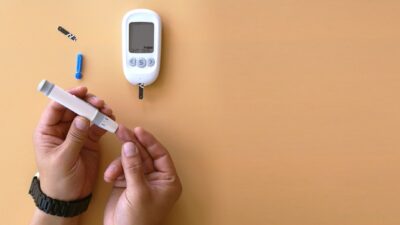
- Patients off all glucose-lowering medications: monitoring may stop entirely.
- Patients on minimum insulin: once or twice daily, often before main meal.
- Patients with type 1 diabetes: once daily basal review; symptom-triggered checks.
- Continuous glucose monitors are often discontinued because alarms disturb rest, though some families keep them on for caregiver reassurance.
- Symptom-based monitoring (check if confusion, thirst, increased urination) is appropriate in many cases.
Common Symptoms and Their Glucose Connection
- Confusion: can be hypoglycemia (treat immediately) or hyperglycemic coma (check glucose).
- Increased thirst and urination: often hyperglycemia — reduce dose adjustment may help.
- Sweating and tremor: classic hypoglycemia in patients still aware.
- Lethargy: multifactorial; check glucose if uncertain.
- Anxiety and agitation: can be hypoglycemia in patients with awareness intact.
- Falls: hypoglycemia is a leading driver in older patients on insulin or sulfonylurea.
Who Is Hospice-Eligible
Common comorbidities that bring diabetic patients into hospice include end-stage renal disease, advanced cardiovascular disease, advanced dementia, and metastatic cancer. Diabetes itself is rarely the hospice qualifying diagnosis but commonly accompanies the qualifying condition. Each case requires a prognosis assessment from a physician and a hospice medical director.
Caregiver and Family Support
- Caregivers may struggle with the shift from “keeping blood sugar normal” to “comfort first.”
- Explicit framing helps: “We are not stopping caring — we are changing what we are caring about.”
- Glucagon should still be available for type 1 diabetes patients in hospice.
- Family education about DKA symptoms in type 1 diabetes — for the rare case insulin is interrupted.
- Bereavement support after death includes Medicare-covered hospice grief services.
- See our caregiver burden in diabetes guide for broader context.
Diabetes-Specific Hospice Teams
Some hospice agencies have endocrinology-trained nurses or medical directors with specific diabetes expertise. In rural areas, telehealth consultation with palliative care diabetes specialists is increasingly available. The American Academy of Hospice and Palliative Medicine and the American Diabetes Association have collaborated on guidance documents that hospice teams now use widely.
Advance Care Planning
- Discuss glycemic goals before hospice enrollment when possible.
- Diabetes-specific advance directives can document preferences.
- DNR/DNI conversations should include preferences about insulin continuation, blood glucose monitoring, and treatment of hypo or hyperglycemia.
- Patient and family alignment is more important than the specific glucose number.
- Revisit decisions as the clinical picture changes.
Related Topics
For specific glycemic goals at end of life, see our companion guide on end-of-life glycemic targets. For the broader nursing home context, see nursing home diabetes care. For dementia-specific considerations, see dementia and diabetes care. Broader management context is in our treatment overview.
The Bottom Line
Hospice care reorients diabetes management around comfort rather than glycemic control. Many medications can be reduced or stopped — sulfonylureas, SGLT2 inhibitors, GLP-1 receptor agonists, and often metformin and insulin in type 2 diabetes. For type 1 diabetes, insulin must never be stopped completely because DKA develops rapidly. Comfort glucose ranges are typically broad — 100 to 300 mg/dL or wider — prioritizing hypoglycemia avoidance and prevention of symptomatic hyperglycemia. Monitoring frequency drops to once daily, symptom-based, or stops entirely depending on the regimen. The shift requires explicit framing for families: comfort-focused care is not less caring but a different kind of caring. The American Academy of Hospice and Palliative Medicine and the American Diabetes Association both endorse this framework. Done well, hospice diabetes care meaningfully reduces treatment burden while preserving comfort and dignity through the end of life.