How many mg is 40 units of semaglutide? The short answer: it depends on the concentration of your specific vial, because 40 units is a volume measurement (0.40 mL on a U-100 insulin syringe), not a drug amount. The milligram conversion varies across pharmacies and preparations, which is why your prescriber and pharmacist must confirm the number for your product.
Why the Question Exists
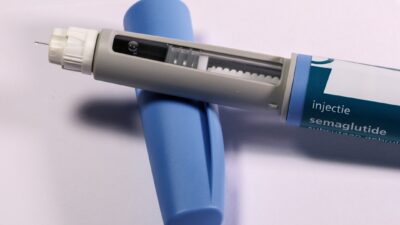
FDA-approved semaglutide products — Ozempic and Wegovy — are prefilled pens that deliver a preset milligram dose, so patients never count units. The confusion arises with compounded semaglutide, which is typically dispensed as a multi-dose vial. Patients draw each weekly dose into an insulin syringe marked in U-100 units, where 100 units equals 1 mL and each unit equals 0.01 mL.
For an overview of where semaglutide fits within glucose management options, see our treatment hub and, for a broader context on glucose dysregulation itself, our prediabetes 101 resource.
The Math — Reference Framework Only
Start with the conversion everyone agrees on: 40 units on a U-100 syringe equals 0.40 mL. From there, the milligram content depends on how many milligrams of semaglutide are in each mL of liquid.
| Vial Concentration | Mg in 0.40 mL (40 units) | Mg in 0.20 mL (20 units) |
|---|---|---|
| 1.0 mg per mL | 0.40 mg | 0.20 mg |
| 2.0 mg per mL | 0.80 mg | 0.40 mg |
| 2.5 mg per mL | 1.00 mg | 0.50 mg |
| 5.0 mg per mL | 2.00 mg | 1.00 mg |
| 10.0 mg per mL | 4.00 mg | 2.00 mg |
The chart above is a clinical framework for discussion. Your pharmacy label lists the concentration in your vial; that is the number that applies to your actual dose.
How Pharmacists Derive the Concentration
Compounded semaglutide usually starts as a lyophilized (freeze-dried) powder in a vial. The pharmacist or patient reconstitutes it with bacteriostatic water. The concentration is determined by two things: the total milligrams of semaglutide in the vial and the total volume of diluent added. A vial containing 10 mg of semaglutide reconstituted with 2 mL of water yields 5 mg per mL; reconstituted with 1 mL it yields 10 mg per mL.
Where Mistakes Happen
The FDA has warned repeatedly about dosing errors with compounded GLP-1 medications. The agency’s public advisory on compounded semaglutide and tirzepatide describes cases where patients confused units on an insulin syringe with milligrams, resulting in 5- to 10-fold overdoses and emergency-room visits.
Red Flags That Warrant a Pharmacy Call
- Label lists a volume (mL) and a unit count that don’t match your prescriber’s milligram order.
- Vial concentration is not printed clearly on the label.
- Pharmacy supplies no written dose instructions.
- Your prescribed dose requires more than about 50 to 60 units on the syringe — often a signal that the concentration is unusually dilute.
Branded Semaglutide Doses for Comparison
According to the Ozempic FDA label, the drug is titrated from 0.25 mg weekly (starter) to 0.5, 1, and 2 mg maintenance doses. Wegovy escalates from 0.25 mg to 2.4 mg over 16 weeks. These doses were not derived from unit-based calculations and do not require any math from patients.
Putting This in Context
The right maintenance dose of semaglutide depends on your A1C goals, weight trajectory, tolerability, and other medications. Nutrition foundations and activity amplify any GLP-1 response. All of these inputs are evaluated by your clinician rather than by a conversion chart.
Side Effects Across the Dose Range
Semaglutide’s common side effects — nausea, vomiting, diarrhea, constipation, abdominal pain — track with dose and with the pace of escalation rather than with any specific unit count. Starter doses minimize symptoms; higher maintenance doses produce the largest A1C and weight effects but the most gastrointestinal burden. Rare but serious risks listed in the FDA label include pancreatitis, gallbladder disease, acute kidney injury, and diabetic retinopathy complications. The boxed warning about thyroid C-cell tumors applies to all doses. Report any severe or persistent abdominal pain to your clinician promptly, and check in about any new vision changes.
The Bottom Line
40 units of semaglutide is 0.40 mL of liquid; how many milligrams that represents is a function of your specific vial’s concentration. This article gives you the framework to ask the right questions, but it does not substitute for the product-specific instructions from your prescriber and dispensing pharmacist. When in doubt, call the pharmacy before you inject.