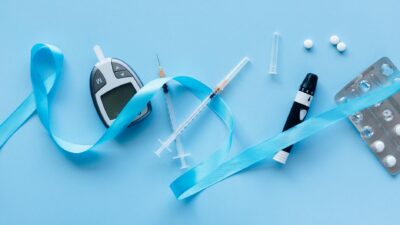
Insulin is the hormone your pancreas makes to move glucose out of the bloodstream and into your cells. In people with diabetes, this system breaks down — either because the pancreas makes little or no insulin (type 1) or because cells stop responding to it (type 2). Insulin therapy replaces or supplements that missing hormonal signal so blood sugar stays in a safe range.
How Insulin Works in the Body
After you eat, carbohydrates break down into glucose that enters your bloodstream. Rising blood sugar triggers beta cells in the pancreas to release insulin. Insulin acts like a key, unlocking muscle, liver, and fat cells so they can take in glucose for energy or storage. Between meals, insulin levels drop and the liver releases stored glucose to keep blood sugar stable.
In type 1 diabetes, an autoimmune attack destroys the insulin-producing beta cells. In type 2 diabetes — which is preceded by prediabetes — cells become resistant to insulin, and the pancreas eventually cannot keep up with demand.
Who Needs Insulin Therapy
- Type 1 diabetes: All patients. Insulin is life-sustaining from diagnosis.
- Type 2 diabetes: Used when diet, exercise, and oral or non-insulin injectable medications cannot keep A1C in target range, or when A1C is very high at diagnosis.
- Gestational diabetes: Prescribed when blood sugar stays elevated despite diet adjustments.
- Hospitalized patients: Temporary insulin is often used during surgery, infection, or steroid therapy.
- Prediabetes: Insulin is rarely needed. First-line treatment is lifestyle change, sometimes plus metformin.
Types of Insulin
| Type | Examples | Onset | Peak | Duration |
|---|---|---|---|---|
| Rapid-acting | Lispro, aspart, glulisine | 10–15 min | 1–2 hrs | 3–5 hrs |
| Short-acting (regular) | Humulin R, Novolin R | 30 min | 2–4 hrs | 6–8 hrs |
| Intermediate-acting | NPH | 1–2 hrs | 4–10 hrs | 10–16 hrs |
| Long-acting | Glargine, detemir | 1–2 hrs | Minimal | 20–24 hrs |
| Ultra-long-acting | Degludec | 30–90 min | Minimal | 42+ hrs |
Most people using insulin combine a basal (long-acting) insulin with a bolus (rapid-acting) dose at meals. Pre-mixed insulins are also available for simpler regimens.
Benefits of Insulin
- Effective at any A1C level — unlike some oral medications, insulin can be titrated to bring even very high blood sugar down.
- Preserves beta-cell function in some early type 2 patients when used short-term.
- Reduces long-term complications — the DCCT and UKPDS trials showed that tight glucose control lowers risk of eye, kidney, and nerve damage.
- Flexible dosing that can be matched to individual meals, activity, and schedules.
Side Effects and Risks
The most common side effect is hypoglycemia — blood sugar below 70 mg/dL. Symptoms include shakiness, sweating, heart palpitations, confusion, and hunger. Severe hypoglycemia can cause seizures or loss of consciousness. According to the NIDDK, carefully matching insulin to food, activity, and testing patterns is the best way to minimize low blood sugar.
Other potential side effects include:
- Weight gain — especially with higher doses of basal insulin
- Injection-site reactions such as redness, itching, or lipohypertrophy (fatty lumps) from repeated injections in one spot
- Fluid retention early in therapy
- Rare allergic reactions to specific insulin formulations
Insulin and Prediabetes: An Important Distinction
Prediabetes is defined as a fasting glucose of 100–125 mg/dL or an A1C between 5.7% and 6.4%. At this stage, the pancreas is still making plenty of insulin — often too much — to compensate for insulin resistance. Adding exogenous insulin is almost never the answer. Instead, treatment focuses on improving insulin sensitivity through weight loss, exercise, and dietary changes, which you can explore in our prediabetes treatment guide.
How Insulin Is Delivered
- Syringes and vials — least expensive, most flexible dosing
- Insulin pens — pre-filled and more portable; easier to dose discreetly
- Insulin pumps — continuous subcutaneous infusion, often paired with continuous glucose monitors
- Inhaled insulin — a rapid-acting powder inhaler is available as a mealtime option
The Bottom Line
Insulin is the central hormone in diabetes — and often the central therapy. Everyone with type 1 diabetes, and many people with advanced type 2, need insulin to keep blood sugar in a safe range and prevent complications. The main trade-offs are hypoglycemia and potential weight gain, both of which are manageable with careful dosing, structured monitoring, and coordination with your care team. For anyone with prediabetes, insulin is not the starting point — lifestyle changes remain the most powerful, evidence-based first step. Discuss any medication decisions with your doctor to match treatment to your personal risk and goals.