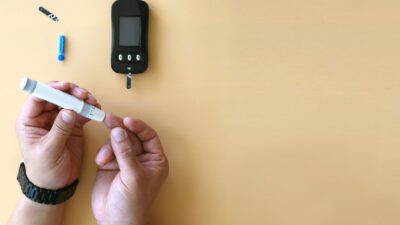
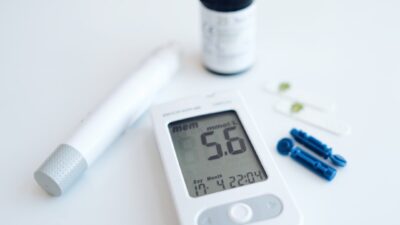
Obsessive-compulsive disorder occurs at modestly elevated rates in adults with diabetes compared with the general population, approximately 2 to 3% versus 1 to 2%. The relationship is bidirectional: pre-existing OCD can complicate diabetes self-management by amplifying checking and food-control compulsions, and the necessary checking behaviors of diabetes care can crystallize into OCD-style compulsions in vulnerable individuals. Understanding the distinction between appropriate self-management vigilance and pathological OCD compulsions is essential because the treatment differs. This guide covers the common presentations, the assessment, and the evidence-based treatments that work alongside diabetes care.
Common OCD Presentations in Diabetes
| Presentation | What it looks like | Frequency in OCD + diabetes |
|---|---|---|
| Glucose-checking compulsions | 20-50+ fingerstick or CGM checks daily; anxiety-driven; ritualized | Most common; 40-60% |
| Food-control rituals | Precise carb counting beyond clinical need; rigid food rules; “safe” foods only | 30-40% |
| Dose-calculation compulsions | Recalculating insulin dose many times; counting injection numbers; ritualized site selection | 20-30% |
| Pure-O mental rumination | Mental review of glucose data, dose decisions, food choices; no external compulsions | 10-20% |
| Contamination concerns | Excessive site cleaning; needle-disposal rituals; avoiding “contaminated” food | 5-10% |
| Equipment-checking compulsions | Repeatedly verifying pump function, CGM connection, supply counts | 10-15% |
Healthy Self-Management vs OCD-Style Checking
- Healthy self-management: planned, clinically appropriate (4-10 daily checks for T1D, 1-4 for T2D on insulin); decisions follow the data; takes 15-30 min total daily.
- OCD-style: anxiety-driven; 20-50+ daily checks; checking provides only brief relief; often does not act on the data; takes 1+ hour daily; interferes with function.
- Key markers of OCD: time consumed (≥1 hour daily), anxiety-driven rather than data-driven, interferes with work/relationships/sleep, recognized as excessive but cannot stop.
- The person with diabetes alone reviews data to plan; the person with OCD reviews data to manage anxiety.
Diabetes-Specific OCD Subtypes
- Hypoglycemia obsession: persistent fear of low glucose; can overlap with hypoglycemia anxiety.
- Complications obsession: rumination on future complications regardless of actual A1C/control.
- Dose-precision obsession: insistence on exact carb counts to the gram; refusing meals where exact counts aren’t possible.
- Food-purity obsession: extreme rigidity about “clean” or “safe” foods, often beyond clinical need.
- Symmetry/sequence compulsions: ritualized injection sites, ordered timing, must-do-in-order behaviors.
Treatment — Exposure and Response Prevention (ERP)
- First-line evidence-based psychotherapy for OCD.
- Gradually exposes the person to triggering situations while preventing the compulsive response.
- For diabetes-related OCD: gradually reducing glucose checks toward clinically appropriate frequency while building tolerance for uncertainty.
- Typical structured ERP: 12 to 20 sessions, often combined with homework.
- Requires coordination with diabetes care team to ensure clinical safety during reduction.
- Effect sizes are large — 60 to 80% of patients show significant improvement.
Pharmacotherapy for OCD
- SSRIs are first-line; doses are typically higher than for depression.
- FDA-approved for OCD: fluoxetine, fluvoxamine, paroxetine, sertraline, escitalopram.
- Typical OCD doses: fluoxetine 40-80 mg, sertraline 150-200 mg, fluvoxamine 100-300 mg.
- Response takes longer than for depression — 8-12 weeks at full dose.
- Clomipramine (a tricyclic) is highly effective but has more side effects; usually reserved for treatment-resistant cases.
- Augmentation with low-dose antipsychotic (aripiprazole, risperidone) sometimes used — but antipsychotics carry diabetes-specific concerns.
- SSRIs are weight-neutral to slight weight-gain; generally compatible with diabetes self-management.
CGM Use in OCD-Vulnerable Adults
- CGMs can reduce fingerstick checking compulsions by providing continuous data.
- But CGMs can also create new compulsions — app-checking, scrolling, anxiety on minor fluctuations.
- For most adults with OCD tendencies, CGMs reduce diabetes-related anxiety overall.
- Setting boundaries: alarm thresholds set appropriately; viewing frequency limited to mealtime + occasional intervention; not staring at the graph.
- Consider hiding the phone CGM app behind a folder; turn off non-urgent alerts.
- Discuss with both endocrinology and mental health providers.
OCD Severity Assessment
- Y-BOCS (Yale-Brown Obsessive Compulsive Scale): standard severity measure; 10 items.
- 0-7 mild; 8-15 moderate; 16-23 moderate-severe; 24-31 severe; 32-40 extreme.
- Diabetes-specific adaptations exist but are research-level.
- The American Diabetes Association recommends mental health screening at routine visits.
Family and Caregiver Considerations
- Family members can inadvertently accommodate OCD behaviors (e.g., agreeing to checking, reassurance-seeking).
- Accommodation feels supportive but reinforces the OCD pattern.
- Family education about OCD reduces accommodation behaviors.
- Family-based therapy is particularly important for children and adolescents with T1D and OCD.
- Spouses or partners often need their own support to manage the relationship strain.
Coexisting Mental Health Conditions
- Anxiety disorders coexist with OCD in 50-60% of cases — see our anxiety and diabetes guide.
- Depression coexists in 30-50% of OCD cases.
- Eating disorders show overlap — diabulimia and food-rigid OCD can blur.
- Tic disorders coexist in some pediatric OCD presentations.
- The treatment plan needs to address coexisting conditions.
Practical Strategies for Daily Management
- Set planned check-in times for glucose review rather than continuous checking.
- Use a CGM with appropriate alarm thresholds rather than fingerstick compulsions.
- Write down a worry instead of acting on it; review later with a therapist or coach.
- Use scheduled “worry time” for diabetes problem-solving — contained periods rather than constant rumination.
- Identify and label OCD thoughts as separate from realistic concerns.
- Practice exposure exercises with therapist guidance.
- Maintain regular sleep and exercise — both reduce OCD severity.
When to Seek Professional Help
- Glucose checking takes more than 1 hour daily.
- Food-control rituals interfere with work, social life, or relationships.
- The behaviors feel anxiety-driven rather than clinically necessary.
- You recognize the behaviors are excessive but cannot stop.
- Coexisting anxiety, depression, or eating disorder symptoms.
- Find a therapist trained in ERP — the International OCD Foundation (iocdf.org) maintains a provider directory.
- Coordinate with the endocrinology team during ERP for clinical safety.
The Bottom Line
OCD occurs at modestly elevated rates in adults with diabetes — approximately 2 to 3% versus 1 to 2% in the general population. The relationship is bidirectional: pre-existing OCD can complicate diabetes self-management by amplifying checking and food-control compulsions, and the necessary checking behaviors of diabetes care can crystallize into OCD-style compulsions in vulnerable individuals. The most common presentations are glucose-checking compulsions (40 to 60% of OCD + diabetes), food-control rituals (30 to 40%), and dose-calculation compulsions. The distinction between healthy self-management and OCD-style checking matters: healthy management is planned and data-driven; OCD checking is excessive, anxiety-driven, and interferes with function. Exposure and Response Prevention (ERP) therapy is first-line treatment and works alongside diabetes self-management when coordinated with the care team. SSRIs at higher doses than used for depression (often 1.5 to 2×) are first-line pharmacotherapy. CGMs can help or hurt depending on how they are used; setting appropriate alarm thresholds and viewing boundaries matters. Find an ERP-trained therapist through the International OCD Foundation directory. For coordinated diabetes-and-mental-health care, the ADA Mental Health Provider Directory lists clinicians with experience in both. See our broader anxiety and diabetes guide for the overlapping anxiety territory.