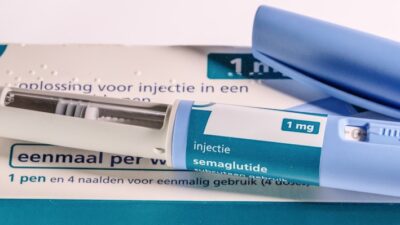
“Ozempic penis” is an internet shorthand for a real, predictable body composition change: as people lose significant weight on semaglutide or other GLP-1 receptor agonists, the suprapubic fat pad shrinks, and more of the penile shaft becomes visible externally. The penis itself does not grow. This is the same mechanism behind “Ozempic face” and “Ozempic butt” — total-body fat loss, including in the pubic region.
What People Mean by “Ozempic Penis”
The phrase began circulating online as more men started taking semaglutide (Ozempic, Wegovy) and tirzepatide (Mounjaro, Zepbound) and noticed that their penis appeared longer or more prominent after losing 30 to 50 pounds or more. There is no anatomical change to the corpora cavernosa, the urethra, or any erectile tissue. What changes is the layer of fat that sits in front of the pubic bone, called the suprapubic fat pad. When that pad is thick, it covers the base of the penis and visually shortens it. When it shrinks, the buried portion of the penile shaft becomes externally visible.
The Anatomy of the Suprapubic Fat Pad
The penis attaches to the pubic bone via the suspensory ligament, with about a third of the total penile length sitting internally. In men carrying excess abdominal weight, the suprapubic fat pad can extend several centimeters in front of the bone, hiding part of that internal segment. This is sometimes called a “buried penis” in clinical settings, and it is well documented in the urology literature. As body fat decreases, the pad recedes and the same anatomical penis becomes more visible. A man who loses 60 pounds may see one to two extra centimeters of visible shaft length, even though no tissue has been added.
Why GLP-1 Weight Loss Triggers This Quickly
GLP-1 receptor agonists like semaglutide and tirzepatide produce more rapid and total-body weight loss than diet and exercise alone. The STEP and SURMOUNT trials documented average weight loss of 15 to 22 percent of body weight over 68 to 72 weeks. Unlike spot training or targeted procedures, this loss is systemic — fat decreases everywhere, including the face, hands, buttocks, and pubic region. Because the change happens within months rather than years, patients notice visible body composition shifts faster than they would on a slower lifestyle program. The “Ozempic” prefix has become a popular catch-all, but the same effect would occur with any intervention that produces comparable rapid weight loss, including bariatric surgery.
What the Research Says About Weight Loss and Penile Length
Studies of bariatric surgery patients support the visibility-versus-anatomy distinction. Research published in JAMA Surgery and urology journals describes increases in functional penile length — the visible, usable portion — after substantial weight loss, with no change in stretched penile length when measured from the pubic bone. A review in the Journal of Sexual Medicine noted that men with obesity often underestimate their penile length because the suprapubic fat pad obscures the base. After weight loss, perception aligns more closely with measured anatomy.
| Body Change | Mechanism | Reversible? |
|---|---|---|
| Increased visible penile length | Suprapubic fat pad reduction | Yes — returns if weight is regained |
| “Ozempic face” | Loss of facial fat pads | Partially; collagen and elastin do not rebound fully |
| “Ozempic butt” | Loss of subcutaneous and gluteal fat | Yes — returns with weight regain |
| Skin laxity | Rapid volume loss exceeds skin retraction rate | Variable; depends on age and rate of loss |
Sexual Function After GLP-1 Weight Loss
Men with obesity often have lower total and free testosterone, higher rates of erectile dysfunction, and reduced libido. Visceral adipose tissue increases aromatase activity, converting testosterone to estrogen, and contributes to vascular endothelial dysfunction. Sustained weight loss generally improves these markers. Several observational studies and a few randomized trials have shown improvements in International Index of Erectile Function (IIEF) scores and serum testosterone after substantial weight loss, whether achieved through lifestyle, surgery, or pharmacotherapy. Early in GLP-1 therapy, some men report reduced libido or fatigue, often tied to caloric deficit, dehydration, or nausea — usually transient as the body adjusts.
When This Is and Isn’t a Concern
For most men, increased penile visibility is a welcome side effect of weight loss. It rarely requires medical attention. Talk to your prescriber if you experience persistent erectile dysfunction, loss of libido, testicular pain, or signs of hypogonadism (low energy, mood changes, loss of muscle mass). These can have multiple causes and warrant a hormone panel rather than blame on the GLP-1 alone. Body image distress in either direction — feeling uncomfortable with the change, or fixating on it — is worth discussing with a clinician or therapist familiar with weight-loss psychology.
Lifestyle Considerations During Rapid Weight Loss
Anyone losing weight rapidly on a GLP-1 should pay attention to a few practical issues that affect overall health and body composition. Resistance training preserves lean mass, including pelvic floor muscles that support sexual function. Adequate protein intake (typically 1.2 to 1.6 grams per kilogram of body weight) protects against excessive muscle loss. Hydration and electrolyte balance reduce fatigue and headaches that can be mistaken for sexual side effects. For men with prediabetes pursuing weight loss for metabolic reasons, our treatment hub reviews evidence-based approaches, and the guide to reversing prediabetes covers lifestyle integration.
How This Compares to “Ozempic Face” and “Ozempic Butt”
All three terms describe the same underlying phenomenon — rapid total-body fat loss — applied to different anatomical regions. “Ozempic face” refers to deflated facial fat pads that can age the appearance, especially in patients over 50. “Ozempic butt” describes loss of gluteal subcutaneous fat that can leave the buttocks looking flatter. “Ozempic penis” describes the suprapubic pad effect. None are unique to semaglutide; they would occur with any equivalent rapid weight loss, including from bariatric surgery, very-low-calorie diets, or other anti-obesity medications. The difference is that GLP-1 use has reached enough patients quickly enough that the patterns now have nicknames. According to the Ozempic prescribing information, weight reduction is an expected effect in most patients, with average loss varying by indication.
The Bottom Line
“Ozempic penis” is not a drug side effect in any clinical sense. It is the visible result of rapid, total-body fat loss reducing the suprapubic fat pad and exposing more of the penile shaft that was always there. The phenomenon is well described in the bariatric surgery literature and is not unique to GLP-1 medications. If you are losing weight on semaglutide or tirzepatide and notice this change, it is generally benign and often welcome. Discuss any persistent sexual function concerns with your prescriber, who can evaluate hormone levels and other contributing factors.
Medical disclaimer: This article is for informational purposes only and does not constitute medical advice. Always consult a qualified healthcare professional before starting, stopping, or changing any medication or treatment plan.