Tirzepatide maintenance dose after weight loss is a clinical conversation, not a fixed prescription. The FDA-approved dose ladder stops at 15 mg; there is no separately labeled maintenance dose. Current evidence suggests that staying on some level of tirzepatide preserves weight loss better than stopping, though some patients successfully taper to lower doses. All decisions depend on your full health picture and belong to your prescriber.
What the Trials Show
The most direct data on this question come from SURMOUNT-4, published in JAMA in 2024. Participants first completed 36 weeks of open-label tirzepatide at their maximum tolerated dose (10 or 15 mg), losing an average of 20.9 percent of body weight. They were then randomized to continue tirzepatide or switch to placebo for another 52 weeks.
Those who continued lost an additional 5.5 percent. Those who switched to placebo regained 14 percent of body weight. The contrast is striking and forms the clinical basis for treating obesity as a chronic condition that often requires ongoing pharmacotherapy, similar to how hypertension and elevated A1C are managed.
Dose Options at Maintenance
| Approach | Typical Dose | What the Data Suggest |
|---|---|---|
| Continue top dose | 10 to 15 mg weekly | Best weight preservation, most side-effect burden |
| Step down one level | 7.5 or 10 mg weekly | Often maintains most of the weight loss; limited trial data |
| Low-dose maintenance | 2.5 or 5 mg weekly | Anecdotal use; not formally studied for this indication |
| Discontinue | 0 mg | Expect gradual regain per SURMOUNT-4 findings |
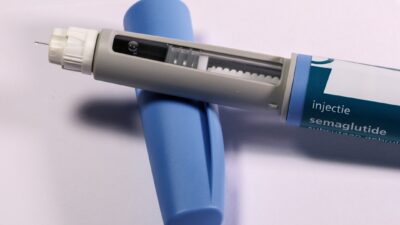
| Switch molecules | Semaglutide 2.4 mg weekly | An alternative GLP-1; results vary |
The table is a clinical framework for conversation with your prescriber, not a personalized recommendation. Some participants in real-world cohorts sustain weight at lower doses; others require continued maximum dosing.
Why Weight Regain Happens
Obesity involves long-term changes in appetite-regulating hormones, including ghrelin, leptin, peptide YY, and GLP-1 itself. GLP-1 receptor agonists compensate for some of these changes while on board. When the drug is stopped, the underlying physiology reverts. The American Diabetes Association’s 2024 Standards of Care describes this as evidence that pharmacotherapy for obesity is generally long-term.
Lifestyle foundations — sleep, activity, nutrition, and stress management — influence how much regain occurs after discontinuation, but they rarely prevent it entirely in people with significant baseline obesity.
Side-Effect Considerations During Maintenance
Gastrointestinal side effects tend to lessen after the first several months on a stable dose but can persist. During maintenance, some patients find that dose reduction offers a good balance of weight preservation with fewer symptoms. Others tolerate the maximum dose indefinitely. The Zepbound FDA label does not distinguish between induction and maintenance dosing.
When Clinicians Often Reduce the Dose
- Persistent nausea, reflux, or early satiety interfering with adequate nutrition.
- Unintentional weight loss below goal.
- Concerning loss of lean mass or functional decline.
- Emergence of labeled adverse events such as gallbladder issues.
- Patient preference and shared decision-making.
Planning for the Long Term
Long-term GLP-1 use requires periodic reassessment — typically every three to six months — of weight, labs, side effects, medication cost, and overall quality of life. Some patients pivot from tirzepatide to semaglutide or vice versa for cost or tolerability reasons. Others layer tirzepatide with structured treatment support including dietitian visits and resistance training to protect lean mass.
Special Situations
Pregnancy planning, upcoming surgery, and new medical conditions can change the calculation. Tirzepatide is not recommended during pregnancy; discontinuation typically occurs at least two months before trying to conceive. For elective surgery, anesthesia guidelines increasingly recommend pausing GLP-1 agonists to reduce aspiration risk; the exact duration depends on procedure and patient factors.
What to Ask at a Maintenance Visit
- What is my current weight trajectory compared with my goals?
- Would a dose reduction preserve most of the benefit with fewer side effects?
- How will we monitor for regain if we reduce or stop the medication?
- Are there signs that would prompt us to return to a higher dose?
- How does my insurance coverage affect the choice between staying and stopping?
The Bottom Line
Tirzepatide maintenance dose after weight loss is not a single number — it is a personalized decision shaped by trial data, side-effect tolerance, and your broader health goals. The evidence favors continuing some level of therapy to preserve results, but the specific plan belongs to you and your prescriber. Use this overview as a framework to open that conversation, not as a dosing instruction.