A tirzepatide reconstitution calculator is an educational tool that converts a vial’s total drug content and added diluent volume into a concentration and a per-dose draw volume. The math itself is simple; the danger is in the inputs. Because online calculators cannot see your actual vial label, they should be used only under the guidance of the prescriber and pharmacist who know your specific product.
Why Reconstitution Is a Compounded-Product Concept
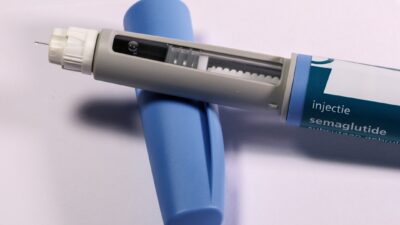
FDA-approved tirzepatide — sold as Mounjaro for type 2 diabetes and Zepbound for chronic weight management — comes in prefilled single-dose pens. There is no mixing, no drawing, and no calculator. Reconstitution comes up only when compounding pharmacies dispense the drug as a lyophilized powder (freeze-dried cake) that must be rehydrated with bacteriostatic water before the first dose.
If you want context on how tirzepatide fits into broader management strategies, our treatment hub and reversibility resources cover the full spectrum.
The Math Behind the Calculator
Three inputs define any reconstitution problem:
- Total drug in vial, in milligrams (e.g., 10 mg or 30 mg).
- Volume of diluent added, in mL (typically 1 mL, 2 mL, or 3 mL).
- Target dose, in milligrams (e.g., 2.5, 5, 7.5, 10 mg).
Concentration = total mg ÷ diluent volume. Draw volume = target dose ÷ concentration. Unit count on a U-100 syringe = draw volume × 100. That is the full calculator.
| Vial Strength | Diluent Added | Concentration | Volume for 5 mg Dose | Units (U-100) |
|---|---|---|---|---|
| 10 mg | 1.0 mL | 10 mg/mL | 0.50 mL | 50 units |
| 10 mg | 2.0 mL | 5 mg/mL | 1.00 mL | 100 units |
| 30 mg | 1.5 mL | 20 mg/mL | 0.25 mL | 25 units |
| 30 mg | 3.0 mL | 10 mg/mL | 0.50 mL | 50 units |
| 60 mg | 3.0 mL | 20 mg/mL | 0.25 mL | 25 units |
This table is a clinical reference. Your pharmacy’s specific vial, diluent, and resulting concentration must be confirmed before any injection.
Where the Math Goes Wrong
The FDA’s safety communication on compounded semaglutide and tirzepatide describes three recurring errors:
- Assuming vial strength = per-dose strength (for example, using a full 30 mg vial as if it were a 30 mg dose).
- Reading mL as units (entering 1.0 where 10 units belongs, resulting in a 10-fold overdose).
- Applying a calculator from a different compounder to a new vial without confirming the actual concentration.
Safer Use of Online Calculators
If you find a reconstitution calculator helpful as an educational aid, these guardrails reduce risk. First, read the physical label on your vial — not your prior prescription — for total mg and recommended diluent volume. Second, cross-check the answer with your dispensing pharmacist before your first dose. Third, write the draw volume (and unit count) on the vial itself with a permanent marker so it is visible every injection. Fourth, reuse the same brand of insulin syringe for each dose to avoid scale confusion.
Sterility and Storage
Reconstituted tirzepatide must be kept refrigerated and used within the beyond-use date assigned by the compounding pharmacy, which generally falls within 28 to 56 days depending on formulation. Do not shake vigorously; gentle swirling preserves peptide integrity. Never share a vial or syringe. The United States Pharmacopeia’s General Chapter <797> sets standards for sterile compounding and establishes the expectations your pharmacy should meet.
When the Calculator Isn’t Enough
Calculators cannot replace clinical judgment about the appropriate dose for your situation — only the volume that corresponds to a dose your prescriber chose. If you have questions about whether to escalate, reduce, pause, or stop, that is a clinical conversation, not a math problem. Our diet and nutrition hub and A1C guide round out the picture clinicians use when deciding.
Red Flags That Should Halt an Injection
- Cloudiness, particulates, or discoloration in the reconstituted solution.
- A label number that does not match what your pharmacist told you.
- A draw volume that looks dramatically different from prior weeks without a dose change.
- A vial past its beyond-use date.
- Any uncertainty about whether the syringe is a U-100 insulin syringe or a tuberculin syringe — they look similar but are not interchangeable.
The Bottom Line
A tirzepatide reconstitution calculator does straightforward arithmetic, but the inputs are the high-risk part. Treat any calculator — including the reference table above — as educational, and rely on your prescriber and dispensing pharmacist for the specific numbers that apply to your vial. Reconstitution math is never a substitute for clinical guidance.