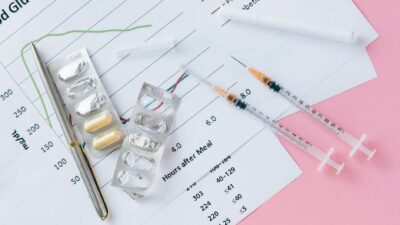
Type 1 diabetes treatments replace the insulin your immune system has destroyed and keep blood sugar in a safe range. The core toolkit includes insulin (by injection or pump), continuous glucose monitoring, carbohydrate awareness, and — for a narrow group — immunotherapy to delay disease onset. Most people use a combination.
Why Insulin Replacement Is the Foundation
Type 1 diabetes is an autoimmune disease in which T cells destroy insulin-producing beta cells in the pancreas. Without insulin, glucose cannot enter most cells, blood sugar rises dangerously, and the body begins burning fat for fuel, producing ketones. According to the NIDDK, everyone with type 1 requires insulin to survive — this is non-negotiable and distinguishes type 1 from type 2.
Unlike prediabetes, which can sometimes be managed or reversed through lifestyle changes, type 1 diabetes cannot be prevented by diet or exercise once diagnosed.
Insulin Types Used in Type 1 Diabetes
Modern regimens combine long-acting (basal) and rapid-acting (bolus) insulins to mimic how a healthy pancreas works.
| Category | Examples | Onset | Duration |
|---|---|---|---|
| Rapid-acting (bolus) | Humalog, Novolog, Apidra, Fiasp, Lyumjev | 5 to 15 minutes | 3 to 5 hours |
| Short-acting (regular) | Humulin R, Novolin R | 30 minutes | 5 to 8 hours |
| Intermediate (NPH) | Humulin N, Novolin N | 1 to 3 hours | 12 to 18 hours |
| Long-acting (basal) | Lantus, Basaglar, Levemir, Tresiba, Toujeo | 1 to 2 hours | 20 to 42 hours |
Most adults with type 1 diabetes use a basal-bolus regimen: a long-acting insulin once or twice a day, plus rapid-acting insulin at meals based on carbohydrate content and glucose readings.
Delivery: Injections vs. Pumps
Multiple Daily Injections (MDI)
MDI uses pens or syringes to deliver four or more injections daily. It is low-cost relative to pumping, portable, and has no hardware to carry. Many people with type 1 start here, especially in the first year after diagnosis.
Insulin Pumps
An insulin pump delivers rapid-acting insulin continuously through a small subcutaneous catheter, replacing basal insulin injections. Users bolus at meals through the pump’s interface. Pumps allow variable basal rates throughout the day — useful for dawn phenomenon or shift work.
Hybrid Closed-Loop Systems
These systems pair a pump with a continuous glucose monitor and an algorithm that automatically adjusts basal insulin and, in some cases, delivers correction boluses. FDA-cleared systems include Tandem t:slim X2 with Control-IQ, Medtronic MiniMed 780G, Omnipod 5, and the iLet Bionic Pancreas. Hybrid closed-loop systems have been shown to increase time in range and reduce hypoglycemia compared with MDI in clinical trials.
Continuous Glucose Monitoring
Continuous glucose monitors (CGMs) read interstitial glucose every few minutes and transmit data to a phone, receiver, or pump. The ADA’s Standards of Care recommend CGM for all adults with type 1 diabetes who are able to use it.
Current options include the Dexcom G7, Abbott FreeStyle Libre 3, and Medtronic Guardian 4. Benefits documented in trials include lower A1C, more time in range (70 to 180 mg/dL), fewer severe hypoglycemic events, and improved quality of life.
Emerging and Adjunctive Therapies
Teplizumab (Tzield)
In November 2022 the FDA approved Tzield, the first disease-modifying therapy for type 1 diabetes. Given as a 14-day IV infusion, teplizumab delayed progression to clinical type 1 diabetes by a median of about two years in at-risk individuals with stage 2 disease (multiple autoantibodies plus dysglycemia). It does not treat established type 1.
Islet Cell Transplantation
Donor islet transplantation can restore insulin independence in a minority of recipients but requires immunosuppression with its own risks. In 2023 the FDA approved donislecel (Lantidra), an allogeneic islet product, for a narrow population of adults with severe hypoglycemia unawareness.
Stem Cell-Derived Beta Cells
Vertex’s VX-880 and similar programs are testing whether stem cell-derived islets can be transplanted — with or without immune protection — to restore endogenous insulin production. Early trial data are encouraging but the approach is investigational.
Lifestyle and Behavioral Treatment
Medication is only part of the equation. Nutritional therapy, physical activity, sleep, and mental health shape daily glucose far more than most people expect.
- Carb counting: Most bolus calculations rely on knowing carbohydrate content. A registered dietitian can help translate meals into reliable ratios.
- Exercise management: Aerobic activity often lowers glucose; anaerobic bursts can raise it. Carrying fast carbs and adjusting insulin pre-exercise reduces risk.
- Sleep and stress: Both affect insulin sensitivity. Poor sleep tends to blunt insulin’s effect the next day.
- Mental health: Diabetes distress and depression are common. The ADA recommends routine screening and referral to behavioral health when needed.
Nutrition for people with type 1 diabetes is similar to general healthy eating — a balanced diet with attention to carb timing — though needs vary across individuals.
Setting Glucose Targets
| Metric | Typical Target (non-pregnant adults) |
|---|---|
| A1C | Less than 7.0% (individualized) |
| Time in range (70-180 mg/dL) | Greater than 70% |
| Time below range (less than 70 mg/dL) | Less than 4% |
| Fasting / pre-meal glucose | 80 to 130 mg/dL |
| Post-meal (1-2 hours) | Less than 180 mg/dL |
Older adults, young children, and people with hypoglycemia unawareness often use looser targets. Pregnancy targets are tighter.
Complication Prevention as Treatment
Preventing long-term complications — retinopathy, neuropathy, nephropathy, and cardiovascular disease — is as much a treatment goal as daily glucose control. That means annual dilated eye exams, foot checks, kidney screening (urine albumin/creatinine ratio and eGFR), blood pressure targets (often less than 130/80 mmHg), and statin therapy for appropriate candidates. The DCCT and EDIC trials showed that tight glucose control substantially reduces microvascular and cardiovascular risks over decades.
Cost and Access
Insulin affordability improved with 2023 price cuts from Lilly, Novo Nordisk, and Sanofi, as well as insulin copay caps for Medicare and many state laws. Pumps and CGMs are typically covered by insurance under durable medical equipment but have prior authorization requirements. Pharmacy benefit counselors and manufacturer patient assistance programs can help with gaps.
The Bottom Line
Type 1 diabetes treatments have evolved from twice-daily injections to sophisticated systems that read glucose every few minutes and dose insulin automatically between meals. The right plan depends on your numbers, lifestyle, budget, and goals — not on what is newest. Build a team that includes an endocrinologist, diabetes educator, dietitian, and mental health support, and revisit the plan at least yearly. Insulin remains the core therapy, but CGMs, hybrid closed-loop systems, and, for a subset of people, teplizumab are reshaping what is possible.