When blood sugar falls under 70 mg/dL, act fast: eat 15 grams of fast-acting carbohydrate, wait 15 minutes, and recheck. If the person is unable to swallow or loses consciousness, give glucagon and call 911. This is the ADA-endorsed “15-15 rule” and it handles most mild lows in minutes.
Know the Symptoms
Symptoms progress as glucose falls.
- Mild: shakiness, sweating, rapid heartbeat, hunger, anxiety, tingling lips.
- Moderate: confusion, slurred speech, blurred vision, weakness, poor coordination, irritability.
- Severe: seizure, loss of consciousness, inability to swallow.
Some people — especially those with long-standing diabetes — develop hypoglycemia unawareness and skip mild symptoms. A continuous glucose monitor with a low alert is the best safety net for this pattern.
The 15-15 Rule, Step by Step
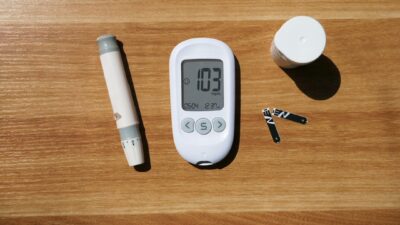
- Check. Confirm glucose under 70 mg/dL with a meter or CGM. If no device is available and symptoms fit, treat anyway.
- Consume 15 g of fast-acting carbs. See the list below.
- Wait 15 minutes. Sit or lie down. Do not drive, exercise, or cook.
- Recheck. If still under 70 mg/dL, repeat the 15 g.
- Stabilize. Once above 70 mg/dL, eat a small snack with protein and complex carbs if the next meal is more than an hour away.
Best Fast-Acting Carbs
All of these deliver about 15 grams of pure glucose or rapidly-digested sugars.
| Food or drink | Amount for 15 g carbs | Notes |
|---|---|---|
| Glucose tablets | 3-4 tablets | Most predictable; portable |
| Glucose gel | 1 tube | Good for people with swallowing difficulty |
| Regular (not diet) soda | 4 oz / half cup | Avoid caffeine-heavy brands |
| Fruit juice (orange, apple) | 4 oz / half cup | No pulp rises faster |
| Honey or table sugar | 1 tablespoon | Easy pantry option |
| Hard candy | 4-5 pieces | Chewy gummies are fine too |
| Raisins | 2 tablespoons | Slower than juice but shelf-stable |
| Skim milk | 8 oz / 1 cup | Some protein slows action slightly |
Foods to Avoid for Acute Lows
These foods contain carbs but absorb too slowly for an emergency.
- Chocolate (fat delays glucose release)
- Peanut butter or nut butters
- Ice cream or milkshakes
- Candy bars with nuts or caramel
- Whole-grain crackers or breads
- Diet soda or anything with artificial sweeteners (zero glucose)
Save these for the follow-up snack once glucose is back above 70 mg/dL.
Severe Episode Protocol
If the person is unconscious, seizing, or cannot swallow safely:
- Do not put food or liquid in the mouth. Aspiration is a real risk.
- Give glucagon. Options include intramuscular injection (1 mg), nasal spray (Baqsimi 3 mg), or autoinjector (Gvoke HypoPen).
- Roll the person on their side in case of vomiting.
- Call 911 even if glucagon works; the cause may be sulfonylurea or long-acting insulin and the low can return.
- Once awake and swallowing, give fast-acting carbs plus a protein-carb snack.
Glucagon works by signaling the liver to release stored glucose. It takes 10-15 minutes to work and commonly causes nausea afterward. If you do not have glucagon, keep the person safe and wait for paramedics. For the full walk-through on severe episodes see our hypoglycemia treatment guide.
Rebound Lows and Sulfonylurea Warning
A single 15 g carb dose may lift glucose only briefly if insulin is still active. Long-acting insulin (glargine, detemir, degludec), large rapid-insulin boluses, and sulfonylureas (glipizide, glyburide, glimepiride) can cause repeated drops for 6-24 hours. After any severe episode:
- Recheck glucose every hour for at least 4 hours.
- Eat a meal or substantial snack as soon as you can keep food down.
- Seek emergency care for any sulfonylurea-induced low; hospital observation is often warranted.
When to Call 911
- Loss of consciousness, seizure, or inability to swallow
- Glucose under 54 mg/dL that does not rise after two 15 g doses
- Low occurring after alcohol or overdose of medication
- Low in a person with known heart disease or after recent cardiac event
- Low in pregnancy or in a child who cannot self-treat
- No glucagon available and symptoms are worsening
What to Eat After the Low
Once glucose is above 70 mg/dL and you can eat safely, follow up with a small meal or snack that combines protein and complex carbohydrate. Good examples:
- Whole-grain toast with peanut butter
- Greek yogurt with a few berries
- Cheese and whole-grain crackers
- Half a turkey sandwich
- Apple slices with cheese
Our what to eat when blood sugar is low article expands on the best recovery foods.
Review and Prevent
Any low — mild or severe — deserves a short post-mortem:
- Insulin or sulfonylurea dose in the last 24 hours
- Meal timing and carb content
- Exercise type and intensity
- Alcohol intake
- New medications or illness
- Recent weight or medication changes
Bring your meter or CGM download to the next visit so the care team can adjust doses. The CDC hypoglycemia resources and ADA Standards of Care recommend a documented review after every severe low.
Supplies to Keep Ready
| Item | Where |
|---|---|
| Glucose tablets (bottle or sleeve) | Purse, car, nightstand, work desk |
| Juice boxes (4 oz) | Pantry, gym bag |
| Glucagon kit (nasal or autoinjector) | Home and with travel companion |
| Blood glucose meter + strips | Always with you |
| Medical ID | Wrist, phone lock screen |
The Bottom Line
When blood sugar drops, reach for glucose tablets or juice, use the 15-15 rule, and escalate to glucagon and 911 if the person cannot swallow. Skip chocolate and peanut butter for the acute fix — they absorb too slowly. After you recover, review what caused the low and work with your clinician to prevent the next one.