Zumba is a Latin-inspired dance fitness format that delivers moderate to vigorous aerobic exercise — a typical 45 to 60 minute class burns 300 to 500 calories and drops blood glucose 30 to 60 mg/dL in people with type 2 diabetes. Regular practice at 2 to 4 classes per week lowers A1C by 0.3 to 0.6 percentage points over 12 to 16 weeks, comparable to other forms of moderate aerobic exercise but often with better adherence because of music, group energy, and variety. Zumba is a versatile option in diabetes treatment, with low-impact (Gold), pool-based (Aqua), and toning variants that adapt to almost any fitness level.
How Zumba Lowers Blood Sugar
Zumba combines continuous aerobic dance with periodic high-intensity intervals during the most energetic songs. The mix of steady moderate work and short higher bursts engages both fat-oxidation and carbohydrate-burning pathways.
- Continuous dance keeps heart rate in the moderate aerobic zone for most of class
- High-energy salsa or merengue songs push intervals into vigorous intensity
- Muscle contraction activates GLUT4 transporters that pull glucose into muscle independent of insulin
- Pivots and side steps engage hip and lateral leg muscles often neglected in straight-line cardio
- Insulin sensitivity stays elevated 24 to 48 hours after class, like other forms of aerobic exercise
- The “afterburn” or EPOC effect after vigorous intervals adds modest extra calorie use
- Higher heart rates during class give a cardiorespiratory training stimulus that walking alone often misses
Calorie Burn and Glucose Drop by Class Type
| Class Type | Calorie Burn (150 lb adult) | Typical Glucose Drop |
|---|---|---|
| Zumba (standard) — 60 min | 300-500 kcal | 30-60 mg/dL |
| Zumba Gold — 60 min | 200-350 kcal | 20-40 mg/dL |
| Zumba Toning — 60 min | 350-550 kcal | 30-60 mg/dL |
| Aqua Zumba — 60 min | 350-500 kcal | 30-50 mg/dL |
| Zumba Step — 60 min | 400-600 kcal | 40-70 mg/dL |
| Strong Nation (Zumba family) — 60 min | 500-700 kcal | 40-80 mg/dL; HIIT-like |
Zumba Variations — Choosing the Right Format
- Zumba (standard) — original format; moderate to vigorous; jumping, pivots, mid-intensity choreography; for healthy adults and active exercisers
- Zumba Gold — low-impact; designed for older adults, beginners, or anyone with joint or balance concerns; same music, slower pace, no jumps; best diabetes-friendly default for many people over 60
- Zumba Toning — adds light maraca-shaped weights (1 to 2.5 lb each); muscular endurance plus cardio; counts toward resistance training goals partially
- Aqua Zumba — pool-based; zero-impact; best for severe knee/hip osteoarthritis, neuropathy, obesity, recent surgery recovery — see swimming for diabetes for related guidance
- Zumba Step — uses a step bench; higher intensity; not recommended for severe knee arthritis
- Strong Nation (formerly Strong by Zumba) — HIIT format with bodyweight exercise to music; not traditional Zumba — see HIIT for diabetes
- Zumba Kids and Zumba Kids Jr — for children; useful for type 1 diabetes management and prediabetes in adolescents
Sample Weekly Zumba Plan
| Day | Plan | Total Minutes |
|---|---|---|
| Monday | Zumba class (standard or Gold) | 60 |
| Tuesday | 20-30 min brisk walk after dinner | 20-30 |
| Wednesday | Zumba Toning class | 60 |
| Thursday | Rest or gentle yoga / stretching | 0-30 |
| Friday | Zumba class or 30 min home Zumba video | 30-60 |
| Saturday | 45-60 min walk or longer aerobic activity | 45-60 |
| Sunday | Rest or short post-meal walk | 0-15 |
Total: 215-255 minutes — comfortably above the 150 minute ADA target, with three Zumba days, supportive walking, and one rest day. Pair with twice-weekly strength training for the combined glucose-lowering effect.
Zumba and A1C — What the Trials Show
- Randomized trials in type 2 diabetes show A1C reduction of 0.3 to 0.6 percentage points over 12 to 16 weeks at 2 to 4 classes per week
- Effect comparable to brisk walking and stationary cycling at similar dose
- Weight loss in trials ranges 2 to 6 lb over 12 weeks; larger with dietary co-intervention
- Waist circumference reductions of 1 to 2 inches common in 16-week trials
- Resting heart rate drops 3 to 6 beats per minute — a marker of improving cardiorespiratory fitness
- Adherence in Zumba trials is often higher than gym-based programs — music, social setting, and variety help
- Improvements in quality of life, depression scores, and self-efficacy reported in multiple trials
- For broader A1C context see our A1C levels guide
Zumba and Weight Loss
- Standard 60 minute Zumba burns 300 to 500 calories — meaningful for energy balance
- Three to four classes per week creates an exercise calorie deficit of 1,000 to 2,000 calories
- Alone, that translates to 2 to 6 lb loss over 12 weeks
- Larger weight loss requires combining Zumba with the dietary changes in our diet and nutrition guide
- Zumba helps maintain weight loss after diet-driven losses
- Preserves lean mass better than diet alone
- Higher engagement may reduce stress-driven eating
Hypoglycemia Risk in Zumba Class
Zumba can be vigorous enough to trigger hypoglycemia in people on insulin, sulfonylureas (glipizide, glimepiride, glyburide), or meglitinides. Other diabetes medications rarely cause exercise-induced hypos on their own.
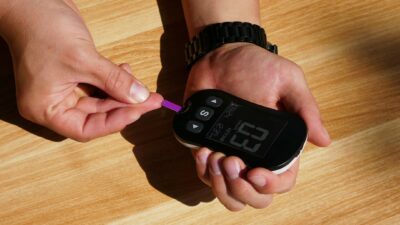
- Check glucose 15 minutes before class
- If under 100 mg/dL pre-class, eat 15 grams of fast carbs
- Keep glucose tablets, gel, or fruit easily accessible at the side of the floor
- Symptoms — shakiness, sweating, sudden weakness, confusion — can be hidden by class energy
- Watch for symptoms that feel unusual for normal exertion
- Step out of class and treat with 15 g carbs if you suspect a low
- Delayed hypoglycemia risk lasts 4 to 6 hours after vigorous Zumba — check before bed for evening classes
- Discuss dose adjustments with your clinician if you start regular Zumba and experience repeated lows
Joint and Foot Cautions
- Wear cross-trainers — not running shoes — because Zumba involves lateral motion and pivots; running shoes are designed for forward motion only and can sprain ankles on side steps
- Sprung wood floors (most studio floors) reduce knee impact compared to concrete or tile
- Knee or hip osteoarthritis — use Zumba Gold or Aqua Zumba
- Inspect feet before and after class — blisters can form on toes during pivots; severe neuropathy may not feel them
- Recent foot ulcer or any active foot wound — pause Zumba until cleared by clinician
- Avoid carpet — high friction stresses knees on pivots
- Stop any move that causes joint pain — most choreography has a low-impact alternative the instructor can show
Diabetes-Specific Zumba Cautions
- Severe peripheral neuropathy — use Zumba Gold or Aqua Zumba; inspect feet before and after; wear seamless socks
- Proliferative retinopathy — avoid vigorous head movements, jumps, and rapid postural changes; clear with eye specialist before vigorous classes
- Autonomic neuropathy — blunted heart rate response; use RPE for intensity; rise slowly after class
- Cardiovascular disease — get medical clearance before vigorous classes; consider Zumba Gold while building fitness
- Recent cardiac event — cardiac rehab graduate status is helpful before joining standard Zumba
- Pregnancy — many instructors offer modified Zumba; generally safe in low-risk pregnancy
- Balance problems — Zumba Gold or Aqua Zumba; stay at the back of class with a wall or chair nearby
- Heat sensitivity — Zumba studios warm quickly; bring water; some autonomic neuropathy reduces sweating
Home and Online Zumba Options
- Zumba Fitness official YouTube channel offers free routines and demos
- Zumba app (paid subscription) — structured programs, certified instructors
- STRONG Nation app — for the HIIT family member
- YouTube channels with full-length classes (POPSUGAR Fitness, OFFICIAL Zumba Class) are widely used
- Home practice works when class access is limited; choreography can be repeated until learned
- A 6 ft x 6 ft clear area is enough for most routines
- Adherence is often lower at home than in group classes — keep a class schedule or accountability buddy
Getting Started — A Realistic Ramp
- Get medical clearance if you have cardiovascular disease, recent cardiac event, severe neuropathy, or active proliferative retinopathy
- Buy supportive cross-trainers (lateral support, not maximal cushioning) before first class
- Week 1-2 — start with one Zumba Gold class per week; learn basic steps; do not worry about choreography accuracy
- Week 3-4 — add a second class or short home video; build to two Zumba sessions per week
- Week 5-8 — try standard Zumba if cleared; aim for 2 to 3 classes per week
- Month 3+ — work toward 3 to 4 sessions weekly; combine with walking on non-Zumba days
- Track glucose responses with a CGM or finger sticks to learn your patterns
The Bottom Line
Zumba is an effective and enjoyable moderate-to-vigorous aerobic option for diabetes. A typical 60 minute class burns 300 to 500 calories and drops blood glucose 30 to 60 mg/dL; regular practice at 2 to 4 classes per week reduces A1C by 0.3 to 0.6 percentage points over 12 to 16 weeks. Variants like Zumba Gold (low-impact for older adults), Zumba Toning (with light weights), and Aqua Zumba (pool-based) make the format accessible to almost any fitness level. Wear cross-trainers, watch hypoglycemia risk on insulin or sulfonylureas, inspect feet if neuropathic, and clear vigorous classes with your clinician if you have cardiovascular disease or retinopathy. Music, group energy, and dance variety often drive better adherence than treadmill workouts, and adherence is what produces long-term A1C change. Pair Zumba with strength training twice a week and the dietary changes in our diet and nutrition guide for the highest combined effect on glucose, weight, and long-term diabetes outcomes.