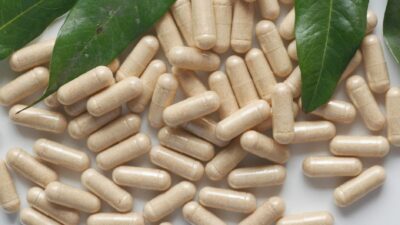
Alpha-lipoic acid for diabetes has its strongest evidence in symptom relief for diabetic peripheral neuropathy — the SYDNEY 2 and NATHAN 1 trials by Ziegler and colleagues showed meaningful improvement in burning pain, paresthesia, and numbness at 600 mg/day oral. The effect on A1C is modest (roughly 0.2 to 0.4 percent in meta-analyses), and the American Diabetes Association does not recommend ALA for glycemic management. This guide walks through what ALA is, the antioxidant mechanism, neuropathy and glucose evidence, R vs S forms, dosing, side effects, and drug interactions.
What Alpha-Lipoic Acid Is
Alpha-lipoic acid (ALA, thioctic acid, or 1,2-dithiolane-3-pentanoic acid) is a sulfur-containing compound that:
- Is synthesized in small amounts by mitochondria in your own cells
- Acts as a cofactor for several mitochondrial enzymes (pyruvate dehydrogenase, alpha-ketoglutarate dehydrogenase)
- Is unusual among antioxidants in being both water-soluble and fat-soluble — meaning it can act inside and outside cell membranes
- Is found in trace amounts in foods (red meat, organ meats, spinach, broccoli) — too little to matter as a “dietary source”
“Alpha-lipoic acid” should not be confused with “alpha-linolenic acid” (also ALA), which is the omega-3 fatty acid in flaxseed. They are unrelated.
Mechanism in Diabetes
ALA has several proposed mechanisms relevant to diabetes:
- Direct antioxidant: scavenges reactive oxygen species (ROS) directly
- Antioxidant regeneration: recycles other antioxidants including vitamin C, vitamin E, and glutathione
- Improved insulin sensitivity: small effect on glucose uptake in muscle
- Reduction of advanced glycation end products (AGEs): may reduce diabetes-related tissue damage
- Improved endothelial function: relevant to diabetic microvascular complications
- Nerve protection: the antioxidant action is thought to underlie the neuropathy benefit, since diabetic neuropathy has substantial oxidative stress in its pathogenesis
Evidence Summary: Neuropathy
| Trial | Population | Dose | Duration | Finding |
|---|---|---|---|---|
| ALADIN (Ziegler 1995) | T2D with neuropathy (n=328) | IV 100, 600, or 1200 mg/day | 3 weeks | Reduced TSS pain scores at 600 and 1200 mg |
| ALADIN III (1999) | T2D neuropathy (n=509) | IV 600 mg then oral 1800 mg | 7 months | Mixed; nerve conduction improvement |
| SYDNEY (Ametov 2003) | T2D neuropathy | IV 600 mg/day | 3 weeks | Significant reduction in pain symptoms |
| SYDNEY 2 (Ziegler 2006) | T2D neuropathy (n=181) | Oral 600, 1200, or 1800 mg/day | 5 weeks | All doses improved TSS; 600 mg best risk-benefit |
| NATHAN 1 (Ziegler 2011) | T2D mild-moderate neuropathy (n=460) | Oral 600 mg/day | 4 years | Slowed neuropathy progression vs placebo on secondary endpoints |
Cumulatively, the neuropathy evidence is reasonably good — better than for most supplements in diabetes. ALA at 600 mg/day is licensed as a diabetic neuropathy treatment in some European countries, including Germany. The United States has no FDA approval; ALA is sold as a dietary supplement.
Evidence Summary: Glucose Control
| Study | Population | Dose | Duration | Finding |
|---|---|---|---|---|
| Ansar 2011 | T2D adults (n=57) | 300 mg/day | 2 months | Modest fasting glucose reduction; A1C non-significant |
| Porasuphatana 2012 | T2D (n=38) | 300 to 1200 mg/day | 6 months | A1C reduction ~0.3 percent at higher doses |
| Akbari 2018 (meta-analysis) | Pooled T2D and prediabetes | Various | Pooled | A1C reduction ~0.35 percent; fasting glucose modest |
| Rahimlou 2019 (meta-analysis) | Pooled trials | Various | Various | Significant but modest glucose effect; high heterogeneity |
ALA’s effect on A1C and glucose is real but small. It is not a substitute for metformin or other proven therapies. Where ALA shines is symptomatic neuropathy.
R-ALA vs S-ALA vs Racemic
| Form | Description | Use case |
|---|---|---|
| R-ALA (natural) | Body’s own enantiomer; better bioavailability | Higher cost; smaller doses may suffice |
| S-ALA (synthetic) | Manufacturing byproduct; less active | Not sold alone |
| R/S-ALA (racemic 50/50) | Standard supplement form; used in most trials including SYDNEY 2 | Standard, cheaper, best evidence base |
| Na-R-ALA (sodium R-lipoate) | More stable, water-soluble salt of R-ALA | Some newer products; theoretical advantage |
If you are matching a trial protocol, the racemic form at 600 mg/day was used in SYDNEY 2 and NATHAN 1. R-ALA at lower doses (200 to 300 mg/day) is sometimes substituted on the theory of higher bioavailability, but trial evidence at those equivalents is thinner.
Typical Dosing
- 600 mg/day oral: standard neuropathy dose; SYDNEY 2 sweet spot
- 1200 to 1800 mg/day oral: used in some trials; more GI side effects without proportional benefit
- 600 mg IV: used in inpatient neuropathy protocols in Europe
- Timing: on empty stomach — 30 minutes before meals or 2 hours after — food can reduce absorption by up to 30 percent
This describes trial dosing, not a recommendation. Talk to your healthcare provider before starting any supplement.
Side Effects and Drug Interactions
| Concern | Detail |
|---|---|
| GI upset | Nausea, heartburn at higher doses; reduced by taking with small amount of food |
| Skin rash | Uncommon |
| Hypoglycemia | Rare alone; possible with insulin or sulfonylureas — monitor |
| Thiamine status | ALA may worsen thiamine deficiency in heavy drinkers |
| Insulin / sulfonylureas | Additive glucose lowering — monitor |
| Thyroid hormone (levothyroxine) | May reduce absorption — separate by 4 hours |
| Chemotherapy | Antioxidants may interfere with chemotherapy efficacy — discuss with oncologist before use |
| Pregnancy and breastfeeding | Insufficient safety data — avoid |
ADA Position
The American Diabetes Association Standards of Care does not endorse ALA for glycemic control. The ADA recognizes that diabetic neuropathy is a difficult-to-treat complication, and that ALA is used clinically in some European countries with reasonable evidence, but does not list it in its U.S. neuropathy treatment recommendations. The first-line U.S. pharmacotherapy for painful diabetic neuropathy includes duloxetine, pregabalin, gabapentin, and tricyclic antidepressants.
Cost and Forms
- Racemic ALA 600 mg: 15 to 30 dollars per month
- R-ALA 200 to 300 mg: 25 to 50 dollars per month
- Na-R-ALA stabilized: 30 to 60 dollars per month
- Combination supplements (with B12, B6, benfotiamine for neuropathy): 25 to 60 dollars per month
ALA is often paired with vitamin B12 and benfotiamine in neuropathy combination products. Quality varies; third-party tested brands are preferable.
Practical Considerations
- If using for neuropathy, allow at least 4 to 8 weeks before judging effect; some trials saw early benefit in 3 weeks
- Take on empty stomach for best absorption
- Do not stop prescribed neuropathy medication to substitute ALA without your doctor’s input
- Track your glucose closely for the first 2 to 4 weeks, especially on insulin or sulfonylureas
- If on chemotherapy, discuss with your oncologist first
Who Might Benefit
- Adults with painful or symptomatic diabetic peripheral neuropathy who want an adjunct to standard therapy
- People with type 2 diabetes interested in an evidence-light adjunct to diet, exercise, and medication for glucose control (with realistic expectations)
- Those who cannot tolerate or prefer to avoid standard neuropathy pharmacotherapy (duloxetine, pregabalin, gabapentin), under medical supervision
Who Should Avoid or Use Caution
- Pregnancy and breastfeeding
- Active chemotherapy without oncologist clearance
- Heavy alcohol users at risk of thiamine deficiency
- People with frequent hypoglycemia on insulin or sulfonylureas without close monitoring
Related Reading
See our companion guides on berberine for diabetes and magnesium and blood sugar, our broader overview of diabetes treatment, and our resource on diabetes complications and related conditions.
The Bottom Line
Alpha-lipoic acid is one of the few supplements with meaningful trial evidence for a specific diabetes complication — symptomatic diabetic peripheral neuropathy, where 600 mg/day oral has shown improvement in pain, burning, and paresthesia scores in trials including SYDNEY 2 and NATHAN 1. The glucose-lowering effect is modest (about 0.2 to 0.4 percent A1C). The American Diabetes Association does not recommend ALA for glycemic control, and the United States has no FDA-approved indication. Side effects are usually mild GI upset, but potential hypoglycemia with insulin or sulfonylureas, interaction with levothyroxine, and possible interference with chemotherapy require attention. Talk to your healthcare provider before starting any supplement, especially if you are on diabetes medication or undergoing cancer treatment. ALA is not a substitute for proven therapies — it is a reasonable adjunct, particularly for neuropathy symptoms, with a defined risk profile.