Berberine for diabetes has emerged from traditional Chinese medicine into the mainstream supplement market on the strength of meta-analyses suggesting A1C reductions around 0.7 percent — comparable in some short trials to metformin. It activates the same AMP-activated protein kinase (AMPK) pathway as metformin and has earned the misleading nickname “natural metformin.” This guide walks through what berberine is, how it works, the actual evidence, dosing in trials, side effects, the many drug interactions, and the ADA position.
What Berberine Is
Berberine is a yellow alkaloid (a nitrogen-containing plant compound) found in the roots, rhizomes, stems, and bark of several plants:
- Coptis chinensis (Chinese goldthread, huang lian) — main TCM source
- Berberis aristata (Indian barberry, tree turmeric)
- Hydrastis canadensis (goldenseal) — North American source
- Mahonia aquifolium (Oregon grape)
- Phellodendron amurense (Amur cork tree, huang bai)
Berberine has been used for centuries in traditional Chinese medicine for digestive complaints, infections, and a broad range of other conditions. Its glucose-lowering effects were observed relatively recently in modern clinical research.
Mechanism: AMPK and More
Berberine’s principal proposed mechanism is activation of AMP-activated protein kinase (AMPK), a master energy regulator in cells. AMPK activation:
- Inhibits hepatic gluconeogenesis (reducing the liver’s glucose output) — the main mechanism of metformin
- Increases glucose uptake in muscle and fat
- Improves insulin sensitivity
- Reduces lipogenesis and improves lipid profile
Berberine also has other effects: it modifies gut microbiota composition, inhibits intestinal alpha-glucosidase modestly, and has anti-inflammatory effects. The AMPK story is the most cited, but berberine is mechanistically broader than metformin.
Evidence Summary
| Study | Population | Dose | Duration | Finding |
|---|---|---|---|---|
| Yin 2008 (Metabolism) | Newly diagnosed T2D Chinese (n=36) | 500 mg 3×/day vs metformin 500 mg 3×/day | 3 months | Comparable A1C reduction (~2 percent in both groups) |
| Yin 2008 second arm | Poorly controlled T2D on therapy (n=48) | 500 mg 3×/day adjunct | 3 months | A1C reduced from 8.1 to 7.3 percent |
| Zhang 2010 | T2D adults | 500 mg 2×/day | 2 months | A1C reduction; fasting glucose and triglycerides improved |
| Pirillo 2015 (meta-analysis lipids) | Pooled trials | Various | Pooled | Significant LDL and triglyceride reduction |
| Lan 2015 (meta-analysis) | Pooled T2D trials (n=2569) | 0.5 to 1.5 g/day | 2 to 4 months | A1C reduced ~0.71 percent; fasting glucose ~0.78 mmol/L |
| Liang 2019 (meta-analysis) | Pooled trials | Various | Various | A1C reduction ~0.8 percent; effect comparable to oral agents in short trials |
Berberine is one of the more compelling supplement-class interventions for type 2 diabetes — meta-analyses are reasonably consistent. But major caveats apply:
- Most trials are short (2 to 4 months)
- Most are in Chinese populations
- Many are small, open-label, and methodologically variable
- There is no long-term cardiovascular or mortality outcome data
- Drug-supplement comparison trials are not the same standard as drug-approval trials
Typical Dosing in Trials
| Dose | Schedule | Use case |
|---|---|---|
| 500 mg 2×/day | With breakfast and dinner | Common starting / lower dose |
| 500 mg 3×/day | With each meal | Standard Yin 2008 protocol |
| 1000 mg 2×/day | Twice daily | Sometimes used; more GI |
| 1500 mg 3×/day | With meals | Higher doses; not commonly used |
Berberine has a short half-life (about 4 to 8 hours) and divided dosing with meals improves both tolerability and consistent exposure. Some products use “dihydroberberine” or sustained-release formulations claiming better absorption — evidence for superiority is mixed.
Side Effects
| Side effect | Frequency / detail |
|---|---|
| Diarrhea | Common — 10 to 25 percent; worse at higher doses |
| Abdominal cramping, gas | Common |
| Constipation | Less common |
| Nausea | Occasional |
| Hypoglycemia | Rare alone; possible with insulin or sulfonylureas |
| Headache, dizziness | Uncommon |
| Hyperbilirubinemia (neonates) | Avoid in pregnancy and breastfeeding |
Drug Interactions — A Long List
Berberine inhibits multiple cytochrome P450 enzymes (CYP3A4, CYP2D6, CYP2C9) and the drug efflux transporter P-glycoprotein. This causes many interactions:
| Drug class / agent | Interaction |
|---|---|
| Cyclosporine | Berberine raises blood levels significantly — avoid combination |
| Tacrolimus | Similar risk — avoid |
| Statins (simvastatin, atorvastatin) | Levels may rise; increased myopathy risk |
| Macrolide antibiotics (erythromycin, clarithromycin) | Additive CYP3A4 inhibition |
| Calcium channel blockers | Levels may rise; hypotension |
| Antiarrhythmics | Caution — many CYP3A4 substrates |
| Warfarin / anticoagulants | Variable effects; monitor INR |
| Antihypertensives | Additive blood pressure lowering |
| Insulin / sulfonylureas | Additive glucose lowering — hypoglycemia risk |
| Metformin | Partial AMPK overlap — see companion guide |
| SSRIs (some) | CYP2D6 inhibition — caution |
| Bilirubin displacement | Avoid in neonates and pregnancy |
Always review your medication list with a pharmacist or physician before starting berberine.
ADA Position
The American Diabetes Association does not recommend berberine for the treatment of diabetes. The ADA cites the limited size and duration of trials, the predominantly Chinese study populations, the absence of long-term outcome data, and the absence of regulatory approval. Berberine is sold as a dietary supplement in the United States — not as a medication — and is not subject to the same manufacturing and purity standards as prescription drugs.
Cost and Forms
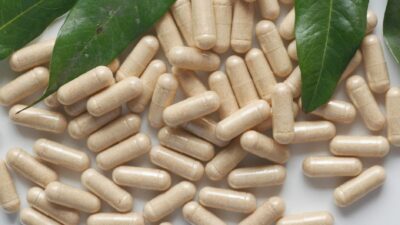
- Generic berberine HCl 500 mg: 15 to 30 dollars per month at 1500 mg/day
- Dihydroberberine: usually more expensive; claims of better absorption
- Berberine + milk thistle, alpha-lipoic acid, etc. combinations: 25 to 60 dollars per month
- Quality: third-party tested brands (USP, NSF, ConsumerLab) more reliable
Who Might Benefit, Who Should Avoid
- Reasonable consideration: adults with type 2 diabetes or prediabetes who cannot tolerate metformin and want to discuss adjunct options with their healthcare provider
- Use caution: anyone on multiple medications metabolized by CYP3A4, anyone with low blood pressure, those prone to GI issues
- Avoid: pregnancy, breastfeeding, neonates, transplant recipients on cyclosporine or tacrolimus, those with significant liver disease
Practical Tips If You Try It
- Start low (500 mg once daily with the largest meal) for 1 week, then titrate up
- Take with food to reduce GI side effects
- Divide doses across 2 to 3 meals per day rather than one large dose
- Monitor glucose more closely for the first 2 to 4 weeks, especially if on diabetes medication
- Track A1C at baseline and 3 months — if no benefit, stop
- Review your medication list with a pharmacist
Related Reading
See our companion supplement coverage on chromium for diabetes, cinnamon for diabetes, and our broader guides on diabetes treatment and diet and nutrition for diabetes.
The Bottom Line
Berberine has more consistent evidence than most blood-sugar supplements — meta-analyses estimate roughly 0.7 percent A1C reduction at 500 mg two to three times daily — but trials are small, short, and mostly Chinese, with no long-term outcome data. The American Diabetes Association does not recommend berberine as a diabetes treatment. It works on the same AMPK pathway as metformin and has similar GI side effects, plus a long list of cytochrome P450 drug interactions including cyclosporine, statins, and calcium channel blockers. If you are considering berberine, talk to your healthcare provider before starting any supplement, review your full medication list with a pharmacist, and do not stop or reduce prescribed diabetes medication. Berberine is not a replacement for metformin or other proven therapies — it is an evidence-supported but unregulated adjunct that needs careful integration into a treatment plan.