Black coffee has a paradoxical effect on blood sugar: caffeine acutely raises glucose by 5 to 20 mg/dL in most people, but long-term coffee drinkers have a 20 to 30 percent lower risk of developing type 2 diabetes. The added milk, sugar, and syrups in most commercial drinks are usually the real spike problem. Understanding this split between acute and chronic effects helps you drink coffee strategically.
The Acute Effect: Why Your Reading Might Rise
Caffeine is a central nervous system stimulant. Within 15 to 45 minutes of a strong cup, it triggers the release of epinephrine (adrenaline) and a small cortisol bump. Both hormones signal the liver to release stored glucose through a process called glycogenolysis, and they also reduce insulin sensitivity in muscle tissue for about two hours. Net effect: a small glucose rise.
Studies measuring this directly show a typical increase of 5 to 20 mg/dL in people with prediabetes and type 2 diabetes after a 150 mg caffeine dose (about one strong cup). People without diabetes show smaller rises because their pancreas compensates quickly. The response is individual — some people see almost no change, others see 30 mg/dL or more.
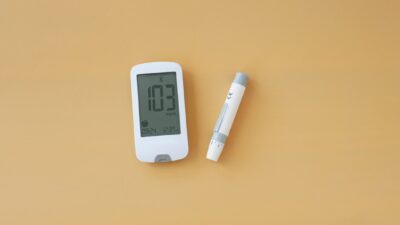
This acute effect is why morning fasting glucose on a CGM can look higher if you measure right after coffee. It is not harmful on its own, but it can confuse people trying to interpret their fasting numbers.
The Chronic Effect: Why Coffee Drinkers Do Better
The long-term data are consistent and surprising. A 2014 meta-analysis in Diabetes Care pooled 28 prospective studies covering more than 1.1 million adults. Compared with non-drinkers, people who drank 4 to 6 cups of coffee daily had about a 30 percent lower risk of developing type 2 diabetes. The relationship was dose-dependent up to about 4 cups, then leveled off.
The protective effect appears in both caffeinated and decaf coffee, which suggests it is not just caffeine. Leading mechanisms include:
- Chlorogenic acid — a polyphenol that slows glucose absorption in the gut and improves insulin signaling
- Magnesium content — coffee is a modest source, and magnesium deficiency worsens insulin resistance
- Trigonelline — reduces early post-meal glucose peaks in mechanistic studies
- Anti-inflammatory effects — chronic low-grade inflammation contributes to insulin resistance
The upshot: your fasting glucose may be slightly higher on coffee days, but your long-term A1C and diabetes risk are trending in your favor, especially compared with people who drink zero coffee.
What You Add to Coffee Matters More
Most coffee-related glucose spikes come from additions, not the coffee itself. Here is a breakdown of common add-ins:
| Add-In | Amount | Carbs (g) | Glucose Impact |
|---|---|---|---|
| Black coffee | 12 oz | 0 | Minimal from content; small caffeine effect |
| Splash of half-and-half | 2 tbsp | 1 | Negligible |
| Whole milk | 1/4 cup | 3 | Low |
| Oat milk (unsweetened) | 1/4 cup | 4 | Low to moderate |
| Almond milk (unsweetened) | 1/4 cup | 0.5 | Negligible |
| Sugar | 1 tsp | 4 | Moderate |
| Flavored syrup | 1 pump | 5 | Moderate |
| Starbucks Caramel Macchiato (grande) | 16 oz | 33 | High |
| Pumpkin Spice Latte (grande, whole milk) | 16 oz | 52 | Very high |
The jump from black coffee to a flavored specialty drink is the same order of magnitude as going from water to soda. If you enjoy specialty drinks, order smaller sizes, choose unsweetened syrups (many chains carry them), and request fewer pumps of flavor.
Practical Ways to Drink Coffee with Prediabetes
- Default to black coffee or coffee with a splash of dairy
- Use stevia, monk fruit, or allulose if you want sweetness without glucose impact
- Drink coffee with food rather than on an empty stomach to blunt the caffeine glucose bump
- Try decaf after noon to avoid sleep disruption, which itself worsens insulin resistance
- Skip the flavored syrups — or treat them as dessert-caliber events, not daily habits
- Check your personal response with a CGM or fingerstick if curious; individual variation is real
Coffee, Sleep, and Glucose Together
One indirect way coffee raises blood sugar is by interfering with sleep. Caffeine has a half-life of roughly five hours, so a 3 p.m. coffee can still be blocking adenosine receptors at 11 p.m. Poor sleep reliably worsens insulin sensitivity the next day — often more than the coffee itself. If your afternoon cup is costing you sleep, the net metabolic effect may be negative even though the coffee itself is neutral. See the prediabetes 101 hub for more on sleep’s role in glucose control.
The American Diabetes Association does not recommend quitting coffee for people with diabetes but does suggest monitoring individual response and moderating caffeine if it seems to worsen glucose control.
The Bottom Line
Does coffee spike blood sugar? Black coffee can nudge glucose up modestly through caffeine’s hormonal effects, but this is a small and temporary bump. Over years, coffee drinkers have better metabolic outcomes, not worse. The real culprit behind most coffee-related spikes is sugar, syrups, and large milk portions. If you enjoy coffee, you probably do not need to quit — just watch what goes in the cup. For more on how beverages fit into a prediabetes-friendly diet, see the diet and nutrition hub.
This article is for educational purposes and does not replace personalized advice from your healthcare provider. Talk with your doctor about caffeine intake, especially if you take diabetes medication or have heart or blood pressure conditions.