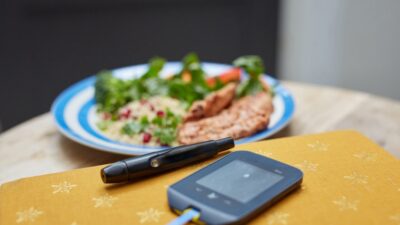
How to lower morning blood sugar: adjust dinner timing, consider a targeted pre-bed snack, add a short post-dinner walk, review medication timing with your clinician, and use a CGM to detect patterns. Each lever matters, but the right combination depends on why your morning numbers are high.
Why Morning Blood Sugar Rises (Quick Physiology)
Before you can lower a morning number, you need to know what is raising it. Overnight glucose elevation has three main causes: the dawn phenomenon (a cortisol and growth hormone surge from roughly 3-8 a.m.), residual carbohydrate absorption from a late dinner, and — less commonly — the Somogyi effect, where nocturnal hypoglycemia triggers a counter-regulatory rebound. The interventions differ by cause, so skip guesswork and log data.
For a deeper explainer of the physiology, see our guides on prediabetes overview and nighttime glucose patterns. This article is action-oriented: what to do tonight to see a lower number tomorrow.
How to Lower Morning Blood Sugar Through Dinner Timing
Finish your last meal at least 3 hours before bedtime. Late-night eating keeps digestion and insulin demand active during sleep when your body is metabolically less efficient. A 9 p.m. pasta dinner followed by 11 p.m. sleep often produces a 6 a.m. glucose 15-25 mg/dL higher than the same meal eaten at 6:30 p.m.
Also scrutinize dinner composition. Swap refined carbs (white rice, bread, pasta) for lower-glycemic options (lentils, quinoa, non-starchy vegetables). Pair any carb with protein and fat to slow absorption. A plate that is half vegetables, a quarter lean protein, and a quarter slow carb will produce a flatter overnight curve than an all-carb meal of equal calories.
The Pre-Bed Snack Strategy
Counterintuitively, a small targeted snack before bed can lower morning glucose for some people — particularly those whose liver produces too much glucose overnight in response to prolonged fasting. The snack signals the pancreas to release a small insulin pulse that suppresses hepatic glucose output.
Candidates: one hard-boiled egg, a small handful of almonds, Greek yogurt with cinnamon, or a tablespoon of peanut butter on celery. Keep it under 15 g carbohydrate and over 7 g protein. Test on waking for a week with and without the snack to see which direction it moves your numbers. If it raises them, skip it; if it lowers them by 10+ mg/dL, keep it.
Exercise Timing That Actually Works
A 15-20 minute walk within an hour of dinner is one of the highest-leverage interventions for fasting glucose. Muscle contraction draws glucose from the bloodstream without needing insulin, and the insulin-sensitizing effect lasts 12-24 hours. People who walk after dinner consistently report next-morning fasting glucose 10-20 mg/dL lower than sedentary-evening days.
| Evening Habit | Typical Effect on Morning Glucose |
|---|---|
| Dinner at 6:30 p.m. + 15-min walk | Lowest morning reading |
| Dinner at 6:30 p.m., no walk | Baseline |
| Dinner at 9 p.m., no walk | +15 to +25 mg/dL vs baseline |
| Dinner at 9 p.m. + late snack | +20 to +40 mg/dL vs baseline |
| Strength training 4-6 p.m. | -10 to -20 mg/dL next morning |
Strength training in the late afternoon adds another benefit: increased muscle mass improves insulin sensitivity for days, not hours. According to the CDC, a combination of aerobic and resistance exercise produces the largest sustained glycemic improvement.
Medication Timing (Discuss Before Changing)
If you take metformin, basal insulin, or a sulfonylurea, timing may be the hidden variable. Some people do better with split-dose metformin (morning and evening) than once daily. Basal insulin taken at bedtime may peak too early or too late for your individual dawn phenomenon. Sulfonylureas can cause overnight lows that trigger Somogyi rebound.
Do not adjust doses on your own. Bring a two-week glucose log and a list of exact dose times to your clinician. Ask specifically about shifting basal insulin 1-2 hours later, adding extended-release metformin at bedtime, or switching agents entirely. Many people see morning numbers improve with dose-timing tweaks that require no new prescription.
Using a CGM to Find Your Pattern
A two-week CGM trial turns guesswork into data. You will see exactly when glucose starts rising overnight, how high it peaks, and which dinners, snacks, or workouts move the curve. Many people discover their “morning high” is actually a 3 a.m. spike from undigested food, not a dawn-phenomenon issue at all. The intervention changes accordingly.
Even if you do not qualify for a prescription CGM, over-the-counter models like Stelo and Lingo now make short-term CGM trials affordable. Log meals, exercise, and sleep in the CGM app so you can correlate inputs with curves. Bring the data to your clinician for a focused conversation.
Sleep and Stress (Often Overlooked)
Poor sleep raises cortisol, which raises fasting glucose. A single night of under 6 hours of sleep can increase next-day fasting glucose by 10-15 mg/dL. Prioritize a consistent sleep window of 7-9 hours, limit alcohol (which fragments sleep), and address untreated sleep apnea — which is strongly associated with worsened glycemic control in prediabetes and diabetes treatment scenarios.
The Bottom Line
To lower morning blood sugar, move dinner earlier, walk after eating, test a small protein snack before bed, prioritize sleep, and bring two weeks of data to your clinician for medication-timing review. No single lever works for everyone — the fastest path is systematic testing with a CGM and a logbook.
This content is for educational purposes only and is not a substitute for professional medical advice. Consult your healthcare provider before adjusting medications or making significant dietary changes.