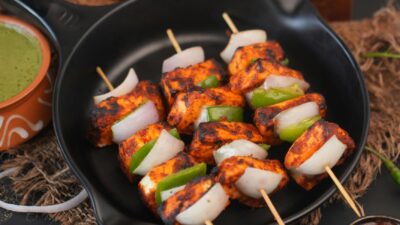
Israeli cuisine is a unique blend of Mediterranean (olive oil, fresh produce, fish), Middle Eastern (hummus, tahini, falafel, shawarma), Ashkenazi Jewish (cholent, kugel, gefilte fish, brisket), Sephardic Jewish (mafrum, hraime, bourekas), and modern global influences. Core healthy components – abundant fresh vegetables (cucumber, tomato, pepper, eggplant, zucchini, herbs); olive oil as primary fat; lean proteins (fish – tilapia, sea bass, salmon; chicken; lamb in moderation; legumes); whole grains (whole wheat pita, bulgur, freekeh); fresh herbs; tahini (sesame paste) as healthy fat source; yogurt and labneh; abundant fruit in season. Israeli breakfast pattern (Mediterranean style – vegetables, eggs, cheese, olives, salads, yogurt) is one of the most diabetes-friendly meal patterns. Research strongly supports Mediterranean and Israeli-DIRECT diet patterns for diabetes management. Hummus – chickpea-tahini-lemon-garlic spread; ¼ cup serving 100-130 calories, 12-15 g carb, 4-5 g fiber, 5 g protein, 5-8 g fat; good source of plant protein and fiber; moderate carb load. Use – dip with cucumber, bell pepper, carrots, celery rather than pita; spread on whole-grain crackers (small portion); add to wraps with vegetables and protein. Tahini – sesame paste; high fat (healthy unsaturated); ~90 cal/tbsp, 3 g carb, 1 g fiber, 3 g protein, 8 g fat; calcium and iron source; almost any vegetable benefits from drizzle. Use – dressing for salads (with lemon and garlic), drizzle on grilled vegetables, sauce for grilled meats, in baba ghanoush, base for halva (limit halva). Baba ghanoush – grilled eggplant with tahini, lemon, garlic. Labneh – strained yogurt, high protein, lower lactose than regular yogurt; spread for vegetables, breakfast with za’atar and olive oil. Olive oil – primary fat; cold-pressed extra-virgin preferred; 1-2 tbsp per meal liberal use. Israeli pita bread – small white flat bread; one pita 150-200 calories, 30-40 g carb; pocket commonly stuffed with falafel, shawarma, sabich; whole-meal pita (lower GI) preferred but less common. Strategies – half pita maximum per meal; choose whole-wheat pita when available; substitute large lettuce wrap for some dishes; use as vehicle for protein/vegetables rather than meal staple. Challah – traditional white sweet braided bread served Friday night/Sabbath; very high GI; small slice only if observing tradition; whole-wheat versions exist.
Typical Israeli Foods
| Category | Examples |
|---|---|
| Fresh vegetables | Cucumber, tomato, pepper, eggplant, zucchini, parsley, mint |
| Mezze/spreads | Hummus, tahini, baba ghanoush, labneh, matbucha |
| Lean proteins | Fish (denis, lavrak, salmon), chicken, eggs, legumes |
| Grains | Pita (limit), bulgur, freekeh, couscous, rice |
| Fats | Olive oil, tahini, olives |
| Spices | Za’atar, sumac, cumin, baharat |
| Traditional dishes | Shakshuka, falafel, shawarma, sabich, cholent |
| Sweets (limit) | Halva, rugelach, sufganiyot, baklava |
Best Diabetes-Friendly Choices
- Israeli salad with cucumber, tomato, onion, parsley, lemon, olive oil.
- Shakshuka (eggs poached in tomato-pepper sauce) with whole-wheat pita half.
- Hummus (¼ cup) with vegetable crudités.
- Grilled fish (denis, lavrak, salmon) with vegetables.
- Grilled chicken shawarma (small portion) with salad, not pita-stuffed.
- Cabbage salad with caraway and lemon.
- Baba ghanoush (grilled eggplant with tahini).
- Labneh with za’atar and olive oil.
- Mejadra (rice and lentils) – small portion.
- Fattoush salad (limit pita croutons).
- Tahini-drizzled grilled vegetables.
- Sabich (without pita – eggplant, egg, salad).
Foods to Limit
- Pita bread – half maximum per meal.
- Falafel – small portion (fried chickpea balls).
- Challah – traditional sweet white bread.
- Cholent (Sabbath stew) – high carb beans, meat, potatoes, barley.
- Kugel (noodle/potato pudding).
- Rugelach (sweet pastries).
- Sufganiyot (Hanukkah jelly doughnuts).
- Halva (sesame-honey sweet).
- Bourekas (phyllo pastries with cheese/spinach/potato).
- Israeli wines and beer (small portion if drinking).
- Pickled vegetables (sodium).
Hummus and Tahini Use
- Hummus with vegetable crudités instead of pita.
- ¼ cup serving moderate carb, high protein/fiber.
- Tahini drizzle on grilled vegetables.
- Tahini-lemon-garlic dressing for salads.
- Tahini sauce for grilled meats.
- Baba ghanoush as dip alternative.
- Labneh as breakfast spread with za’atar.
- Make own hummus to control sodium.
Bread Strategy
- Whole-wheat pita preferred over white.
- Half pita maximum per meal.
- Lettuce wraps as substitute for some dishes.
- Bread as vehicle for protein/vegetables.
- Small slice challah for tradition only.
- Avoid bread basket-style continuous eating.
- Limit bagels (American/Israeli style).
- Choose whole-grain options when available.
Holiday and Traditional Considerations
- Sabbath challah – small slice; whole-wheat versions exist.
- Cholent (Sabbath stew) – smaller portion; emphasize meat over starches.
- Passover seder – matzah very high GI; limit; eat after protein.
- Hanukkah latkes – limit portion; eat with sour cream or salad.
- Rosh Hashanah honey – limit; symbolic taste only.
- Yom Kippur breaking fast – eat slowly; balance carbs and protein.
The Bottom Line
Israeli cuisine is a unique blend of Mediterranean (olive oil, fresh produce, fish), Middle Eastern (hummus, tahini, falafel, shawarma), Ashkenazi Jewish (cholent, kugel, gefilte fish, brisket), Sephardic Jewish (mafrum, hraime, bourekas), and modern global influences. Core healthy components – abundant fresh vegetables (cucumber, tomato, pepper, eggplant, zucchini, herbs); olive oil as primary fat; lean proteins (fish – tilapia, sea bass, salmon; chicken; lamb in moderation; legumes); whole grains (whole wheat pita, bulgur, freekeh); fresh herbs; tahini (sesame paste) as healthy fat source; yogurt and labneh; abundant fruit in season. Israeli breakfast pattern (Mediterranean style – vegetables, eggs, cheese, olives, salads, yogurt) is one of the most diabetes-friendly meal patterns. Research strongly supports Mediterranean and Israeli-DIRECT diet patterns for diabetes management. Diabetes-friendly choices – Israeli salad (chopped cucumber, tomato, onion, parsley, lemon, olive oil) very diabetes-friendly; shakshuka (eggs poached in tomato-pepper sauce); hummus (¼ cup with vegetable crudités moderate carb); tahini (sesame paste) drizzle on salads/meats; grilled fish (denis, lavrak, salmon); grilled chicken shawarma small portion; grilled vegetables; cabbage salad; baba ghanoush (grilled eggplant); labneh (strained yogurt) with za’atar; mejadra (rice and lentils) small portion; kebab; sabich (eggplant sandwich, watch pita); fattoush salad. Watch portions of pita bread (limit to ½ pita with meals), falafel (small portion, fried chickpea balls), challah bread (traditional Sabbath bread, white, sweet, very high GI), cholent (Sabbath stew with beans, meat, potatoes, barley – slow-cooked, high-carb), kugel, rugelach, sufganiyot, halva. Hummus – chickpea-tahini-lemon-garlic spread; ¼ cup serving 100-130 calories, 12-15 g carb, 4-5 g fiber, 5 g protein, 5-8 g fat; good source of plant protein and fiber; moderate carb load. Use with vegetable crudités rather than pita. Tahini – sesame paste; high healthy fat; calcium and iron source. Use as dressing, drizzle, sauce. Israeli pita bread – small white flat bread; 150-200 calories, 30-40 g carb per pita. Strategies – half pita maximum per meal; choose whole-wheat pita when available; substitute large lettuce wrap; use as vehicle for protein/vegetables. Challah – very high GI; small slice for tradition only. Whole-grain options – whole wheat pita, freekeh, bulgur, brown rice. For adults with type 2 diabetes – Israeli/Mediterranean pattern strongly supported by research; emphasize salads, grilled proteins, vegetable mezze; limit starchy carbs. See our broader diabetes diet guide for context.