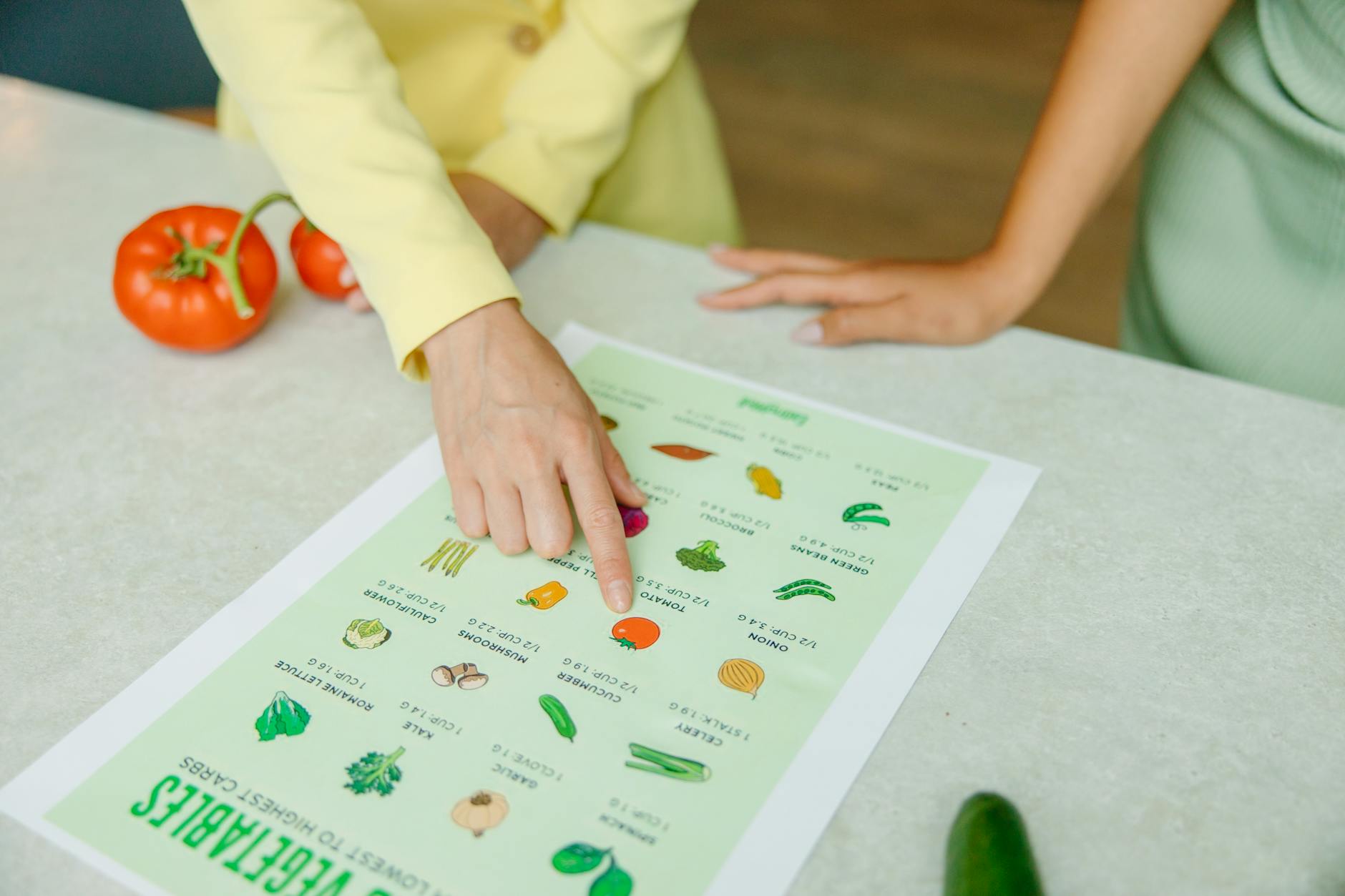
Non-starchy vegetables are the foundation of a diabetes-friendly diet. They contain about 5 grams of carbohydrate or less per cup raw and have almost no effect on blood sugar, while delivering huge doses of fiber, vitamins, minerals, and plant antioxidants. The American Diabetes Association recommends filling half of every lunch and dinner plate with them.
What Are Non-Starchy Vegetables?
Non-starchy vegetables are vegetables low in carbohydrate (typically under 5 g per serving) and high in water and fiber. They include leafy greens, cruciferous vegetables, peppers, summer squash, mushrooms, tomatoes, and many others. Their low glycemic load means you can eat large volumes without a meaningful glucose rise.
This is the opposite of starchy vegetables — potatoes, corn, peas, winter squash, beans — which deliver about 15 g of carbohydrate per serving and need to be portioned like grains.
Complete List of Non-Starchy Vegetables (with Carbs per Cup)
Values per 1 cup raw, chopped, from USDA FoodData Central.
| Vegetable | Carbs (g) | Fiber (g) | Calories |
|---|---|---|---|
| Spinach | 1.1 | 0.7 | 7 |
| Romaine lettuce | 1.5 | 1.0 | 8 |
| Iceberg lettuce | 2.1 | 0.9 | 10 |
| Arugula | 0.7 | 0.3 | 5 |
| Kale | 6.7 | 1.3 | 33 |
| Swiss chard | 1.4 | 0.6 | 7 |
| Collard greens | 2.0 | 1.4 | 11 |
| Bok choy | 1.5 | 0.7 | 9 |
| Watercress | 0.4 | 0.2 | 4 |
| Cabbage (chopped) | 5.2 | 2.2 | 22 |
| Broccoli | 6.0 | 2.4 | 31 |
| Cauliflower | 5.3 | 2.1 | 27 |
| Brussels sprouts | 7.9 | 3.3 | 38 |
| Bell pepper, green | 4.4 | 1.7 | 18 |
| Bell pepper, red | 6.0 | 2.0 | 26 |
| Tomato | 7.0 | 2.2 | 32 |
| Cucumber | 3.8 | 0.5 | 16 |
| Celery | 3.0 | 1.6 | 14 |
| Zucchini | 3.9 | 1.2 | 21 |
| Yellow squash | 3.8 | 1.2 | 18 |
| Eggplant | 4.8 | 2.5 | 20 |
| Asparagus | 5.2 | 2.8 | 27 |
| Green beans | 7.0 | 2.7 | 31 |
| White mushrooms | 2.3 | 0.7 | 15 |
| Onion | 10.7 | 1.9 | 46 |
| Garlic (3 cloves) | 3.0 | 0.2 | 13 |
| Radishes | 3.9 | 1.9 | 19 |
| Carrots (chopped) | 12.3 | 3.6 | 52 |
| Beets (sliced) | 13.0 | 3.8 | 58 |
| Artichoke (1 medium) | 13.4 | 6.9 | 60 |
| Snow peas | 4.8 | 1.6 | 27 |
| Sprouts (alfalfa) | 0.7 | 0.6 | 8 |
Note: carrots, beets, onions, and artichokes are sometimes called “borderline” — slightly higher in carbs but still classified as non-starchy by the ADA.
Why Non-Starchy Vegetables Are Ideal for Blood Sugar
- Low glycemic load. Even large servings barely move blood glucose.
- High fiber. Slows digestion and improves insulin sensitivity over time.
- High water content. Increases fullness for very few calories — supporting weight loss.
- Rich in micronutrients. Magnesium, potassium, and vitamin C are linked to better glucose control.
- Polyphenols and carotenoids. Antioxidant compounds may reduce diabetes-related inflammation.
According to the American Diabetes Association, non-starchy vegetables are the only food group adults are encouraged to eat in unlimited amounts.
Filling Half Your Plate: The CDC Plate Method
The CDC and ADA promote a simple visual:
- Use a 9-inch plate.
- Fill half with non-starchy vegetables.
- Fill one quarter with lean protein.
- Fill one quarter with carbohydrate (whole grain or starchy vegetable).
- Add a small serving of fruit or dairy on the side.
For more on building diabetes-friendly meals, see the diet and nutrition hub or our prediabetes diet plan.
Meal Planning Tips
Breakfast
- Spinach and mushroom omelet with tomato slices
- Avocado toast on whole-grain bread topped with arugula and sliced bell pepper
- Greek yogurt with cucumber, dill, and a side of cherry tomatoes
Lunch
- Big salad: 3 cups greens, ½ cup chopped vegetables, grilled chicken, olive oil and vinegar
- Lettuce-wrap turkey burgers with tomato and red onion, side of roasted broccoli
- Cauliflower-rice bowl with peppers, mushrooms, salsa, black beans, and avocado
Dinner
- Baked salmon, roasted asparagus, and a green salad
- Stir-fry with bok choy, snow peas, mushrooms, peppers, and tofu over a small portion of brown rice
- Zucchini noodles with marinara, ground turkey, and sautéed spinach
Snacks
- Sliced cucumber, peppers, and celery with hummus
- Cherry tomatoes with mozzarella balls and basil
- Roasted kale chips
Tips to Eat More Non-Starchy Vegetables
- Double the recipe. If a stir-fry calls for 1 cup of broccoli, use 2.
- Pre-wash and chop on Sunday. Container of cut vegetables in the fridge = no excuses.
- Frozen is your friend. Bags of broccoli florets, cauliflower, spinach, and stir-fry mix make weeknight dinners fast.
- Add to whatever you are already cooking. Spinach into pasta sauce, peppers into tacos, mushrooms into burgers.
- Start with a salad or vegetable soup. Studies show this reduces total calorie intake at the meal.
- Roast big batches. Olive oil, salt, 425 °F for 20 minutes — broccoli, cauliflower, Brussels sprouts, peppers, asparagus all work.
Common Pitfalls
- Drowning vegetables in cheese sauce, ranch, or butter (defeats the calorie advantage).
- Counting fries or chips as “vegetables.”
- Eating the same two vegetables every day — variety boosts the range of nutrients.
- Forgetting that high-sodium canned vegetables can raise blood pressure.
The Bottom Line
Non-starchy vegetables are the most powerful food group for managing prediabetes and diabetes. They are low in carbs, rich in fiber and micronutrients, and almost limitless in portion. Aim for 3 to 5 cups daily and fill half your plate with them at every meal. This single habit can transform your blood sugar, your weight, and your long-term health.