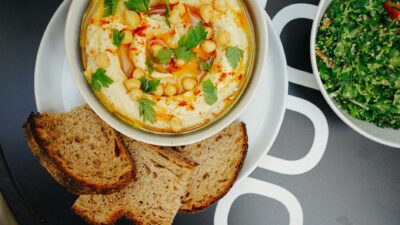
The Nordic diet (also called Baltic Sea diet or New Nordic diet) is a research-backed eating pattern emphasizing local Scandinavian foods adapted from traditional Danish, Swedish, Norwegian, Finnish, and Icelandic cuisines. Core components – fatty fish 2-3x per week (salmon, herring, mackerel, sardines, cod) for high omega-3; root vegetables (potatoes in moderation, carrots, beets, turnips, parsnips, rutabagas) for high fiber; berries (lingonberries, bilberries/blueberries, cloudberries, sea buckthorn) rich in antioxidants; whole rye (rye bread, crispbread, whole rye porridge) high in fiber with lower GI than wheat; cabbage (sauerkraut, fresh) and other cruciferous; rapeseed (canola) oil as primary fat with omega-3 content; legumes; nuts and seeds; herbs (dill, parsley); moderate dairy (especially fermented – yogurt, skyr, viili). Research (NORDIET and SYSDIET trials) shows modest A1C improvement, better lipids, blood pressure reduction, weight loss in metabolic syndrome adults. The diet ranks competitively with Mediterranean for cardiometabolic outcomes. Wild berries are essential and many have notable health properties – lingonberries (similar to cranberries, traditional sauce with meatballs and game), bilberries (European blueberries, much higher anthocyanin than American blueberries), cloudberries (orange Arctic berries, high vitamin C), sea buckthorn (orange berries, exceptionally high vitamin C), rosehips, rowanberries, juniper berries. Whole rye is the traditional grain – rye bread (rugbrod – dense, dark, sourdough-fermented, lower GI than wheat), rye crispbread (knäckebröd), whole rye porridge. Fermented dairy includes skyr (Icelandic – 17 g protein per ½ cup, less than 0.5% fat), viili, filmjölk, kefir, piimä, ymer.
Typical Scandinavian Foods
| Category | Examples |
|---|---|
| Fatty fish | Salmon, herring, mackerel, sardines, cod |
| Root vegetables | Potatoes (moderate), carrots, beets, turnips, parsnips, rutabagas |
| Nordic berries | Lingonberries, bilberries, cloudberries, sea buckthorn, rowanberries |
| Whole grains | Rye bread, crispbread, rye porridge, oats |
| Cruciferous | Cabbage, sauerkraut, brussels sprouts, kale |
| Fats | Rapeseed (canola) oil, butter (limit) |
| Fermented dairy | Skyr, viili, filmjölk, kefir, ymer |
| Game and meat | Reindeer (Lapland), moose, elk, pork, beef |
Best Diabetes-Friendly Choices
- Baked salmon with dill and lemon.
- Pickled herring (sild) – small portion; high sodium.
- Whole rye bread with cottage cheese and cucumber.
- Rye crispbread with smoked salmon and cream cheese.
- Skyr with berries and cinnamon.
- Cabbage rolls with lean ground meat.
- Roasted root vegetables with rapeseed oil and herbs.
- Fish stew (kalakeitto – Finnish) with vegetables.
- Gronkalsoppa (kale soup).
- Ärtsoppa (yellow pea soup – traditional Thursday meal).
- Pyttipanna with extra vegetables, less potato.
- Gravlax with cucumber and dill.
- Sauerkraut as side dish.
Foods to Limit or Watch
- Traditional pastries – kanelbulle (cinnamon rolls), princess cake, semla buns, krumkake, lefse, danish pastries – high sugar.
- Aquavit and other alcoholic beverages.
- Cured/smoked meats – high in sodium.
- Pickled fish – watch sodium content.
- White rye products vs whole grain.
- Sweetened berry preserves and jams.
- Cream-based sauces.
- Glogg (mulled wine – sugar + alcohol).
- Salted fish preparations.
- Lutefisk – low carb but high sodium.
Nordic Berry Specifics
- Lingonberries – traditional sauce with meat dishes; choose unsweetened.
- Bilberries – higher anthocyanin than American blueberries; some glucose research.
- Cloudberries – Arctic specialty; high vitamin C; pair with skyr.
- Sea buckthorn – exceptional vitamin C; tart; juice or oil.
- Rosehips – tea or low-sugar jam.
- Choose frozen, unsweetened, or stevia-sweetened.
- Small portions of traditional sweetened versions if any.
- Smoothies, yogurt toppers, sauce for fish/game.
Rye and Fermented Dairy
- Whole rye – lower GI than wheat (~50 vs 70).
- Sourdough rye fermentation further reduces GI.
- Choose dense, dark whole rye breads.
- Rye crispbread provides high fiber per serving.
- Whole rye porridge for breakfast.
- Skyr – 17 g protein per ½ cup; less than 0.5% fat.
- Plain unsweetened fermented dairy for diabetes.
- Add berries and stevia for flavor; avoid sweetened versions.
- Kefir for gut health.
The Bottom Line
The Nordic diet (also called Baltic Sea diet or New Nordic diet) is a research-backed eating pattern emphasizing local Scandinavian foods adapted from traditional Danish, Swedish, Norwegian, Finnish, and Icelandic cuisines. Core components – fatty fish 2-3x per week (salmon, herring, mackerel, sardines, cod) for high omega-3; root vegetables (potatoes in moderation, carrots, beets, turnips, parsnips, rutabagas) for high fiber; berries (lingonberries, bilberries/blueberries, cloudberries, sea buckthorn) rich in antioxidants; whole rye (rye bread, crispbread, whole rye porridge) high in fiber with lower GI than wheat; cabbage (sauerkraut, fresh) and other cruciferous; rapeseed (canola) oil as primary fat with omega-3 content; legumes; nuts and seeds; herbs (dill, parsley); moderate dairy (especially fermented – yogurt, skyr, viili). Research (NORDIET and SYSDIET trials) shows modest A1C improvement, better lipids, blood pressure reduction, weight loss in metabolic syndrome adults. The diet ranks competitively with Mediterranean for cardiometabolic outcomes. Diabetes-friendly dishes – gravlax (cured salmon with dill, watch sodium), pickled herring (small portion), baked salmon, fish stew (kalakeitto), meatballs with lingonberry sauce and roasted vegetables, roasted root vegetables, cabbage rolls, sauerkraut, gronkalsoppa, fish gratin, smoked mackerel salad, whole rye bread with cottage cheese and cucumber, muesli with skyr and berries, cloudberry parfait, pyttipanna (moderate portion), ärtsoppa. Watch portions of kanelbulle (cinnamon rolls), princess cake, semla buns, krumkake, lefse, danish pastries (traditional but high sugar). Aquavit (alcohol) limit. Cured meats high in salt. Choose whole-grain rye varieties. Wild berries are essential – lingonberries (similar to cranberries, traditional sauce with meatballs and game), bilberries (European blueberries, much higher anthocyanin), cloudberries (orange Arctic berries, high vitamin C), sea buckthorn (orange berries, exceptionally high vitamin C), rosehips, rowanberries, juniper berries. For diabetes – choose unsweetened, frozen, or sugar-free preserves; use stevia-sweetened sauce; small portions of traditional sweetened versions. Whole rye is the traditional grain – rye bread (rugbrod – dense, dark, sourdough-fermented, lower GI than wheat), rye crispbread (knäckebröd), whole rye porridge. Choose dense whole rye breads (more fiber, lower GI) over light rye; sourdough rye has lower GI due to fermentation. Rye contains more soluble fiber than wheat – better satiety, blood sugar response. Fermented dairy – skyr (Icelandic – 17 g protein per ½ cup, less than 0.5% fat – excellent diabetes choice), viili, filmjölk, kefir, piimä, ymer, buttermilk. Plain unsweetened varieties; add berries and stevia for flavor. For adults with type 2 diabetes – Scandinavian diet is a strong evidence-supported pattern competitive with Mediterranean; especially good if you have access to fresh fish and like rye/root vegetables. See our broader diabetes diet guide for context.