Acupuncture for peripheral neuropathy may ease symptoms such as pain, tingling or numbness for some people, but the evidence is modest and mostly low quality. It is not an FDA-approved treatment for diabetic nerve pain. If you want to try it, use it alongside standard care, choose a licensed practitioner, and take extra precautions if your feet are numb or slow to heal.
This guide covers what the research shows, how a session works, the safety rules for people with diabetes, and what it typically costs.
What Acupuncture Is and How It Might Help Nerve Pain
Acupuncture involves inserting very thin needles into the skin at specific points. In electroacupuncture, a small electrical current is passed through the needles. Traditional Chinese medicine explains acupuncture in terms of energy flow. Researchers have proposed other explanations, such as effects on how the nervous system processes pain signals and changes in local blood flow, but these ideas are still being studied.
Peripheral neuropathy is damage to the nerves outside the brain and spinal cord. In people with diabetes, it most often affects the feet and legs. The National Institute of Diabetes and Digestive and Kidney Diseases (NIDDK) says up to half of people with diabetes have peripheral neuropathy. For background, see our overview of diabetic peripheral neuropathy.
What the Research Shows
Some studies suggest acupuncture can reduce nerve pain caused by diabetes and by chemotherapy. Many trials have tested acupuncture for diabetic peripheral neuropathy, but most have important weaknesses. A 2025 systematic review and network meta-analysis in the journal Medicine pooled 62 randomized trials with nearly 6,000 participants. All participants were already receiving mecobalamin, a form of vitamin B12. The review found that electroacupuncture and some related techniques were linked with better nerve conduction test results, but the authors described the evidence as low certainty.
Several limits make these findings hard to apply:
- Few sham controls. Many trials compared acupuncture plus medicine with medicine alone, so it is hard to separate a real effect from a placebo effect.
- Small, single-center studies. Most trials were small and done in one region, which raises the risk of bias.
- Nerve tests, not pain. Many studies measured nerve conduction speed rather than the pain, sleep and daily function that matter most to patients.
- Short follow-up. Few trials followed people long enough to show whether any benefit lasts.
The National Center for Complementary and Integrative Health (NCCIH) notes that for carpal tunnel syndrome, another nerve condition, a review found acupuncture may have little or no effect compared with sham acupuncture. Standard care for diabetic neuropathy centers on blood sugar control and prescription nerve pain medicines, and acupuncture is used alongside these rather than instead of them.
| Question | What the evidence suggests |
|---|---|
| Can it reduce nerve pain? | Some studies suggest it can; many trials are small and the evidence is low certainty |
| Can it improve nerve test results? | Some trials report improvement, mostly in low-quality studies |
| Can it reverse nerve damage? | No good evidence |
| Is it FDA-approved for neuropathy? | No; acupuncture needles are regulated as medical devices, not as a neuropathy treatment |
| Does it replace medicines or blood sugar control? | No; it is at most an add-on |
Safety Rules for People With Diabetes and Neuropathy
According to NCCIH, relatively few complications have been reported from acupuncture. The FDA regulates acupuncture needles as medical devices and requires them to be sterile and labeled for single use. When acupuncture is not delivered properly, serious harms such as infections, punctured organs and nerve injury can occur.
Neuropathy adds specific risks. If you cannot feel your feet well, you may not notice a small wound or early infection. Diabetes can also slow healing. Keep these precautions in mind:
- No needles near foot ulcers, cuts, blisters, calluses with broken skin, or infected areas
- Extra caution, or avoiding the feet, if you have poor circulation or peripheral artery disease
- Tell the practitioner if you take blood thinners or have a bleeding disorder
- Avoid heat therapies such as moxibustion or heat lamps on numb skin, because burns can go unnoticed
- Check needle sites on your feet daily for redness, swelling, warmth or drainage for several days afterward
If you see signs of infection, or a wound that is not healing, contact your doctor or podiatrist promptly. Our diabetic foot care guide covers daily checks in detail.
What to Expect at a Session
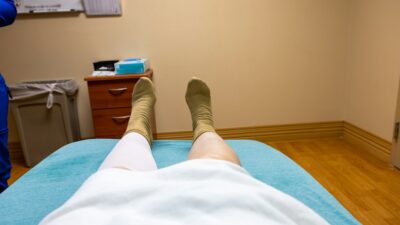
A first visit usually starts with questions about your health, symptoms and medicines. The practitioner then places needles at chosen points, which may include the legs, hands, back or ears as well as the feet. The needles are left in place for a period of time while you rest. Some people notice a dull ache or tingling where the needles go in.
Mild side effects can include soreness, small bruises or minor bleeding where needles went in. Feeling lightheaded is possible, so eat normally before a session. If you take insulin or a sulfonylurea, check your blood sugar beforehand, since skipping a meal could raise the risk of a low.
How to Find a Qualified Practitioner
NCCIH notes that most states license acupuncturists, but the requirements vary from state to state. When choosing a practitioner:
- Check that they hold a current state license (often shown as L.Ac.), or are a physician trained in acupuncture
- Ask about their experience treating people with diabetes and neuropathy
- Confirm they use sterile, single-use, disposable needles
- Ask them to inspect your feet before and after treatment and to avoid any broken skin
- Be wary of anyone who tells you to stop prescribed medicines or promises a cure
Cost and Insurance Coverage
Medicare Part B covers acupuncture only for chronic low back pain that has lasted 12 weeks or more, up to 12 sessions in 90 days, with 8 more if you are improving, and no more than 20 sessions in any 12-month period. It does not cover acupuncture for neuropathy. Some private and employer plans include acupuncture benefits, so call your insurer before starting. Out-of-pocket prices vary by region and practitioner, so ask for the cost per session and for a set number of sessions in writing.
How Acupuncture Fits With Proven Neuropathy Care
The foundation of neuropathy care is keeping blood sugar, blood pressure and cholesterol in range, which NIDDK says can keep nerve damage from getting worse. Prescription medicines can reduce nerve pain, though they do not repair the nerves. Physical therapy can help with balance and strength, and daily foot checks help prevent serious injuries.
If you want to add acupuncture, treat it as a time-limited experiment. Track your pain, sleep and activity before you start and after a set number of sessions. If there is no meaningful change, stop and talk with your doctor about other options. Our guides on how to treat diabetic neuropathy and acupuncture for diabetes cover related options, and our treatment hub lists more.
The Bottom Line
Acupuncture for peripheral neuropathy is a low-risk option for some people when done by a licensed practitioner, but the evidence for it is modest and low certainty. It does not replace blood sugar control, prescribed pain medicines or daily foot care. People with numb feet, ulcers, poor circulation or blood thinners need extra precautions. Talk with your doctor before starting, and stop if it does not help after a fair trial.