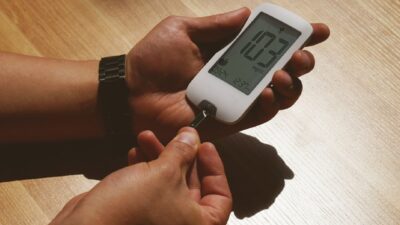
Diabetes affects fertility in both sexes. Women with type 1 or type 2 diabetes may have menstrual irregularity, PCOS-related anovulation, higher miscarriage risk, and elevated congenital anomaly risk if A1C is poorly controlled at conception. Men face erectile dysfunction, retrograde ejaculation, reduced sperm quality, and low testosterone. Pre-pregnancy A1C target is below 6.5 percent. Most non-insulin diabetes medications are stopped before conception — insulin (often with metformin) takes over. Folic acid, blood pressure and thyroid optimization, and switching to continuous glucose monitoring (especially type 1) all reduce complications.
How Diabetes Affects Female Fertility
Anovulation and PCOS
- Polycystic ovary syndrome (PCOS) is the leading cause of anovulatory infertility
- 50 to 70 percent of women with PCOS have insulin resistance
- 40 percent of women with PCOS develop prediabetes or T2D by age 40
- Hyperinsulinemia stimulates ovarian androgen production, disrupting ovulation
- Treatment: weight loss, metformin, letrozole or clomiphene for ovulation induction
Menstrual Irregularity
- Poor glycemic control linked with delayed menarche, irregular cycles, and earlier menopause in type 1 diabetes
- Obesity and insulin resistance disrupt the hypothalamic-pituitary-ovarian axis
Miscarriage and Congenital Anomalies
- A1C above 9 to 10 percent at conception roughly doubles miscarriage risk
- Congenital anomaly risk rises stepwise with A1C — particularly neural tube defects (spina bifida, anencephaly), cardiac defects, and caudal regression
- Pre-pregnancy A1C below 6.5 percent substantially reduces these risks
- Higher rates of preeclampsia, preterm birth, and stillbirth in poorly controlled diabetes
How Diabetes Affects Male Fertility
- Erectile dysfunction — vascular (small vessel disease) and neuropathic — common from age 40 onward in diabetes
- Retrograde ejaculation — semen enters bladder instead of being ejected, due to autonomic neuropathy affecting bladder neck
- Reduced sperm motility and morphology — oxidative stress from chronic hyperglycemia
- Increased sperm DNA fragmentation
- Low libido and reduced testosterone (30 to 50 percent of T2D men)
- Varicocele — found in about 15 percent of men generally, possibly more common in T2D
Pre-Pregnancy Planning Checklist
3 to 6 Months Before Conception
- A1C target below 6.5 percent (or as close as safely achievable)
- Start folic acid 400 to 800 mcg daily (4 mg if prior NTD-affected pregnancy or other high risk)
- Review and adjust medications:
- Stop teratogenic drugs (statins, ACE inhibitors, ARBs, fibrates)
- Stop most non-insulin diabetes drugs (GLP-1 RAs, SGLT2 inhibitors, DPP-4 inhibitors, sulfonylureas, pioglitazone)
- Continue or transition to insulin (and possibly metformin)
- Switch hypertension control to labetalol, methyldopa, nifedipine, or hydralazine
- Check TSH and treat hypothyroidism (target TSH below 2.5 mIU/L)
- Consider continuous glucose monitor and insulin pump (especially type 1)
- Dilated eye exam to assess retinopathy
- Spot urine albumin-creatinine ratio
- Vaccinations updated (flu, COVID, Tdap, rubella, varicella if not immune)
- Stop smoking and alcohol
- Address weight if BMI is very high or very low
- Carrier genetic screening if appropriate
Medications in Pregnancy
| Category | In Pregnancy |
|---|---|
| Insulin (all forms) | Preferred — does not cross placenta meaningfully |
| Metformin | Acceptable; crosses placenta; option for GDM or PCOS |
| Glyburide | Crosses placenta; reasonable second-line in GDM in some practices |
| GLP-1 receptor agonists (semaglutide, tirzepatide, liraglutide) | Stop before conception — limited safety data |
| SGLT2 inhibitors | Stop before conception — animal studies show fetal renal toxicity |
| DPP-4 inhibitors | Stop before conception |
| Pioglitazone | Stop before conception |
| Sulfonylureas (other than glyburide) | Stop before conception |
| Statins | Stop before conception (most), restart after delivery and breastfeeding |
| ACE inhibitors and ARBs | Stop before conception — fetotoxic |
Pregnancy Glycemic Targets
- Fasting glucose below 95 mg/dL
- 1-hour postprandial below 140 mg/dL
- 2-hour postprandial below 120 mg/dL
- A1C below 6 percent (ideal) to below 6.5 percent
- Time-in-range above 70 percent on CGM (target range 63 to 140 mg/dL in pregnancy)
- Avoid hypoglycemia — risk is higher in first trimester for type 1
Insulin Requirements Across Pregnancy (Type 1)
| Trimester | Insulin Need |
|---|---|
| Pre-pregnancy | Baseline |
| First (weeks 0 to 13) | Often decreased — hypoglycemia risk; nausea reduces intake |
| Second (weeks 14 to 27) | Slow increase as placental hormones rise |
| Third (weeks 28 to 36) | Sharp increase — often 2 to 3× baseline |
| Late third (weeks 36 to delivery) | May plateau or decrease — placental aging |
| Postpartum (immediately) | Drops back near baseline within 24 to 48 hours |
| Breastfeeding | 20 percent lower than pre-pregnancy |
Ovulation Induction for PCOS
- Letrozole — first-line per ACOG and ASRM; aromatase inhibitor; lower multiple pregnancy rate than clomiphene
- Clomiphene citrate — selective estrogen receptor modulator; second-line
- Metformin — alone modestly improves ovulation; combined with letrozole or clomiphene for resistance cases
- Gonadotropin injections — for refractory cases, requires monitoring
- Bariatric surgery in severe obesity often restores ovulation
- In vitro fertilization (IVF) — when above fail or when other factors require
Assisted Reproductive Technology (ART)
- A1C below 7 percent before initiating ovarian stimulation
- Monitor for ovarian hyperstimulation syndrome (higher risk in PCOS)
- Sperm analysis early in workup if male partner has diabetes
- Consider intracytoplasmic sperm injection (ICSI) for severe male-factor
- Frozen embryo transfer cycles allow tight glucose optimization before transfer
Male Fertility Optimization
- Tight glycemic control (A1C below 7 percent)
- Weight loss
- Treat erectile dysfunction (PDE5 inhibitors first-line)
- Address low testosterone — but avoid TRT if fertility desired (TRT suppresses spermatogenesis); use clomiphene, hCG, or aromatase inhibitor instead
- Consider antioxidants (vitamin C, E, CoQ10, zinc, folate) — modest evidence
- Avoid heat (hot tubs, saunas, laptop on lap)
- Stop smoking and limit alcohol
- Retrograde ejaculation: alpha agonists (pseudoephedrine, imipramine) may help; sperm retrieval from bladder for IVF/IUI
Gestational Diabetes and Future Fertility
- Gestational diabetes affects 6 to 10 percent of US pregnancies
- About 50 percent of women with GDM develop type 2 diabetes within 10 years
- Postpartum 6 to 12 week 75-gram oral glucose tolerance test is recommended
- Annual A1C or fasting glucose thereafter
- Breastfeeding reduces maternal T2D risk
- Future pregnancies: pre-pregnancy A1C check; high recurrence rate (30 to 60 percent)
Pregnancy Risks to Monitor
- Congenital anomalies — detailed anatomy ultrasound at 18 to 22 weeks, fetal echocardiogram
- Macrosomia (large for gestational age)
- Shoulder dystocia at delivery
- Neonatal hypoglycemia after birth
- Preeclampsia — low-dose aspirin 81 mg from 12 weeks reduces risk in high-risk women
- Preterm birth
- Diabetic ketoacidosis — particularly type 1, can present at lower glucose levels in pregnancy
- Worsening retinopathy — eye exams each trimester
- Polyhydramnios
- Stillbirth (rare with good control)
Breastfeeding
- Encouraged for women with diabetes
- Improves maternal glycemic control and reduces future T2D risk
- Improves infant outcomes
- Insulin requirements drop by about 20 percent below pre-pregnancy baseline
- Metformin compatible with breastfeeding
- Most other diabetes drugs lack safety data in breastfeeding — insulin first-line
When to See a Specialist
- Inability to conceive after 12 months of trying (6 months if age 35+)
- Known PCOS, endometriosis, prior pelvic surgery
- Recurrent miscarriage (2 or more)
- Long-standing or poorly controlled diabetes
- Erectile dysfunction not responding to first-line therapy
- Suspected male-factor infertility
- Need for ovulation induction
- Pre-pregnancy planning with high baseline A1C
Related Reading
See our overviews on complications and related conditions, diabetes and low testosterone, and A1C levels. The American College of Obstetricians and Gynecologists publishes practice bulletins on pregestational and gestational diabetes management.
The Bottom Line
Diabetes affects fertility in both sexes — women through PCOS-related anovulation, irregular cycles, and higher miscarriage and congenital anomaly risk; men through erectile dysfunction, retrograde ejaculation, and reduced sperm quality. Pre-pregnancy A1C target is below 6.5 percent. Switch off teratogenic medications (statins, ACE inhibitors, ARBs) and most non-insulin diabetes drugs (GLP-1 RAs, SGLT2 inhibitors, DPP-4 inhibitors, pioglitazone) before conception — insulin and metformin are the mainstays in pregnancy. Take folic acid, optimize thyroid and blood pressure, and consider CGM and pump therapy (especially type 1). Gestational diabetes predicts type 2 diabetes in about half within 10 years, so postpartum testing and ongoing screening matter. Talk to your doctor about a pre-pregnancy plan if you have diabetes and are considering conception.