Diabetes and Parkinson’s disease are connected. Large studies show that people with type 2 diabetes are more likely to develop Parkinson’s later in life, although that doesn’t prove one causes the other. Living with both brings practical challenges, from timing levodopa around protein to telling a tremor apart from low blood sugar. No diabetes drug is approved to treat Parkinson’s.
When to get urgent care
Call 911 or get urgent care for sudden confusion, a fall with a head injury, inability to swallow, or signs of severe low blood sugar such as passing out or a seizure. Never give food or drink to someone who is unconscious; glucagon is used for severe lows. Sudden confusion can come from a low, an infection or a medicine problem, so check glucose if it’s safe and get help.
What Is the Link Between Diabetes and Parkinson’s?
Parkinson’s disease is a nervous system disorder that affects movement and gets worse over time. According to NINDS, it happens when dopamine-producing nerve cells in a brain area called the substantia nigra weaken and die, causing tremor, stiffness and problems with movement and balance.
Several large studies have found an association with type 2 diabetes:
| Study | What it found |
|---|---|
| English record-linkage cohort, Neurology 2018 | Among about 2 million people with type 2 diabetes, the rate of later Parkinson’s was 32% higher than in a reference group (hazard ratio 1.32). The link was stronger with complicated diabetes (1.49) and in people aged 25 to 44 (3.81). |
| Meta-analysis, Brain and Behavior 2021 | Across 16 studies, diabetes was associated with a 15% higher risk overall; cohort studies showed a 29% higher risk, while case-control studies didn’t show a significant link. |
These are observational studies, so they show that the two conditions travel together, not that diabetes causes Parkinson’s. The 2018 study authors suggest shared genetic predisposition or overlapping disease pathways may be involved. This is an area of active research.
Can Diabetes Drugs Treat Parkinson’s? What GLP-1 Trials Show
Because GLP-1 receptor agonists showed protective effects on nerve cells in lab and animal studies, researchers have tested them in people with Parkinson’s. The results so far are mixed:
| Trial | Drug | Result |
|---|---|---|
| LIXIPARK, NEJM 2024 (phase 2, 156 people with early Parkinson’s) | Lixisenatide | At 12 months, movement scores were essentially unchanged on lixisenatide but worsened by about 3 points on placebo. Nausea affected 46% and vomiting 13%. The authors said longer, larger trials are needed. |
| Exenatide-PD3, Lancet 2025 (phase 3, 194 people) | Exenatide (weekly) | No difference from placebo in movement scores at 96 weeks. The authors found no evidence that exenatide slows Parkinson’s. The Lancet published an editorial expression of concern about this paper in June 2026. |
As of November 2026, no GLP-1 drug or other diabetes medicine is approved to treat or slow Parkinson’s disease. If you take a GLP-1 medicine for diabetes or weight, it’s for those conditions. Don’t start, stop or switch a medicine hoping to affect Parkinson’s.
Managing Meals, Levodopa and Blood Sugar
Protein and levodopa timing
Carbidopa-levodopa is the main medicine for Parkinson’s symptoms. The Sinemet label explains that levodopa competes with certain amino acids for absorption in the gut, so a high-protein diet may delay absorption and reduce how much reaches the bloodstream.
This matters if you follow a low-carb, higher-protein eating plan for diabetes. Protein isn’t the enemy. You need it, especially if Parkinson’s is causing weight loss. But timing matters. Ask your neurologist and a registered dietitian how to space levodopa doses and spread protein across the day while keeping carbohydrate intake steady for glucose control.
Slowed stomach emptying
NINDS notes that Parkinson’s can affect the nerves that control the gut, causing nausea, constipation and swallowing problems. Parkinson’s is also a recognized risk factor for gastroparesis (delayed stomach emptying), which diabetes can cause as well. When food sits in the stomach longer:
- Levodopa may reach the small intestine, where it’s absorbed, later and less predictably.
- Mealtime insulin may peak before the food’s glucose arrives, raising the risk of a low followed by a later high.
A continuous glucose monitor can help reveal these patterns. Our guide to diabetic gastroparesis explains meal and insulin timing.
Avoid metoclopramide in Parkinson’s
Metoclopramide (Reglan) is sometimes used for gastroparesis. Its label carries a boxed warning for tardive dyskinesia and advises avoiding it in people with Parkinson’s disease, because it can cause or worsen parkinsonian symptoms such as slowness, tremor and stiffness. If you need gastroparesis treatment, make sure every prescriber knows about your Parkinson’s. See gastroparesis medication for other options to discuss.
Tremor, Shakiness or Low Blood Sugar?
Shakiness is a classic sign of low blood sugar, and tremor is a classic Parkinson’s symptom. If you take insulin or a sulfonylurea and suddenly feel shakier than usual, sweaty, hungry or confused, check your glucose. A reading under 70 mg/dL (3.9 mmol/L) is low. Treat it with 15 to 20 g of fast-acting carbohydrate, recheck in 15 minutes and repeat if you’re still low. Learn the full list in symptoms of low blood sugar.
Planning for swallowing problems
NINDS notes that swallowing and chewing problems can happen in later stages of Parkinson’s, raising choking risk. That changes how lows are treated:
- Ask your care team or a speech-language pathologist which fast-acting carbohydrate is safest for you. Some people manage glucose gel more easily than chewable tablets.
- Keep glucagon on hand if you use insulin or a sulfonylurea, and teach caregivers how to use it. It’s for severe lows when someone can’t safely eat or drink.
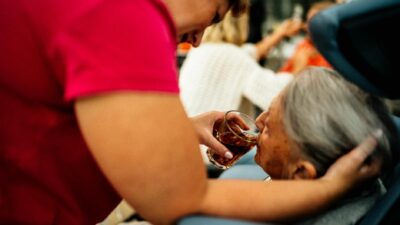
- Never put food or drink in the mouth of someone who is unconscious or having a seizure.
Dizziness, Falls and Blood Pressure
Both conditions can cause orthostatic hypotension, a drop in blood pressure on standing. NINDS lists it as a Parkinson’s symptom that can cause dizziness or fainting, and diabetic autonomic neuropathy can do the same. Some Parkinson’s medicines can also lower blood pressure on standing. Combined with low blood sugar, this raises the risk of falls. See orthostatic hypotension and diabetes and falls prevention for practical steps such as standing up slowly, staying hydrated and checking glucose before activity.
Thinking, Memory and Caregiving
Parkinson’s can affect attention and thinking, and some people develop dementia over time. That can make insulin dosing and glucose checks harder to manage. Caregivers may need to take on more of the routine, and simpler regimens may be safer. Our guides on dementia and diabetes care and Lewy body dementia and diabetes cover this in depth.
Ask your care team
Bring a full list of your medicines, including over-the-counter products and supplements, to both your diabetes team and your neurologist. Ask whether your diabetes targets or medicines should change as Parkinson’s progresses. Never stop or change a prescribed medicine on your own.
The Bottom Line
Type 2 diabetes is associated with a higher risk of Parkinson’s disease, but the link isn’t proven to be causal, and GLP-1 trials haven’t produced an approved Parkinson’s treatment. Day to day, the biggest issues are practical: timing levodopa around protein, handling slowed digestion, avoiding metoclopramide, checking glucose when shaky or dizzy, and planning safe low-blood-sugar treatment if swallowing gets harder. Keep both care teams talking. Explore related conditions in our complications hub.