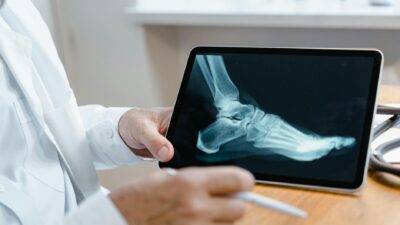
Testing for neuropathy in the feet typically includes the 10-gram monofilament test, 128 Hz tuning fork for vibration sense, ankle reflexes, pinprick sensation, and gait observation. Nerve conduction studies and electromyography (EMG) confirm the diagnosis when symptoms are atypical or rapidly progressing. Annual foot exams are recommended for everyone with diabetes; daily self-inspection and frequent professional checks are needed once neuropathy is established.
The Clinical Foot Neuropathy Exam
10-Gram Monofilament Test
- A thin nylon filament calibrated to bend at 10 grams of pressure
- Pressed at 4 to 10 standardized sites on the sole of each foot
- Patient with eyes closed reports whether they feel each touch
- Inability to feel at 4 or more sites indicates loss of protective sensation
- Strong predictor of future foot ulcer risk
128 Hz Tuning Fork
- Tuning fork struck and placed on the bony prominence of the big toe
- Patient reports when vibration stops being felt
- Compare with examiner’s perception (examiner should feel vibration longer than patient)
- Tests large-fiber sensory nerves
- Reduced vibration sense often the earliest objective sign
Reflex Testing
- Ankle reflex tested with reflex hammer at the Achilles tendon
- Diminished or absent ankle reflex is common in established neuropathy
- Knee reflex usually preserved in mild distal neuropathy
Pinprick Test
- A sterile pin or sharp object lightly pressed at multiple foot sites
- Tests small-fiber nerves (pain pathways)
- Compares sensation between left and right and between proximal and distal sites
Other Clinical Components
- Visual inspection — calluses, cracks, ulcers, deformity, color, temperature
- Nail inspection — fungus, ingrowth, length
- Pulse check at the dorsalis pedis and posterior tibial arteries
- Gait observation — limp, balance, foot drop
- Romberg test — standing with feet together, eyes closed; loss of balance suggests proprioceptive loss
Symptom Screening Tools
| Tool | What It Captures |
|---|---|
| Michigan Neuropathy Screening Instrument (MNSI) | Symptom questionnaire plus brief exam |
| Toronto Clinical Neuropathy Score | Symptom and exam composite |
| Neuropathy Symptom Score | Patient-reported symptom severity |
| Diabetic Neuropathy Examination (DNE) | Structured clinical exam |
Specialized Testing
Nerve Conduction Studies (NCS)
- Surface electrodes apply small electrical stimuli to peripheral nerves
- Measures speed and strength of nerve signal conduction
- Detects large-fiber neuropathy
- Useful when diagnosis is uncertain
- Performed by a neurologist or electrodiagnostic specialist
Electromyography (EMG)
- Thin needle electrodes inserted into muscle
- Records electrical activity at rest and during contraction
- Detects motor nerve involvement
- Often performed alongside NCS
Skin Biopsy
- Small punch biopsy from the lower leg
- Counts intraepidermal nerve fiber density (IENFD)
- Detects small-fiber neuropathy that NCS may miss
- Used for atypical or painful neuropathy with normal NCS
Quantitative Sensory Testing (QST)
- Measures thresholds for vibration, temperature, and pain
- Research and specialized clinical settings
Autonomic Testing
- Heart rate variability with deep breathing
- Tilt-table test for postural blood pressure changes
- Skin sweat tests (sudomotor testing)
- Used when autonomic neuropathy symptoms are present
What Symptoms Trigger Testing
- Numbness or “stocking” loss of sensation in the feet
- Burning, prickling, or tingling
- Pain that worsens at night or with light touch
- Loss of balance, especially in dim light
- Foot ulcer or callus
- Foot drop or weakness
- Unexplained falls
- Progressive deformity (Charcot foot)
Annual Foot Exam Components
| Component | Frequency |
|---|---|
| Visual inspection | At every clinic visit |
| Monofilament test | At least annually |
| Vibration test (tuning fork) | Annually |
| Pulse check | Annually |
| Reflex testing | Annually or as indicated |
| Footwear inspection | Annually |
| Patient education on self-care | Annually plus as needed |
Self-Inspection at Home
- Daily visual inspection of feet (use a mirror for the soles)
- Note any new redness, blisters, cracks, or color changes
- Check between toes for moisture, fungus
- Test toenails for ingrowth or thickening
- Compare temperature side to side (one foot warmer may signal infection)
- Note any changes in shoe fit or comfort
- Track gait and balance for changes
Differential Diagnosis
Foot symptoms may not always be diabetic neuropathy. Other causes to rule out:
- Vitamin B12 deficiency
- Hypothyroidism
- Alcohol-related neuropathy
- Chemotherapy-induced neuropathy
- Lumbar radiculopathy
- Tarsal tunnel syndrome
- Charcot-Marie-Tooth disease (genetic)
- Inflammatory neuropathies (CIDP, vasculitis)
- Heavy metal exposure
- HIV-related neuropathy
What Happens If Neuropathy Is Confirmed
- Optimize blood sugar control (target A1C usually under 7 percent)
- Address blood pressure and lipid control
- Treat painful symptoms with medications such as duloxetine, gabapentin, pregabalin, or topical capsaicin
- Refer for podiatry care for callus management and ulcer prevention
- Custom orthotics or therapeutic shoes if indicated
- Address vitamin deficiencies and other contributors
- Physical therapy for balance and strength
- Consider research interventions for severe cases
See our overview on treatment options for more.
Related Reading
For more on diabetic neuropathy and foot care, see our guides on treatment and prediabetes basics.
The Bottom Line
Foot neuropathy is diagnosed clinically with the 10-gram monofilament test, 128 Hz tuning fork, ankle reflexes, pinprick, and gait observation. Nerve conduction studies and EMG confirm large-fiber neuropathy when needed; skin biopsy detects small-fiber types. Annual foot exams catch neuropathy early when prevention of complications is most effective. New foot symptoms — numbness, tingling, burning, or pain — warrant prompt evaluation. Once neuropathy is established, daily self-inspection and frequent clinician visits prevent ulcers and limb-threatening complications.