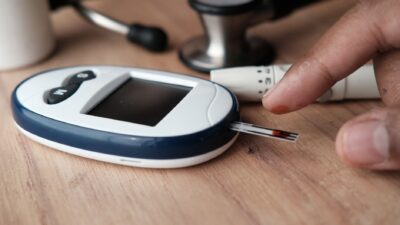
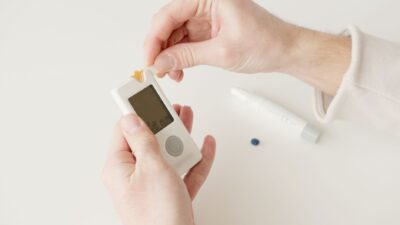
A blood ketone meter is a handheld device that measures ketones in a drop of blood from a finger prick. It reads beta-hydroxybutyrate, the main ketone that builds up in diabetic ketoacidosis (DKA), and gives a result in millimoles per liter (mmol/L). People who take insulin use one to catch rising ketones early on sick days or when glucose runs high.
Call 911 or go to the ER if your ketones are high and you have vomiting, stomach pain, trouble breathing, fruity-smelling breath, confusion or extreme sleepiness. These can be signs of DKA, which needs hospital treatment. Do not try to treat DKA at home, and do not wait for another reading if you feel very unwell.
What a Blood Ketone Meter Measures
When your body cannot use glucose for fuel, usually because there is not enough insulin, it breaks down fat instead. The liver turns that fat into ketones. A little ketone production is normal, for example after an overnight fast. In people with diabetes who lack insulin, ketones can build up quickly and make the blood acidic, which is DKA. Our article on what a ketone is explains the chemistry.
The body makes three ketones. Blood ketone meters measure beta-hydroxybutyrate, the one that rises most in DKA. The 2024 consensus report on hyperglycemic crises from the American Diabetes Association and European diabetes experts recommends direct measurement of beta-hydroxybutyrate for diagnosing DKA, and uses a level of 3.0 mmol/L or higher as the ketone criterion.
Blood Ketone Meter vs Urine Ketone Strips
| Feature | Blood ketone meter | Urine ketone strips |
|---|---|---|
| Ketone measured | Beta-hydroxybutyrate | Acetoacetate |
| Timing | Shows your level right now | Reflects ketones built up over the past few hours |
| Result | A number in mmol/L | A color range, from negative to large |
| Affected by hydration | Less | Yes, concentrated urine can read higher |
| Cost | Meter plus ketone strips, which usually cost more than urine strips | Low cost, sold over the counter |
Urine strips are still useful and inexpensive. If you rely on them, our guide to dangerous levels of ketones in urine explains the color scale.
Who Should Have a Blood Ketone Meter
MedlinePlus notes that at-home meters are available for people whose provider recommends frequent ketone checks. They are most useful for:
- People with type 1 diabetes, including those using insulin pumps, where a blocked or dislodged infusion set can stop insulin delivery
- People with type 2 diabetes or LADA who take insulin
- People taking SGLT2 inhibitors (such as empagliflozin, dapagliflozin, canagliflozin or ertugliflozin), which can cause DKA even when glucose is only mildly raised
- Pregnant people with type 1 or type 2 diabetes, since DKA can develop at lower glucose levels in pregnancy
- Anyone with diabetes who has had DKA before
Most people with prediabetes do not need a ketone meter, because they do not take insulin and their DKA risk is very low.
When to Check Your Ketones
Your care team should give you a written plan. Common reasons to check include:
- Blood glucose above 240 mg/dL (13.3 mmol/L), or above the level in your plan, especially if it stays high on repeat checks
- Illness, fever, vomiting or diarrhea
- Symptoms such as nausea, stomach pain, unusual thirst or fast breathing, even if glucose is not very high
- A suspected insulin pump or infusion site problem
- While taking an SGLT2 inhibitor, if you feel unwell, regardless of your glucose reading
What Blood Ketone Readings Mean
Exact action points can vary between care teams, so follow your own plan. These ranges are widely used:
| Reading | What it usually means | Typical action |
|---|---|---|
| Below 0.6 mmol/L | Normal | No action needed for ketones |
| 0.6 to 1.5 mmol/L | Raised | Follow your sick-day plan, drink water and recheck as directed |
| 1.5 to 3.0 mmol/L | High, at risk of DKA | Contact your care team right away |
| 3.0 mmol/L or higher | Very high, possible DKA | Seek emergency care, especially with symptoms |
Ketones and glucose should be read together. DKA usually occurs with high glucose, but in people taking SGLT2 inhibitors or who are pregnant, it can happen with glucose below 250 mg/dL (13.9 mmol/L).
How to Use a Blood Ketone Meter
- Wash and dry your hands.
- Check that you have a ketone strip, not a glucose strip, and that it has not expired.
- Insert the strip and prick the side of your fingertip with the lancing device.
- Touch the blood drop to the strip and wait for the result.
- Write down or save the reading with the time and your glucose level.
Store strips as the label directs, away from heat and moisture. Expired or badly stored strips can give wrong results.
Meters and Sensors Available in the US
Several fingerstick meters measure both glucose and ketones using two separate types of strips. Abbott’s Precision Xtra is one long-standing example, which we cover in our Precision Xtra ketone meter review. Some other dual meters are marketed mainly for people following ketogenic diets. If you have diabetes, choose a meter your care team recommends.
Continuous ketone monitoring is new. In August 2026, the FDA granted De Novo authorization to Abbott’s Libre Duo, a wearable sensor that tracks glucose and ketones together, for people with diabetes aged 2 and older. Abbott has announced a US launch, but availability and insurance coverage may still be limited as of late 2026. The FDA has said that ketone readings from the sensor should be considered alongside glucose values and symptoms.
Ketone Meters and Low-Carb Diets
On a ketogenic diet, blood ketones often rise above the normal range while glucose stays normal. This is called nutritional ketosis, and it is different from DKA, which involves acid buildup and usually high glucose. MedlinePlus notes that ketoacidosis can still develop on a low-carbohydrate diet, so people with diabetes who take insulin or SGLT2 inhibitors should talk with their care team before starting one. For more on eating patterns, see our prediabetes diet hub.
The Bottom Line
A blood ketone meter gives a quick, numeric reading of beta-hydroxybutyrate, the ketone that matters most for DKA. It is most valuable for people who use insulin or take SGLT2 inhibitors, especially on sick days. Readings under 0.6 mmol/L are normal, 1.5 to 3.0 mmol/L means calling your care team, and 3.0 mmol/L or higher with symptoms means emergency care. Ask your care team whether you need one and for a written plan. To learn about other blood sugar tests, visit our A1C test hub.