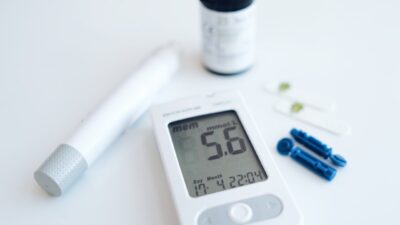
A blood sugar reading of 120 mg/dL sits at an interpretation crossroads. Fasting, it is borderline-high and lands in the prediabetes range. Two hours after a meal, it is comfortably normal. Random — neither fasting nor immediately post-meal — it is generally unremarkable. Context determines whether 120 is a yellow flag, a green light, or background noise. This guide walks through what 120 mg/dL means in each situation, what equivalent metrics it maps to, and what reasonable next steps look like.
What 120 mg/dL Means in Each Context
| Measurement Type | Normal Range | 120 mg/dL Interpretation |
|---|---|---|
| Fasting (8+ hours no food) | Under 100 mg/dL | Prediabetes (impaired fasting glucose) — upper end |
| 2 hours post-meal | Under 140 mg/dL | Normal |
| Random (anytime) | Under 140 mg/dL | Normal |
| 1 hour post-meal | Under 180 mg/dL (rough target) | Excellent |
| Bedtime | 100 to 140 mg/dL (with diabetes) | Within typical range |
Fasting 120 mg/dL: The Prediabetes Picture
The American Diabetes Association defines impaired fasting glucose as 100 to 125 mg/dL. A fasting reading of 120 is in the upper portion of that band, only 6 mg/dL away from the diabetes threshold of 126. That proximity matters. People whose fasting glucose has crept into the 115 to 125 range are at meaningfully higher risk of progressing to type 2 diabetes within 5 to 10 years, especially if other risk factors are present — overweight, family history, sedentary lifestyle, gestational diabetes history, or high blood pressure.
- Confirm with a second fasting test on a different morning — a single value can be off because of stress, illness, or a late evening snack
- Ask for an A1C — it averages glucose over 3 months and is less sensitive to one-off variations
- Consider an oral glucose tolerance test if the fasting numbers are inconsistent
- Begin the basics of lifestyle change: more vegetables and protein, less refined carbohydrate, more daily walking, more sleep
- Aim for 5 to 7 percent weight loss if overweight — that single intervention dramatically reduces progression risk
Post-Meal 120 mg/dL: Generally Reassuring
Two hours after a typical meal, glucose in someone without diabetes usually peaks near 120 to 140 mg/dL and falls back toward fasting baseline. A reading of 120 at 2 hours is within the normal post-meal range and suggests the pancreas is responding well to the carbohydrate load. People who use continuous glucose monitors often see post-meal peaks slightly higher one hour in (140 to 170 mg/dL after carb-heavy meals is common even in metabolically healthy people) and 120 by 2 hours is a clean return to baseline.
Estimated A1C from 120 mg/dL
The relationship between average glucose and A1C is well-established. If 120 mg/dL were the steady all-day average, the corresponding A1C would be roughly 5.9 percent. That sits at the top of normal (under 5.7 percent) and below the prediabetes A1C range (5.7 to 6.4 percent). Reality is messier — glucose swings up after meals and down during fasting — so people whose fasting alone is 120 usually carry higher daily averages and may map to an A1C of 6.0 to 6.4 percent.
| Average Glucose (mg/dL) | Estimated A1C (%) |
|---|---|
| 97 | 5.0 |
| 114 | 5.7 |
| 120 | 5.9 |
| 126 | 6.0 |
| 140 | 6.5 |
| 154 | 7.0 |
Accuracy of Home Glucose Meters at 120 mg/dL
- FDA accuracy standard: within 15 percent of lab value for readings over 100 mg/dL
- So a true 120 may read anywhere from about 102 to 138 on a home meter
- Differences across meters of 10 to 15 percent are common — pick one meter and stay with it for trend tracking
- Hematocrit, altitude, temperature, and expired strips affect accuracy
- Repeat with a fresh strip from a different vial if a reading feels surprising
- Lab venous plasma glucose is the reference standard for diagnosis
When to Act on a 120 Reading
- If it is fasting and repeated on a second morning — follow up with your primary care clinician for A1C testing
- If it is fasting and isolated — recheck in 1 to 2 weeks during a routine fasted morning
- If it is 2-hour post-meal — generally no action needed
- If it is random and you have no diabetes diagnosis — note it and watch for patterns
- If you have diabetes and 120 is a fasting value — it is within most clinician targets (80 to 130)
- If you have diabetes and 120 is post-meal — excellent control
Common Causes of a One-Off 120 Reading
- A late evening snack or dessert before bedtime that extended digestion overnight
- Poor sleep — short or fragmented sleep raises fasting glucose
- Dawn phenomenon — natural early-morning cortisol that pushes fasting glucose up
- Acute illness, infection, or fever
- Recent vigorous exercise (counterintuitively can raise glucose short-term)
- Stress, anxiety, or recent caffeine
- Certain medications — steroids, some diuretics, beta-blockers
- Menstrual cycle phase (luteal phase glucose runs slightly higher)
Symptoms That Sometimes Accompany Higher Glucose
Most people feel nothing at 120 mg/dL — the threshold for symptoms typically begins around 180 to 200 mg/dL. If you have unexplained thirst, frequent urination, fatigue, blurred vision, or unexplained weight changes, those warrant a clinician visit independent of one 120 reading. Glucose in the prediabetes range usually progresses silently — which is exactly why screening is recommended in adults over 35 and earlier with risk factors.
Building a Trend Picture
- Pair morning fasting readings over 5 to 7 mornings and average them
- Check 2-hour post-meal occasionally after typical meals — not just special ones
- Note context — sleep, illness, alcohol, exercise — alongside each reading
- Track A1C every 3 to 6 months if you are in prediabetes range
- Look at the trajectory — values drifting up over months is more concerning than a single high one
Lifestyle Levers That Move Fasting Glucose
- Walk 10 to 15 minutes after dinner — modestly lowers next-morning fasting
- Cut nighttime snacking and finish dinner 3 hours before bed
- Add resistance training 2 to 3 days a week — builds glucose-clearing muscle
- Replace refined carbs with whole grains, beans, vegetables
- Sleep 7 to 9 hours consistently
- Manage stress — chronic cortisol raises fasting glucose
- Limit alcohol — especially evening drinks that disturb sleep and overnight liver glucose output
Related Reading
See our broader guides on detection of prediabetes, related lookup pages including blood sugar 90 and blood sugar 140, and the A1C lookup series including A1C 7.1.
The Bottom Line
A blood sugar of 120 mg/dL is borderline — the meaning depends on when it was measured. Fasting at 120 is in the upper prediabetes range and worth confirming with A1C or a repeat fasted morning. Two-hour post-meal 120 is normal and reassuring. Random 120 is unremarkable in most cases. Single readings do not diagnose disease; patterns and confirmatory testing do. If fasting 120 repeats, schedule an A1C — and consider beginning the lifestyle basics (weight, activity, sleep, dietary fiber) that can move many people back into normal range without medication.