A blood sugar monitor on the arm is almost always a continuous glucose monitor, commonly FreeStyle Libre or Dexcom. A small sensor worn on the back of the upper arm measures glucose in interstitial fluid every one to five minutes and streams readings to a smartphone or reader. Arm placement is FDA-cleared, discreet, and accurate, which is why the back of the upper arm has become the default site for most modern CGMs.
What a Blood Sugar Monitor on Arm Actually Is
The device is a CGM (continuous glucose monitor). A CGM sits on the skin with a small applicator-deployed filament just under the surface. Inside the housing, a glucose-oxidase enzyme on the filament generates an electrical signal proportional to glucose concentration, which the built-in transmitter sends via Bluetooth or NFC to a phone or reader. Modern systems include FreeStyle Libre 2, Libre 3, Dexcom G6, Dexcom G7, Dexcom Stelo, and Senseonics Eversense.
Compared with fingersticks, which capture a single glucose number, an arm CGM shows a trend line, direction of change, and alerts for highs and lows. It is now the standard of care for most people with type 1 diabetes and many with insulin-using type 2, and is increasingly used by those with prediabetes to understand how specific meals behave.
Why the Back of the Upper Arm?
Manufacturers chose the upper arm for several reasons:
- Consistent subcutaneous fat layer across users.
- Out of the way during daily activity.
- Less prone to bumping on counters than an abdominal sensor.
- Accessible Bluetooth line-of-sight to a phone in your pocket.
- Supported by decades of CGM research showing reliable accuracy.
Some older sensors were cleared only for abdominal placement. Current Libre and Dexcom G7 sensors are specifically labeled for the upper arm, and Dexcom G7 also allows upper buttock use in children.
How Accurate Is a Blood Sugar Monitor on Arm?
Accuracy is usually reported as MARD (mean absolute relative difference) against lab-grade glucose. Lower is better.
| Sensor | Wear Time | Adult MARD (%) | Placement |
|---|---|---|---|
| FreeStyle Libre 3 Plus | 15 days | ~7.8 | Upper arm |
| Dexcom G7 | 10 days | ~8.2 | Upper arm or buttock (kids) |
| Dexcom Stelo (OTC) | 15 days | ~10.0 | Upper arm |
| Senseonics Eversense 365 | 365 days (implanted) | ~8.5 | Upper arm (clinician inserted) |
For context, a typical home fingerstick meter has a MARD of 5 to 10 percent. That means arm-worn CGMs are accurate enough that the FDA has cleared the leading sensors as iCGM devices, meaning they can be used for insulin dosing without routine confirmatory fingersticks.
How to Apply a Blood Sugar Monitor on Your Arm
- Wash your hands and the back of your upper arm with soap and water. Dry thoroughly.
- Wipe the skin with an alcohol swab; let it dry fully so the adhesive sticks.
- Twist off the applicator cap. Do not touch the exposed sensor.
- Hold the applicator against the back of the upper arm, about a hand’s width below the shoulder.
- Press firmly straight down. The filament deploys in a fraction of a second.
- Remove the applicator and apply gentle pressure around the adhesive edge for about ten seconds.
- Open the companion app (LibreLink, Dexcom G7, or Stelo) and follow the pairing prompts.
- Wait for the warm-up period: 30 minutes for Dexcom G7, 60 minutes for Libre 3.
Care, Water Resistance, and When to Replace
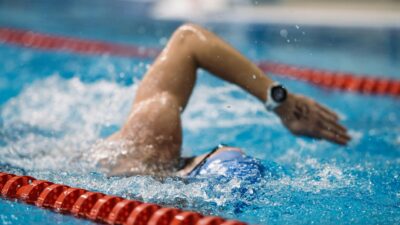
Arm sensors are designed for daily life. You can shower, swim in a pool, and sleep on them. Avoid hot tubs, saunas, and scuba dives. If the sensor lifts at an edge, reinforce with a CGM overpatch. If it falls off early, most manufacturers will replace it once per reporting period with proof of date and reason.
Replace on schedule: 10 days for G7, 15 days for Libre 3 and Stelo, and exactly one year for Eversense 365. Apply the next sensor on the opposite arm to give the skin a rest and reduce adhesive irritation.
Who Should Use a Blood Sugar Monitor on Arm?
The American Diabetes Association Standards of Care recommend CGM for all adults and youth with type 1 diabetes and for anyone with type 2 diabetes using multiple daily insulin injections or pump therapy. Evidence is also growing for non-insulin type 2 and prediabetes, especially as part of a behavior-change program. Over-the-counter options like Dexcom Stelo have lowered the barrier for people curious about their glucose patterns.
If you are exploring a CGM because of a borderline A1C, pair the data with our A1C levels guide so you can interpret what a 120 or 160 reading actually means for your risk.
Common Problems and Fixes
- Signal loss: keep your phone within roughly 20 feet; Bluetooth passes poorly through metal and water.
- Early detachment: use a proper alcohol swab pre-clean and a skin-friendly adhesive patch.
- Compression lows at night: sleeping on the sensor can cause a false drop; rotate to the opposite arm.
- Readings off by a lot: confirm with a fingerstick; if off by more than 20 percent consistently, contact the manufacturer.
The Bottom Line
A blood sugar monitor on the arm is a continuous glucose monitor — FreeStyle Libre, Dexcom G7, Dexcom Stelo, or Eversense — that reads glucose every few minutes and sends data to your phone. The upper arm is FDA-cleared, convenient, and accurate. If you are considering one, talk with your clinician about which device matches your insurance, your goals, and your monitoring needs.
Medical disclaimer: This article is educational and is not medical advice. Confirm any glucose-related treatment decisions with your healthcare provider, especially when you are starting or changing a CGM.