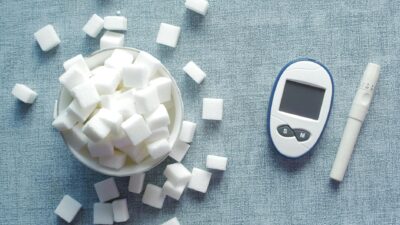
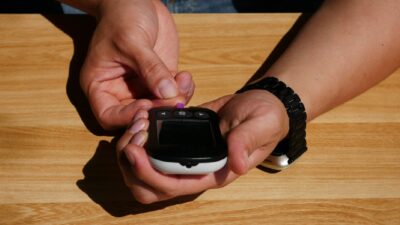
A Bluetooth glucose meter is a traditional fingerstick blood glucose monitor that wirelessly sends each reading to a smartphone app, replacing the old paper logbook with cloud-synced data, trend graphs, and the ability to share results with family or your clinician. It is not a continuous glucose monitor (CGM); you still prick a fingertip and apply a drop of blood to a disposable test strip for each reading.
What “Bluetooth” Actually Adds
Standard glucose meters store readings in onboard memory, typically the last 100-500 results, that you have to scroll through on a small screen. A Bluetooth glucose meter pairs with a free companion app (Contour Diabetes app, mySugr, OneTouch Reveal, Accu-Chek Connect) and pushes every reading the moment it appears. The app then provides:
- Automatic time-stamped logbook with no manual entry
- Trend charts (7, 30, 90 day) for time in range
- Tags for meal, medication, exercise, and mood
- Cloud sync that lets caregivers or clinicians view your data through a portal
- Reminders to test, take medication, or rotate finger sites
How a Bluetooth Glucose Meter Works
The chemistry inside a Bluetooth meter is the same as in any modern fingerstick meter. The disposable test strip contains an enzyme, usually glucose oxidase or glucose dehydrogenase, that reacts with glucose in your blood drop to produce a small electrical current. The meter measures the current and converts it to a glucose value in mg/dL, typically in 4-5 seconds. A Bluetooth Low Energy (BLE) chip then transmits the result, time, and meter ID to the paired smartphone in under a second. If the phone is out of range, readings are stored locally and uploaded the next time the app opens.
Top Bluetooth Glucose Meters in 2025
| Model | App | Sample Size | Standout Feature |
|---|---|---|---|
| Contour Next One | Contour Diabetes | 0.6 µL | Second-Chance Sampling reduces wasted strips |
| Accu-Chek Guide Me | mySugr | 0.6 µL | Spill-resistant strip vial; mySugr coaching |
| OneTouch Verio Reflect | OneTouch Reveal | 0.4 µL | Blood Sugar Mentor tips on the meter screen |
| CareSens N Premier | SmartLog | 0.5 µL | Affordable strips; ketone meter compatible |
| Dario Smart Meter | Dario Health | 0.3 µL | Plugs into the phone; no Bluetooth pairing needed |
Who Benefits Most From a Bluetooth Meter
- People newly diagnosed with prediabetes or type 2 diabetes who want to see how meals, exercise, and stress affect their numbers without keeping paper logs.
- Insulin users who need to share data with an endocrinologist between visits for dose adjustments.
- Caregivers of older adults or children who want remote visibility into daily readings.
- Telehealth patients who upload data to platforms like Livongo, Omada, or virtual diabetes clinics.
- People not ready for a CGM who still want digital trend tracking at a lower monthly cost.
Bluetooth Meter vs CGM: Quick Comparison
| Feature | Bluetooth Glucose Meter | CGM (Dexcom G7, Libre 3) |
|---|---|---|
| Reading method | Fingerstick blood drop | Sensor under the skin |
| Frequency | Spot checks (3-10 per day) | Every 1-5 minutes, automatic |
| Trend data | Snapshot only | Continuous graph + arrows |
| Typical cost | $15-$30 meter; $25-$80/100 strips | $70-$300 per sensor (10-15 days) |
| FDA accuracy | Within 15% of reference | MARD 7-10% (modern systems) |
How to Use a Bluetooth Meter
- Wash and dry your hands; warm water improves blood flow.
- Insert a fresh test strip into the meter and turn it on.
- Use the lancing device on the side of a fingertip (less painful than the pad).
- Touch the blood drop to the test strip until the meter beeps.
- Wait 4-5 seconds for the result; the meter pushes it to your phone automatically.
- Add a meal or activity tag in the app if helpful.
Tips for Accurate Bluetooth Meter Readings
- Use strips before their expiration date and store them in the original vial with the cap closed.
- Avoid testing immediately after eating sweet fruit, which can leave glucose on your fingers and falsely raise the reading.
- Calibrate or run a control solution test if results seem off.
- Keep the meter at room temperature; extreme cold or heat affects strip chemistry.
- Pair the meter with only one phone at a time to avoid sync conflicts.
Insurance and Cost
According to the CMS, blood glucose meters and strips are covered as durable medical equipment when prescribed for diabetes. Most Bluetooth meters retail for $15-$30 (often free with a strip subscription), and a 100-strip box costs $25-$80 retail. Generic strips for some meters (CareSens, ReliOn) cost less than half that. Manufacturer apps are free.
For background on glucose testing in the prediabetes range, see the detection of prediabetes guide and the A1C levels hub.
The Bottom Line
A Bluetooth glucose meter modernizes traditional fingerstick testing by syncing every reading to a smartphone app for trends, sharing, and clinician review. It is more affordable than a CGM and useful for prediabetes, non-insulin type 2 diabetes, and anyone tired of paper logbooks. The Contour Next One, Accu-Chek Guide Me, and OneTouch Verio Reflect lead the 2025 market on accuracy, app quality, and insurance coverage.
Medical disclaimer: This article is for educational purposes only and is not a substitute for professional medical advice, diagnosis, or treatment. Always consult your physician or qualified healthcare provider with any questions about a medical condition or medication.