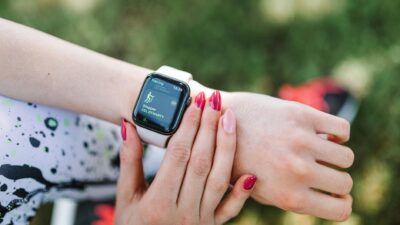
The Dexcom manufacturer is Dexcom, Inc., a publicly traded American medical technology company headquartered in San Diego, California. Founded in 1999, Dexcom specializes exclusively in continuous glucose monitors (CGMs). Its current product lineup includes the prescription Dexcom G7 and the over-the-counter Stelo sensor, with the older G5 discontinued and the G6 being phased out.
Company Overview
Dexcom, Inc. was founded in 1999 by Scott Glenn, John Burd, and Lauren Otsuki with the goal of bringing continuous glucose monitoring to people living with diabetes. The company received its first FDA approval for a short-term CGM in 2006 and has since iterated through seven generations of sensors. Key company facts:
| Attribute | Detail |
|---|---|
| Full legal name | Dexcom, Inc. |
| Founded | 1999 |
| Headquarters | San Diego, California |
| US manufacturing | San Diego, CA and Mesa, AZ |
| International manufacturing | Malaysia (Penang), among others |
| Stock exchange | NASDAQ |
| Ticker | DXCM |
| Product focus | Continuous glucose monitors only |
Dexcom does not manufacture insulin, diabetes pills, or insulin pumps. It partners with pump makers, notably Tandem Diabetes Care (t:slim X2) and Insulet (Omnipod 5), so that a Dexcom sensor can drive closed-loop automated insulin delivery in compatible systems.
The Dexcom Product Lineup in 2025
- Dexcom G7: The flagship prescription CGM. 10-day wear with a 12-hour grace period. 30-minute warm-up. Factory calibrated, no fingerstick needed. Direct-to-Apple-Watch Bluetooth support.
- Dexcom Stelo: The first over-the-counter CGM in the US, cleared by the FDA in 2024 for adults 18 and older who are not on insulin. 15-day wear. Sold directly through the Stelo website and select retailers.
- Dexcom ONE+: An international offering with similar sensor technology, not widely sold in the United States.
- Dexcom G6 (legacy): Being phased out in most markets in favor of G7. Still used by many patients on older pumps.
- Dexcom G5 (discontinued): No longer manufactured or supported. Users have transitioned to G6 or G7.
How Dexcom Devices Work
Every current Dexcom sensor uses glucose-oxidase chemistry on a hair-thin filament inserted just under the skin. The filament reacts with interstitial glucose, generating a small electrochemical current that onboard electronics translate to a mg/dL value. Readings stream via Bluetooth every 5 minutes to a smartphone app, a dedicated receiver, or a compatible smartwatch. Factory calibration means no fingerstick confirmation is required to use readings for treatment decisions in G7, in line with FDA iCGM criteria. For context on how CGM data intersects with A1C interpretation, see our A1C Levels guide.
Manufacturing and Quality
Dexcom manufactures the vast majority of its sensors in FDA-registered facilities in San Diego and Mesa, with international operations in Penang, Malaysia. Each sensor undergoes batch validation for accuracy and sterilization before release. Recalls and field corrections, when they occur, are documented on the FDA MedWatch portal and the company website.
Accuracy Performance
Accuracy is reported through mean absolute relative difference (MARD), the percentage a CGM reading differs from a lab reference glucose. Lower MARD is better. Dexcom G7 has a published overall MARD of 8.2 percent in adults, Stelo around 9 to 10 percent. These numbers put Dexcom devices in the same tier as Abbott’s Freestyle Libre 3 Plus and comfortably within FDA therapeutic-accuracy standards.
How Dexcom Fits in the Broader CGM Market
The CGM market in 2025 is dominated by two companies: Dexcom (Dexcom G7, Stelo) and Abbott (Freestyle Libre 3 Plus, Libre Rio, Libre 2 Plus). Medtronic makes sensors primarily for its own pump systems. Senseonics offers the implantable Eversense. According to the American Diabetes Association, CGMs are recommended for all adults using insulin and are increasingly used for non-insulin type 2 diabetes and prediabetes in motivated patients. For prediabetes readers, a single 15-day Stelo wear can produce actionable insight when combined with the lifestyle strategies in our Prediabetes 101 hub, Diet and Nutrition hub, and Treatment hub.
Key Corporate Facts
- Founded: 1999
- First product: Short-term CGM (2006)
- Current CEO (2024-2025): Kevin Sayer (Executive Chairman) and Jake Leach (CEO). Leadership details evolve; verify current roles on the Dexcom investor site.
- Employees: Over 9,000 globally as of 2024 reporting
- Annual revenue: Several billion USD (exact figures in SEC filings)
- R&D focus: Smaller sensors, longer wear, non-diabetes wellness applications
Customer Support and Resources
Dexcom operates regional customer care lines for tech support, sensor replacements for validated errors, and insurance paperwork. Product documentation, user guides, and app downloads are available on the company’s main website. For prescription G7, your clinician places the order through a durable medical equipment supplier, specialty pharmacy, or directly with Dexcom’s pharmacy partners. Stelo is purchased directly from the Stelo website or select retailers without a prescription.
The Bottom Line
The Dexcom manufacturer is Dexcom, Inc., a San Diego-based, NASDAQ-listed medical technology company (DXCM) that focuses exclusively on continuous glucose monitoring. Its current sensors, G7 by prescription and Stelo over the counter, are industry-standard tools for people managing diabetes and increasingly for those exploring prediabetes and metabolic health. This overview is factual background and not a product endorsement or investment advice.
This article is for informational purposes only and is not a substitute for professional medical advice. It is not intended as financial or investment advice. Always discuss device selection with your healthcare provider.