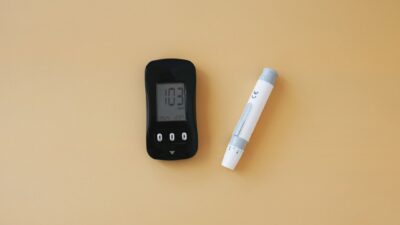
There is no such thing as Dexcom medication. Dexcom is not a drug, pill, injection, or prescription therapy. Dexcom is a brand of continuous glucose monitor (CGM), a small wearable sensor that tracks glucose levels in the fluid just under your skin and sends readings to a phone or receiver every few minutes.
Why “Dexcom Medication” Is a Misnomer
The phrase Dexcom medication appears in search engines thousands of times a month because of a simple mix-up. Your clinician may say, “I am going to prescribe you a Dexcom,” and you might assume that anything prescribed must be a medicine. In fact, CGMs are classified by the FDA as medical devices, similar to insulin pumps, blood pressure monitors, and hearing aids. Dexcom does not contain any active drug. It measures glucose; it does not change glucose.
This matters because treating a CGM like a medication leads to the wrong expectations. A CGM will not lower your A1C by itself. It gives you and your clinician real-time data to make better choices about food, movement, and any actual medications you may take for type 2 diabetes, prediabetes, or weight management.
What Dexcom Actually Is
Dexcom, Inc. is a San Diego-based medical technology company that manufactures continuous glucose monitors. A Dexcom system has three parts:
- Sensor: A thin filament about the width of a human hair, inserted painlessly just under the skin on the back of the upper arm or abdomen.
- Transmitter: Built into the sensor on modern models (G7, Stelo), it sends glucose readings via Bluetooth.
- Display: A smartphone app or dedicated receiver that shows the glucose trend, number, and alerts.
What the Sensor Measures
A Dexcom sensor does not measure blood glucose directly. It measures glucose in interstitial fluid, the watery liquid between your cells. Interstitial glucose tracks blood glucose very closely, typically with a 5 to 10 minute lag. Every 1 to 5 minutes, the sensor generates a new reading, producing up to 288 data points a day. This is a fundamentally different dataset than the 1 to 4 fingerstick readings a typical glucose meter user might take.
Current Dexcom Products and How They Differ
| Product | Wear Time | Prescription Required? | Target User |
|---|---|---|---|
| Dexcom G7 | 10 days + 12 hr grace | Yes | Type 1 or type 2 diabetes, including insulin users |
| Stelo by Dexcom | 15 days | No (OTC, 18+) | Adults with type 2 diabetes not on insulin, or curious about glucose |
| Dexcom G6 (legacy) | 10 days | Yes | Being phased out in favor of G7 |
According to FDA clearance documentation, Stelo became the first over-the-counter CGM in the US in 2024. Both G7 and Stelo have an approved MARD (mean absolute relative difference) in the 8 to 10 percent range, meaning readings are typically within 8 to 10 percent of a lab reference.
What a CGM Can Do That a Medication Cannot
A CGM gives you visibility; a medication gives you a physiological effect. They are complementary. Wearing a Dexcom for two weeks often reveals:
- Which foods cause the biggest spikes for you specifically
- How a 10-minute post-meal walk blunts those spikes
- Dawn-phenomenon glucose rises before breakfast
- Hidden lows at night, especially if on insulin or sulfonylureas
- How stress, illness, and poor sleep push glucose higher
If you want to learn more about what a CGM reveals in someone with borderline glucose, read our Prediabetes 101 hub and the A1C Levels guide.
If Your Doctor Mentioned Dexcom, Here Is What That Means
When a clinician prescribes Dexcom, they are ordering a sensor kit, typically covered under durable medical equipment (DME) benefits or pharmacy benefits depending on your insurer. You will pick up a box containing sensor applicators. You will not take anything by mouth or by injection that is part of the Dexcom itself. Any insulin, metformin, tirzepatide, or other medication on your prescription list is separate and remains its own therapy. The Dexcom simply gives that therapy a real-time feedback loop.
Common Confusions Cleared Up
- Dexcom is not insulin. It does not deliver any drug.
- Dexcom is not a pump. It reads glucose. Insulin pumps deliver insulin. They can talk to Dexcom in a closed-loop system but are separate devices.
- Dexcom will not fix high glucose. Your lifestyle changes and your prescribed medications do that work. The sensor shows you whether those efforts are working.
The Bottom Line
Dexcom medication does not exist because Dexcom is not a medication. It is a continuous glucose monitor, a wearable sensor that tracks interstitial glucose every few minutes and displays the trend on your phone. If your clinician mentioned getting on Dexcom, they are offering you a data tool to support whatever medications, diet, and exercise plan you already have, not a new prescription drug to swallow or inject.
This article is for informational purposes only and is not a substitute for professional medical advice. Talk to your clinician about whether a CGM is appropriate for your situation.