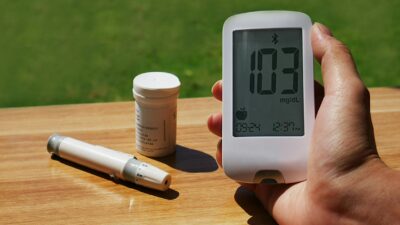
Dexcom OTC refers to Stelo, the over-the-counter continuous glucose biosensor from Dexcom cleared by the FDA in March 2024 as the first consumer CGM available without a prescription in the United States. The Dexcom OTC product is designed specifically for adults not using insulin who want insight into glucose patterns without a clinical prescription process.
What Stelo Is and Why It Matters
The FDA cleared Stelo under a direct-to-consumer pathway on March 5, 2024, marking the first time a CGM could be sold in the United States without a clinician order. The clearance responded to consumer demand and to research suggesting that even people without diabetes can learn useful behavioral information from short-term CGM wear.
Stelo is a 15-day sensor worn on the back of the upper arm, identical in form to Dexcom’s prescription G7 but running different software. It pairs with the Stelo app on iOS or Android smartphones, displays glucose trends every 15 minutes in the app, and provides ambulatory glucose profile summaries for self-review.
How Dexcom OTC Differs From Dexcom G7
Although the underlying sensor hardware shares much with G7, the OTC product is positioned differently. The table below summarizes the practical differences.
| Feature | Dexcom Stelo (OTC) | Dexcom G7 (Rx) |
|---|---|---|
| Prescription required | No | Yes |
| Sensor wear | 15 days | 10 days plus 12 hour grace |
| Reading interval shown | Every 15 minutes | Every 5 minutes |
| Urgent low alarm | Not available below 70 mg per dL | Yes, at 55 mg per dL |
| Insulin pump integration | No | Yes, several pumps |
| Target user | Adults not on insulin | Adults and children with diabetes |
| Insurance coverage | Not currently | Most commercial and Medicare |
| List price per month | About 99 dollars | Varies by coverage |
How Stelo Works
A thin filament about 5 millimeters long rests under the skin in the interstitial fluid compartment. A glucose oxidase enzyme on the filament generates a small electrical signal proportional to glucose. The sensor electronics sample that signal and use a factory calibration algorithm to produce a glucose estimate.
Stelo does not require fingerstick calibration. After a 30-minute warm-up, glucose readings stream to your smartphone via Bluetooth. The Stelo app displays a graph in 15-minute increments, logs meals, activity, and sleep, and generates weekly reports summarizing time in target range.
Who the Dexcom OTC Product Fits
Stelo is labeled for adults 18 years and older who are not using insulin. Common use cases include:
- Adults with type 2 diabetes managed with lifestyle or non-insulin medications
- Adults with prediabetes wanting to see how meals and exercise affect glucose
- Adults with metabolic syndrome or family history of type 2 diabetes
- Adults interested in general health optimization, fitness, or sleep quality
Stelo is not appropriate for children, pregnant people, those on insulin, or those with a history of severe hypoglycemia. If any of those apply, ask your clinician about a prescription CGM instead.
Accuracy and Its Limits
FDA clearance data for Stelo showed mean absolute relative difference in the 9 to 11% range across the target glucose spectrum for adults not on insulin. That is comparable to other consumer CGMs but less accurate than some prescription devices in the hypoglycemic range, which is one reason Stelo is not approved for insulin dosing.
Accuracy degrades in a few predictable situations. The first 12 hours of wear tend to show more variability. Rapid glucose changes of more than 2 mg per dL per minute widen the gap between interstitial and capillary values. Compression from lying on the sensor can produce transient false lows, and severe dehydration can distort readings.
Data You See and What It Means
Stelo focuses on pattern recognition rather than minute-by-minute numbers. Features include:
- Glucose spike notifications when a reading crosses a user-set threshold such as 140 or 180 mg per dL
- Time in range reports comparing weekly averages
- Meal logging so you can see the effect of specific foods
- Sleep and activity overlays
- A monthly summary with trends
Stelo notably does not provide urgent low alerts below 70 mg per dL. For users with hypoglycemia concerns, that gap is a hard limit that pushes them toward prescription G7.
Cost and Access
Stelo is sold directly to consumers through dexcom.com, Stelo.com, and select retailers. Current pricing is 89 dollars for a single 15-day sensor or 99 dollars for a monthly subscription delivering two sensors. Subscriptions can be paused or canceled online. HSA and FSA funds generally apply because Stelo is an FDA-cleared medical device.
Insurance coverage for OTC Stelo remains limited. Medicare does not cover OTC CGMs at this time, and most commercial plans require a prescription product. If cost is a concern, discussing prescription G7 coverage through prediabetes treatment pathways with your clinician may yield better value for eligible patients.
Privacy and Data Ownership
The Stelo app collects glucose readings, user-logged events, and optional linked data from Apple Health or Google Fit. Dexcom’s privacy policy describes how data may be used for product improvement and research in de-identified form. Users can opt out of research sharing and can export their own data through the app.
Common Questions About Daily Use
Stelo is water-resistant for showering and swimming up to 8 feet for 24 hours. Airport security scanners do not damage the sensor, but you should notify TSA agents if asked. Acetaminophen up to 1,000 mg every 6 hours does not significantly interfere with Stelo readings, unlike older Dexcom sensors. Alcohol consumption does not damage the sensor but may alter glucose patterns you observe.
The Bottom Line
Dexcom OTC, sold as Stelo, makes continuous glucose data available to adults not on insulin without a prescription. It is well suited for behavioral insight and general metabolic awareness but lacks the alarms and pump integration needed for insulin-treated diabetes. The FDA announcement of the Stelo clearance describes the intended population in detail. Discuss with your clinician whether Stelo, Libre Rio, or a prescription CGM best matches your goals and medical history.
This article is for educational purposes only and does not constitute medical advice. Always consult your healthcare provider for diagnosis and treatment decisions.