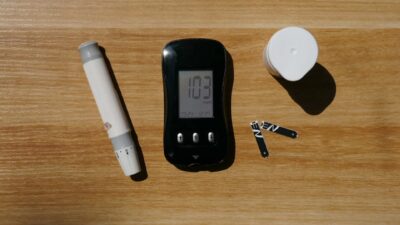
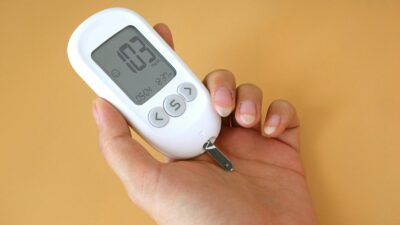
No, as of 2026 there is no fully FDA-approved non invasive glucose meter that reads blood sugar without penetrating the skin. The only glucose monitors cleared for diagnostic or self-management use are fingerstick meters and minimally invasive continuous glucose monitors (CGMs) that insert a tiny filament under the skin. Products marketed as needle-free glucose readers have repeatedly failed accuracy testing, and the FDA has warned consumers against them.
What “FDA-approved Non Invasive Glucose Meter” Actually Means
The phrase gets used loosely. In regulatory terms, “non-invasive” means no part of the device crosses the skin barrier. A true non-invasive monitor would read glucose from the surface, using light (near-infrared spectroscopy), radiofrequency, electromagnetic waves, or chemicals in sweat or tears. Despite decades of research, no device in this category has hit the accuracy standard the FDA requires for a diagnostic or therapeutic claim, which is roughly 95% of readings within 15% of a lab reference value.
The devices most people mean when they search for “non-invasive glucose meter” are continuous glucose monitors. These use a hair-thin filament that sits in the interstitial fluid just below the skin surface. Because the filament punctures the skin, the FDA classifies CGMs as minimally invasive, not non-invasive. That distinction matters: CGMs are cleared for glucose management, while no needle-free competitor is.
Devices That Are FDA-Cleared (and What They Actually Are)
Several glucose monitoring systems hold FDA 510(k) clearance. None are non-invasive in the strict sense, but each reduces the need for traditional fingersticks.
- Dexcom G7 (cleared 2022): wearable CGM with a 10-day sensor, approved for people aged 2 and older.
- FreeStyle Libre 3 (cleared 2022): 14-day CGM with a thin-sensor patch, approved for ages 4 and up.
- Abbott Lingo (cleared 2024): over-the-counter CGM aimed at metabolic health, not diagnosis.
- Dexcom Stelo (cleared 2024): first over-the-counter CGM for adults with type 2 diabetes not on insulin and for people interested in tracking glucose.
All four insert a small filament into the skin. That is why CGMs are sometimes called “semi-invasive” rather than fully non-invasive. For how glucose monitoring fits into detection of prediabetes, lab tests remain the diagnostic standard.
How Non-Invasive Glucose Technology Is Supposed to Work
Several approaches have been attempted, and each has run into the same problem: glucose is present in such low concentrations in skin, sweat, and tears that signal-to-noise ratios have been poor under real-world conditions.
- Near-infrared spectroscopy: shines NIR light through the skin and measures how glucose absorbs specific wavelengths. Affected by skin tone, hydration, and temperature.
- Raman spectroscopy: uses scattered laser light to detect glucose vibrational signatures. Accurate in lab settings but fragile in daily wear.
- Radiofrequency and microwave sensing: measures changes in dielectric properties caused by glucose. Highly sensitive to movement and sweat.
- Sweat and tear sensors: glucose concentrations in these fluids are 10-100 times lower than in blood and lag behind plasma glucose significantly.
Companies have been promising commercial non-invasive glucose monitoring for over 25 years. A 2017 review in Current Trends in Biomedical Engineering catalogued more than 40 failed or stalled devices; the landscape has barely changed since.
Accuracy: Why the FDA Bar Is So High
For a device to be cleared for glucose management, the FDA expects performance close to laboratory plasma glucose. The standard clinical benchmark is the Parkes Error Grid, which requires that nearly all readings fall within zones A and B (clinically acceptable). Modern CGMs achieve a mean absolute relative difference (MARD) of 8-10%, while independent testing of smartwatch-based glucose claims has shown MARDs of 20-35%, well outside safe dosing range for anyone on insulin.
In February 2024 the FDA issued a public Safety Communication warning consumers not to buy smartwatches or smart rings that claim to measure glucose non-invasively. The agency explicitly stated that no such device has been authorized, cleared, or approved.
Comparing Your Real Options
| Device Type | Invasive? | FDA-Cleared? | Typical Accuracy (MARD) |
|---|---|---|---|
| Fingerstick meter | Yes (single drop) | Yes | 5-10% |
| Continuous glucose monitor (Dexcom, Libre) | Minimally (subcutaneous filament) | Yes | 8-10% |
| Smartwatch/ring with glucose claim | No | No | 20-35% or unvalidated |
| Optical patch (experimental) | No | Not yet | Highly variable |
How to Use an FDA-Cleared Monitor Correctly
If you want to track glucose at home without relying on multiple daily fingersticks, a CGM is the closest thing to a needle-free experience. Apply the sensor to the back of the upper arm or abdomen, follow the 30-60 minute warm-up, and pair it with the companion app. Scan or receive Bluetooth readings every 1-5 minutes, and confirm any unexpected number with a fingerstick before acting on it, especially if you take insulin.
CGMs are helpful for seeing how meals, sleep, and exercise shift your glucose curve, but the diagnosis of prediabetes itself still comes from a lab-run A1C test or a fasting plasma glucose.
Red Flags in Consumer Non-Invasive Claims
Before buying any device that advertises needle-free glucose, check three things. First, does the product page cite an FDA 510(k) clearance number you can verify in the public FDA database? Second, have results been published in a peer-reviewed journal with a comparator lab method? Third, does the manufacturer make explicit medical claims, or is the device marketed as a “wellness” or “lifestyle” tracker to dodge regulation? If any of these fail, treat the readings as entertainment, not medical data.
The Bottom Line
An FDA-approved non invasive glucose meter does not yet exist in 2026. CGMs are minimally invasive, highly accurate, and the best needle-light option currently on the market. Anyone considering a smartwatch, ring, or patch that claims painless glucose measurement should look up the FDA 510(k) clearance number and read the peer-reviewed accuracy data before relying on it. For prediabetes screening and management, stick with lab-validated tests and ask your clinician whether a CGM makes sense for you.