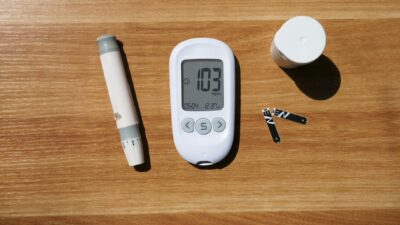
The FreeStyle Libre 14 day sensor is a small, round, skin-worn glucose sensor from Abbott that measures interstitial glucose continuously for up to 14 days. It is one of the most widely used continuous glucose monitoring (CGM) systems in the United States, used by adults with type 1 and type 2 diabetes, and it is cleared by the FDA for both scanning-based and, in newer Libre models, real-time glucose monitoring.
What the FreeStyle Libre 14 Day Sensor Is
The 14 day sensor is a coin-sized, water-resistant disc worn on the back of the upper arm. A tiny enzyme-coated filament sits just under the skin and measures glucose in the interstitial fluid every minute. The system comes in several generations:
- FreeStyle Libre 14 day: The original scan-based flash glucose monitor, where users tap their reader or phone on the sensor to retrieve readings.
- FreeStyle Libre 2: Adds optional real-time high/low glucose alerts.
- FreeStyle Libre 3: Delivers continuous real-time readings to a phone every minute without scanning.
This article focuses on the FreeStyle Libre 14 day sensor, but much of the technology overlaps across models.
How the Sensor Actually Works
Applying the sensor takes about 10 seconds. You clean the skin, attach the sensor with its single-use applicator to the back of your upper arm, and wait for a 1-hour warm-up. After that, every glucose check is as simple as holding the reader or phone near the sensor. Each scan displays the current glucose value, a trend arrow showing direction of change, and an 8-hour history chart.
Because interstitial glucose lags blood glucose by a few minutes, the sensor reading may slightly differ from a simultaneous fingerstick, especially during rapid changes. This is expected and does not indicate a faulty sensor.
Accuracy and What MARD Tells You
Accuracy for FreeStyle Libre sensors is most commonly reported as MARD — mean absolute relative difference against a laboratory reference. Published values for Libre systems fall in the single digits, placing the technology firmly in the range clinicians consider clinically useful for guiding therapy.
| Feature | FreeStyle Libre 14 Day Sensor |
|---|---|
| Wear duration | Up to 14 days |
| Reading frequency | Updates every minute (scan to view) |
| Warm-up time | 1 hour |
| Calibration | Factory-calibrated; no fingerstick calibration required |
| Alerts | Not available on the original 14 day sensor (available on Libre 2 and Libre 3) |
| Water resistance | Rated for shower, bathing, and short water exposure per user guide |
| Approved sites | Back of the upper arm |
Several factors can influence individual accuracy: the first day of wear, pressure on the sensor during sleep, dehydration, very rapid glucose changes, and certain medications noted on the product label. Your clinician can help interpret patterns when sensor and fingerstick readings diverge.
When Clinicians Recommend the FreeStyle Libre 14 Day Sensor
According to the ADA’s Standards of Care, CGM is recommended for most adults on intensive insulin therapy and can be considered across a wider range of diabetes scenarios. Reasons a clinician might specifically consider the FreeStyle Libre 14 day sensor include:
- Preference for a scan-based device without persistent alerts.
- Lower-cost entry point into CGM technology.
- Need for a 14-day wear cycle to minimize sensor changes.
- Use for people checking trends alongside periodic fingersticks and A1C levels.
Integrating Sensor Data into a Care Plan
The most useful output of a FreeStyle Libre session is not any single reading but the Ambulatory Glucose Profile (AGP) that clinicians generate from several weeks of data. That report shows time in range, patterns of highs and lows, and variability. Paired with your current treatment plan and nutrition habits, the AGP guides concrete changes rather than guesswork.
Practical Tips for Everyday Use
- Apply to clean, dry skin on the back of the upper arm for best adhesion and accuracy.
- Let the sensor warm up fully before making treatment decisions.
- Scan regularly — skipping scans causes gaps in the 8-hour history.
- Use a fingerstick if you feel hypoglycemic but the sensor reads normal, or when the label recommends confirmation.
- Share data with your clinician’s office via the LibreView platform for remote review.
Medical Disclaimer
This article is informational and is not a substitute for evaluation or advice from a qualified clinician. Device selection, interpretation of CGM data, and any treatment changes should involve your healthcare team. Always follow the user guide and FDA-cleared labeling for your specific device.
The Bottom Line
The FreeStyle Libre 14 day sensor is a well-established, factory-calibrated CGM that offers up to two weeks of continuous glucose data per sensor, without routine fingerstick calibration. It is a solid choice for adults who prefer a scan-based system and for clinicians who want to bring structured CGM data into type 1 or type 2 diabetes care. If you think it might help you, discuss the right device and wear strategy with your clinician, ideally alongside a concrete plan for how the data will inform your treatment.