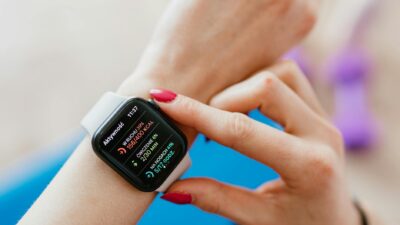
Quick clarification first. Stello CGM is a misspelling of Stelo CGM, Dexcom’s over-the-counter continuous glucose monitor. If you are hunting for a product called Stello, what you actually want is Stelo with a single L. The device exists, it is widely available in the United States, and the rest of this guide covers how it works, its accuracy, and when it makes sense to wear one.
Stelo Is the Correct Name
Dexcom trademarked Stelo, and all official packaging, product pages, and app listings use that spelling. Because the name is short and unusual, many people double the L when writing or searching. If you cannot find the app in your app store, it is because you searched “Stello”; try “Stelo” instead. The company’s site is stelo.com.
What Stelo Is
Stelo is the first FDA-cleared over-the-counter continuous glucose monitor in the US, authorized in March 2024. It is a small biosensor worn on the back of the upper arm that measures glucose in interstitial fluid and streams the data to a companion smartphone app. The product is designed for adults 18 and older who do not take insulin; a prescription is not required.
If you are new to glucose tracking, our A1C levels guide explains how moment-to-moment readings and a three-month A1C average complement each other.
How Stelo Works in Practice
Stelo is inserted with a one-step applicator. After a warm-up period, the sensor reports glucose every 15 minutes for 15 days. You pair it with the Stelo app on a compatible iPhone or Android device. The app shows current glucose, graphs of the last several hours, time-in-range, and daily insights that connect specific meals or activities to your glucose response.
What Stelo Is and Is Not For
- For: adults with prediabetes wanting to learn how meals and movement affect glucose.
- For: adults with type 2 diabetes managed with diet, metformin, or other non-insulin therapy.
- Not for: anyone taking insulin, who needs real-time alarms.
- Not for: diagnosing diabetes; diagnosis requires clinical labs.
- Not for: children, pregnant users, or adults with severe hypoglycemia unawareness.
Accuracy
Stelo’s accuracy is comparable to other modern CGMs. FDA-reviewed performance data show a mean absolute relative difference of roughly 10 percent compared with reference lab values. Accuracy tends to be lower during the first 12 hours after insertion and during rapid glucose changes. Interstitial fluid lags blood glucose by about 5 to 15 minutes, which can matter during dessert, exercise, or other fast transitions.
Stelo vs Other CGMs
| Feature | Dexcom Stelo (OTC) | Dexcom G7 (Rx) | Abbott Rio (OTC) |
|---|---|---|---|
| Prescription | No | Yes | No |
| Target user | Non-insulin adult | All ages and types | Non-insulin T2D adult |
| Wear time | 15 days | 10 days | 14 days |
| Real-time alarms | No | Yes, customizable | No |
| Reading interval | 15 minutes | 5 minutes | 1 minute |
| Typical MARD | ~10% | ~8.2% | ~9% |
| Approximate cost | ~$89-99 per sensor | Varies by payer | ~$89 per sensor |
How to Get Value from Stelo
The most productive use of a CGM is as a structured learning tool. Spend week one living normally and establishing a baseline. In weeks two and three, run small experiments. Swap white toast for whole-grain with nut butter and see how the morning curve changes. Take a 15-minute walk after dinner and see whether your peak is lower and shorter. Try a protein-forward breakfast for several days. Use our diet and nutrition hub for ideas, and check the framework in is prediabetes reversible for the bigger picture.
Reading the Numbers
For adults without diabetes, fasting glucose is typically 70 to 99 mg/dL, and post-meal peaks usually stay below 140 mg/dL. People with prediabetes often see fasting values between 100 and 125 mg/dL or post-meal readings between 140 and 199 mg/dL. Occasional excursions above these ranges are expected; persistent patterns above them deserve an A1C check and a clinician conversation.
Common Questions About Wearing Stelo
- Can I shower or swim with Stelo? Yes, the sensor is water-resistant; avoid prolonged hot tubs.
- Will airport security affect the sensor? Walk-through metal detectors are fine; ask for a hand pat-down if you prefer to avoid body scanners.
- Can I re-use a sensor after removal? No. Each sensor is single-use and single-wear.
- What if the sensor falls off early? Contact Dexcom support; they may replace it depending on circumstances.
Cost and Coverage
Stelo is purchased directly through stelo.com. A single sensor typically costs around 99 US dollars; monthly subscriptions of two sensors bring the per-sensor cost closer to 89 dollars. Insurance generally does not reimburse OTC CGMs, but HSA and FSA accounts usually do. There are no strips, lancets, or calibration fluids to buy.
When to Bring Data to a Clinician
See a clinician if you notice repeated fasting readings above 100 mg/dL, post-meal peaks frequently exceeding 180 mg/dL, unexplained lows below 70 mg/dL, or symptoms such as shakiness, sweating, or severe fatigue. Bring screenshots or exported reports; CGM patterns over two to four weeks are more informative than a single reading. Learn more about when to act in our prediabetes basics.
The Bottom Line
Stello does not exist as a branded product; Stelo does, and it is Dexcom’s over-the-counter continuous glucose monitor for non-insulin adults. Used thoughtfully, it is a strong learning tool that surfaces useful patterns you would miss with a single A1C test. It does not replace a clinician, it is not for insulin users, and its value comes from what you do with the data, not from wearing the sensor itself.
This article is educational and does not replace medical advice. Talk with your clinician before starting a CGM or acting on unusual readings.